Author name: Firoz Jetha

Firoz Jetha is the founder of Achieve Learning and has more than 30 years’ experience in 11+ education and selective school preparation. He began tutoring pupils for the 11+ before formally establishing Achieve Learning in 2004, where he has personally taught pupils, designed and reviewed 11+ materials, advised families on selective school admissions, and managed tutors and curriculum development. Over more than three decades, Firoz has also been involved in delivering 11+ mock examinations and pupil assessments. This has given him extensive first-hand experience of pupil performance, common areas of difficulty and the demands of competitive selective-school entrance examinations. Over this period, he has helped pupils prepare successfully for admission to leading selective schools across North and North West London, including Queen Elizabeth’s School, Henrietta Barnett School, Haberdashers’ Boys’ School and schools within the South West Herts Consortium. This experience continues to inform the educational guidance and practice resources developed through Achieve Learning. His experience of selective education also extends beyond his professional work. As a parent of three children who attended grammar schools, including Queen Elizabeth’s School, Barnet, Firoz has experienced the selective admissions process from both an educator’s and a parent’s perspective. Firoz holds an MBA in International Management from the University of London. He has also completed Executive Coaching and Life Coaching programmes at the University of Cambridge, together with Imperial College London’s verified Coaching Skills for Learner-Centred Conversations programme through ImperialX. Through Achieve Learning, Firoz contributes to the development and review of 11+ educational guides, practice papers and resources for pupils and parents, alongside providing specialist guidance on 11+ preparation, selective-school choices and admissions. His work reflects particular expertise in selective schools, entrance examinations and admissions across North and North West London.

How is SPaG Tested in the QE Boys 11+ Exam? (2026 Guide)

This guide for the QE Boys SPaG has been updated for August 2026 to reflect the current exam format and the latest admissions timeline.

If your child is preparing for the QE Boys 11+ exam, you’ll already know just how competitive the process is. Queen Elizabeth’s School, Barnet, regularly tops national league tables. Every year thousands of boys sit the 11+ entrance exam for just over 180 places. 

In an exam this selective, every mark counts.

One part of the English paper that parents overlook (or at least underestimate) is spelling, punctuation and grammar (or SPaG). It’s easy to think of it as “less important” compared with comprehension sections. But in over two decades of preparing boys specifically for this exam, SPaG is consistently where we see strong candidates lose marks – not because children don’t know the content, but because the exam is so fast-paced and unforgiving.

In this guide, we explain everything you need to know about how SPaG is tested in the QE Boys 11 Plus exam. We’ll look at the exam format, the questions that feature and practical strategies to help your child prepare. 

Along the way, we’ll also touch on broader 11 Plus SPaG revision. Because even if QE Boys is your main focus, good SPaG skills will help in every grammar school entrance exam, as well as your child’s ongoing studies.

What’s SPaG in the 11 Plus exam?

When tutors and schools talk about “SPaG” for the 11+, they’re referring to the building blocks of written English. It includes: spelling (knowing how words are formed and spotting mistakes), punctuation (the marks that organise and clarify writing, like commas and apostrophes) and grammar (the rules governing how sentences and word classes fit together).

In a little more detail…

  • Spelling: not just knowing how to spell common words, but being able to spot homophones (like their vs there), prefixes and suffixes, and irregular words that don’t follow the usual patterns.
  • Punctuation: commas, apostrophes, quotation marks, colons and semicolons (and more), knowing where and when to use them.
  • Grammar: understanding how sentences are constructed, which word class is being used in a given context, and how to use verb tenses correctly.

In the context of the QE 11 Plus SPaG test, this means short, multiple-choice questions rather than long written answers. For example, a child might be asked to spot an error in a sentence, choose the correct tense to complete a sentence, or identify an incorrect piece of punctuation.

For some schools, SPaG is tested within comprehension questions or a creative writing task. In others (including QE Boys), it appears as a standalone section. Either way, it’s a chance for children to pick up marks quickly… if they’ve put in the right practice.

How is SPaG tested in the QE Boys 11+ exam format?

The QE Boys 11+ exam format differs from many other grammar schools. Their English paper has two main components: a longer comprehension section (featuring two demanding texts, with about 35 questions in total) and a SPaG section. It’s a bespoke GL Assessment paper, created specifically for the school.

The SPaG part is broken down into three mini-tests, each featuring 10 questions:

  1. Spelling: Questions often focus on words that children commonly confuse. Think practice vs practise, or high-level vocabulary like obscurity or phenomena. Examiners love mistakes that look deceptively simple.
  2. Punctuation: These questions go beyond the basics. Instead of adding punctuation from scratch, children are asked to spot the error in a sentence. For example, a missing comma in a clause, a misplaced apostrophe, or quotation marks used incorrectly in dialogue.
  3. Sentence completion: This is where grammar and vocabulary meet. Children are given a sentence with a missing word or phrase, and must choose the correct option to complete it. These often test verb tenses, subject–verb agreement, or subtle differences in meaning.

What makes the QE Boys 11 Plus distinctive is the pace and difficulty. There are around 65 questions packed into 45-50 minutes. On top of that, mistakes are never obvious. If a sentence has a punctuation error, it’s unlikely to be a missing full stop — it’s far more likely to be a misplaced apostrophe or a comma splice.

While many children know the rules, they lose marks under time pressure. That’s why regular practice in the precise QE format is so important.

Related reading: How Hard is the QE Boys 11 Plus English Exam?

What kind of SPaG questions feature in the QE Boys 11+?

Of course, this is the first thing we all want to know! Unfortunately, the school doesn’t release official QE Boys 11+ past papers. So the best way to prepare is with high-quality practice materials that match the style. 

But in general, your son will face three types of SPaG question:

  • Spelling: A sentence with one word spelled incorrectly. Students must choose from options A–D (the misspelled word) or option E if there’s no mistake. These often focus on homophones (their/there/they’re) or irregular spellings.
  • Punctuation: A full sentence with a potential punctuation error. Students must select which part (A–D) contains the mistake, or E if the sentence is correct. Errors might involve commas in clauses, apostrophes, colons, semicolons, speech marks (to name just a few).
  • Grammar / sentence completion: Here, a sentence is left incomplete, and your child chooses the correct option to fill the gap (A–E). This tests grammar in context — verb tenses, subject–verb agreement, or precise word choice.

To give you a flavour, here are some questions (taken from Achieve Learning’s QE Boys 11+ SPaG papers) that exactly mirror the test-day format.

Example 1: Spelling

Correct answer: B) The correct spelling is “classified”, not “classifide”. The mistake is tricky because “-fide” sounds right when said aloud. But the correct ending is “-fied” with an “ie”. Words like “identified” and “justified” follow the same pattern.

Example 2: Punctuation

Correct answer: E) The sentence is already correct, which is exactly why it can trip children up. QE examiners love to include “no change” as an option. This forces candidates to think carefully before altering something unnecessarily.

Example 3: Sentence completion

Correct answer: A) “Waiting” gives a mysterious, poetic tone, as if the object has been lying there with purpose. “Abandoned” or “placed” are more literal but miss the literary mood. “Sleeping” sounds odd for an object, and “planted” suggests more direct human intention.

Looking for more QE-style 11+ practice papers? Explore Achieve Learning’s SPaG-only and full-length QE Boys 11 Plus practice papers. Each paper comes with parent-friendly explanations and an in-depth glossary, so you can help your child learn from mistakes. 

Is SPaG harder for QE Boys than other 11 Plus exams?

In a word: yes. The QE Boys 11+ is widely regarded as one of the toughest entrance exams in the country. And the SPaG section is no exception.

Most 11+ exams include some kind of SPaG test (often marked as part of creative writing assignments or long-form comprehension answers). But QE Boys is deliberately more demanding. 

Here’s why:

  • It’s multiple choice: Every question has fixed options (A–D, or sometimes E for “no mistake”), which means there’s no opportunity to explain reasoning or hedge your bets. Your child either spots the error or doesn’t, so accuracy and confidence with the rules are essential.
  • More advanced punctuation: Children aren’t just asked about commas and full stops. They need to know how to use colons, semicolons, fronted adverbials, subordinate clauses and speech marks correctly.
  • Higher-level vocabulary: Spelling and sentence completion sections often use words from classic literature or academic texts. Not just everyday language.
  • Faster pace: Children must work quickly, with about 40 seconds per question. As a result, many lose marks not because they don’t know the answer, but because they run out of time.

By comparison, “standard” GL Assessment papers keep SPaG sections shorter and simpler. That doesn’t mean they’re easy (of course), but QE Boys is another level.

Read more: What’s the Difference Between SPaG and Comprehension in the QE Boys English Exam?

How should my child prepare for SPaG in the 11 Plus?

It’s tempting to think of SPaG as the “less important” part of English 11 Plus exams. But in reality, it’s often the deciding factor between securing a place and losing out.

Imagine two children who both score well on comprehension. One loses just two marks on SPaG because they panicked. The other answers every SPaG question correctly. At QE Boys, with thousands of applicants, that small difference could be the difference between meeting the QE Boys 11 Plus cut-off or missing out.

So, what’s the best way to prepare?

The good news is that SPaG is one of the most “trainable” parts of the exam. Here are some practical tips:

  • Short daily practice: Ten to fifteen minutes of 11 Plus SPaG papers or quick drills is far more effective than an occasional cram session. Focus on weak spots like homophones or tricky punctuation.
  • Timed papers: Build stamina by practising full QE Boys 11 Plus practice papers, which combine SPaG with comprehension. This helps children learn to balance accuracy with speed.
  • Read aloud: Encourage your child to read passages out loud. Hearing sentences helps them recognise where punctuation belongs and whether a tense sounds wrong.
  • Read widely: Classic texts like Dickens or Austen expose children to the kind of sentence structures they’ll see in the exam.
  • Error analysis: Don’t just correct mistakes — ask your child to explain why an option is wrong. This deepens their understanding and makes it less likely they’ll repeat the error.

QE Boys SPaG: Quickfire FAQs

To wrap up this guide to all things SPaG and the 11 Plus, here are parents’ most pressing questions — about the overall skills required and what QE Boys expects. With a clear understanding of the number of questions, different sections, and how the exam is structured, you’ll have clarity and confidence to help your child ace their exams.

Why is SPaG important for the 11 Plus?

Of course, SPaG is important for raw 11+ scores, especially in papers with a dedicated section like QE Boys. But it’s also worth remembering that good grammar, spelling and punctuation have wider benefits:

  • Supporting comprehension: Children who understand punctuation and sentence structures can make sense of long, complex passages more easily.
  • Underpinning writing: Even though QE doesn’t test creative writing directly, accurate SPaG is vital for success once your son starts Year 7.
  • Demonstrates precision: QE Boys has a reputation for academic excellence. A child who can use language accurately and fluently is more likely to thrive in that environment.

How many SPaG questions are in the QE Boys exam?

Usually around 30 questions, evenly split between spelling, punctuation, and sentence completion (roughly 10 of each). The exact balance may vary from year to year, but this is the format parents should expect.

Is vocabulary included in SPaG?

Yes, particularly in the sentence completion questions. Children may need to choose between high-level words that are similar in meaning but have subtle differences. Strong vocabulary also helps with spelling, since many questions focus on irregular or less common words.

Do other grammar schools test SPaG the same way?

Not quite. QE Boys is faster, trickier, and more subtle than most other 11+ SPaG tests. Some schools do have standalone SPaG sections, but these often stop at KS2 level content. Others only assess SPaG indirectly, through creative writing or comprehension answers. QE’s multiple-choice approach is distinctive and deliberately designed to stretch top applicants.

Want to know how QE Boys stacks up? Explore our comparisons with Latymer, Watford Grammar, Tiffin Boys, Dame Alice Owen’s, St Olave’s, Wilson’s School and Habs Boys.

Does SPaG affect comprehension marks?

Not directly. Marks for spelling, punctuation, and grammar are combined with comprehension marks to form the overall English score, which is then age-standardised and ranked. However, children with strong SPaG usually perform better on comprehension too, because they quickly untangle difficult sentences.

Can I use generic 11 Plus SPaG books?

General SPaG books and worksheets are helpful as a starting point — especially for learning rules and drilling key skills. But on their own, they won’t prepare your child for the QE Boys 11 Plus paper style. 

The best preparation comes from targeted practice that mirrors the format, such as our Classic Texts and Mixed Genres practice packs, which combine SPaG in the exact QE format with full comprehension sections.

Where can I find QE Boys 11+ past papers?

QE Boys doesn’t release full past papers. Instead, the school provides links to sample GL Assessment materials. The best alternative is to use high-quality practice materials designed in the same style. 

At Achieve Learning, our QE Boys 11 Plus practice papers replicate the real test as closely as possible, complete with detailed answer explanations so parents can support at home.

When are the 11+ application dates for QE Boys?

For September 2026 entry, the key application dates for QE Boys are:

  • 1st May 2026 – Entrance Test request form released.
  • 8th July 2026 – Deadline to submit the form.
  • 16th & 17th September 2026 – Entrance Test dates.
  • 1st October 2026 (provisional) – Results released.
  • 31st October 2026 – Common Application Form deadline (via local authority).
  • 1st March 2027 – National Offer Day.

Always check the QE Boys admissions pages for the latest updates. It’s sensible to put dates in your diary as soon as they’re announced. Missing a key deadline means your child won’t be able to sit the exam. So it pays to be prepared!

Preparing your son for the SPaG section of the QE Boys 11+ English exam?

Our QE Boys English practice paper packs are written specifically for Queen Elizabeth’s School — not adapted from generic GL materials. Each pack includes a full SPaG section built to the exact QE format: spelling, punctuation and sentence completion, at the same pace and difficulty your son will face on exam day.

Private 11+ tutors and mock exam tutors charge £50–80 per session. These packs give your child the equivalent of a full exam session with expert materials, detailed answers and vocabulary support — for £19.99.

QE Boys English Practice Pack — Classic Texts Set 1 — £19.99
QE Boys English Practice Pack — Classic Texts Set 2 — £19.99
QE Boys English Practice Pack — Mixed Genres Set 1 — £19.99
QE Boys English Practice Pack — Mixed Genres Set 2 — £19.99

Created by 11+ content specialists with over 22 years of experience preparing children for Queen Elizabeth’s School

With the right support, your child can walk into the exam knowing exactly what to expect — and ready to achieve the best possible QE Boys 11+ results.

How is SPaG Tested in the QE Boys 11+ Exam? (2026 Guide) Read More »

SPaG vs Comprehension in the QE Boys 11+: What’s the Difference?

If your son is preparing for the QE Boys 11 Plus exam, you’ve probably already discovered how complex the English paper can be. It covers two main skillsets: SPaG (spelling, punctuation and grammar) and Comprehension. 

But which is most important, and what’s the difference between them? 

On the surface, SPaG seems “easier”: short questions, right-or-wrong answers, clear rules. Comprehension, by contrast, looks sprawling and unpredictable: long passages, trickier vocabulary, subtle questions. 

But things aren’t quite as simple as that. Neither section is straightforward, and both are deliberately designed to stretch the strongest candidates. To ensure success, you need to prepare for both.

This guide explains exactly how the QE Boys English exam is structured, the differences between SPaG and comprehension, and practical advice for supporting your child. 

What’s the pattern of the QE Boys 11+ English exam?

The QE Boys 11 Plus English exam always follows the same format. It begins with comprehension: two demanding passages, each followed by around 15–20 multiple-choice questions (about 35 in total). After this comes SPaG, split into three focused sections: spelling mistakes, punctuation errors, and rounding off with a sentence completion task that tests grammar and vocabulary.

Here’s why the exam is arranged this way:

  • Comprehension comes first because it requires the most focus and stamina. The passages are deliberately challenging, with tricky vocabulary and layered meanings. Examiners want to see how well children read under pressure, untangle difficult sentences, and choose between multiple plausible answers.
  • SPaG comes second because it’s about accuracy and speed. After reading two long texts, children switch gears into sharper, rule-based thinking. The three mini-tests — spelling (10 questions), punctuation (10), and grammar/sentence completion (10) — expose small gaps in knowledge. A single missed rule can mean a lost mark.

Together, this means your son faces around 65 English questions in 45-50 minutes (35 for comprehension and 30 SPaG). It’s a real test of both stamina and precision, which is exactly what the exam measures.

How many marks is the QE Boys exam?

Given this complex structure, the next question for the QE Boys 11+ is: how are the marks split?
Thankfully, the answer is slightly simpler. Because of the multiple-choice format, each question equals one mark. So there’s roughly 65 marks in the English paper as a whole.

Both comprehension and SPaG are combined to produce a single English score, which is then age-standardised. This score is then combined with your son’s performance in the Maths paper (around 50 questions), and placed on a ranking list alongside thousands of other candidates.

The practical takeaway? All parts of the QE Boys exam matter equally. It would be a mistake to treat SPaG as a small add-on, or comprehension as the only “big” section. A strong performance in one but a weak performance in the other will almost certainly hold your son back from hitting the competitive QE Boys 11 Plus cut-off.

Now, let’s unpack the difference between SPaG and Comprehension in more detail…

SPaG at QE Boys: What Does It Mean and How Is It Tested?

What does SPaG mean in English?

SPaG stands for spelling, punctuation and grammar; the “nuts and bolts” of English that hold every sentence together. It covers things like knowing the difference between its and it’s, when to use a comma in a clause, or how to keep verb tenses consistent. In everyday classroom work, these skills are woven into everything children do: reading, writing, even comprehension answers. 

In many grammar school exams, SPaG is tested through creative writing or long-form answers. But in the QE Boys 11+ exam, SPaG is treated differently. It’s pulled out as a standalone section, with focused, multiple-choice questions that test how sharply and quickly children apply the rules. 

This makes it a much more technical, high-pressure test of accuracy — a real check on whether your son knows the fine details of English.

What’s in a SPaG test?

In the QE Boys 11+ SPaG test, there are three question types:

  • Spelling: Your son is given a full sentence with one misspelled word hidden inside it. His job is to spot the mistake and choose which word (A–D) is wrong, or pick option E if the sentence is correct. These questions often involve homophones (there/their/they’re), tricky endings (–ible vs –able), or irregular words that don’t follow normal patterns.
  • Punctuation: Here, the sentence contains a punctuation slip. Maybe a comma in the wrong place, an apostrophe missing or misused, or incorrect quotation marks around dialogue. Again, students choose the error (A–D) or select E if there is none.
  • Grammar / Sentence Completion: The final type involves a blank space in a sentence. Five A-E options are given, and your son must choose the one that fits both grammatically and stylistically. This tests tenses, subject–verb agreement, prepositions and nuanced vocabulary in context.

While this may appear straightforward, the QE Boy 11 Plus paper style is what makes this tough. The mistakes are subtle, there’s no partial credit, and the clock is ticking. Unlike comprehension, where there’s some room for instinct and interpretation, SPaG is unforgiving: either he spots the error, or he doesn’t.

Looking for practice materials? Our full-length and SPaG-only packs mirror the QE Boys 11 Plus exam format, helping children build both speed and accuracy.

How to Improve SPaG for the 11+

Improving SPaG isn’t about memorising hundreds of random rules, it’s about building confidence with the essentials and then practising them until they become second nature. 

At its core, success in the 11 Plus SPaG test comes down to two things:

  1. Knowing the rule: Children need a solid grasp of how English works: when to use an apostrophe, how verb tenses should line up, where a comma belongs.
  2. Applying those rules under pressure: The exam doesn’t give children the luxury of time. They must spot mistakes quickly and accurately, often when several answers look plausible.

That’s why the best SPaG revision is regular, short and focused. Ten minutes a day is far more effective than cramming the week before the test. One day might be apostrophes, another homophones, another verb tenses — keeping practice varied but targeted.

Most importantly, children shouldn’t just learn “the right answer.” They need to understand why a sentence is correct or incorrect, so they can apply the same logic and avoid mistakes on exam day.

Let’s break it down into the main areas.

How to improve spelling for the 11+

Spelling is one of the simplest areas on paper, but it’s also where children lose marks unnecessarily. In the exam, sentences include words that look almost right, so it’s not enough to “have a good eye.” 

For instance, can you spot the mistake below?

Here’s how to tackle it:

  • Use context, not lists: Memorising words in isolation rarely sticks. Instead, give your child sentences with one misspelled word hidden inside. This mirrors the exam and makes practice more meaningful.
  • Prioritise homophones: Words like practice/practise or its/it’s are favourites because they trap even strong readers. Get your child to explain the difference, not just choose the correct spelling.
  • Focus on tricky patterns: Double consonants (accommodate), irregular plurals (children, geese), silent letters (rhythm, subtle) and prefixes (inperfect instead of imperfect) are classic exam traps.
  • Make practice structured: 11 Plus SPaG papers and short quizzes keep spelling sessions manageable and less overwhelming.

The golden rule? Exposure. The more often your child sees these tricky words in real sentences, the more automatic correct spelling becomes.

If you’re still deciding on secondary options, don’t miss our QE Boys comparisons with Latymer, Watford Grammar, Tiffin Boys, Dame Alice Owen’s, St Olave’s, Wilson’s School and Habs Boys.

How to improve punctuation for the 11+

Punctuation is where many children slip up, often because they rush. In the 11 Plus, punctuation questions are about spotting one subtle error in a sentence — the missing comma, rogue apostrophe, or a quotation mark in the wrong place.

For instance, what’s wrong here?

Key areas to revise are:

  • Commas: In lists, in clauses, comma splices and fronted adverbials (After the storm, the sun came out).
  • Apostrophes: For possession (the dog’s bone, the dogs’ bone) and contraction (don’t, won’t).
  • Speech punctuation: Quotation marks, punctuation inside the speech, and correct use of capitals. Don’t forget exclamation marks and question marks too!
  • Colons and semicolons: More advanced, but common in selective schools like QE Boys. You’ll also want to cover ellipses and parentheses.

Parent tip: Encourage your child to read sentences aloud. If they naturally pause, there may need to be punctuation. And if something sounds wrong, it often is.

How to improve grammar and vocabulary for the 11+

This is the section testing how well your child understands the structure of English itself. In the exam, it appears as sentence completion questions.

Both vocabulary and grammar play a key role here. So it’s important to focus on verb tenses (i.e. understanding and using simple, perfect, and progressive tenses) as well as subject-verb agreement (for instance, The group of boys is playing, not are playing).

To work on vocabulary, read widely (especially classics and higher-level texts), keep a word journal and use new words in conversation and memory games.

Parent tip: When your child gets a question wrong, don’t just give them the right answer. Ask them to explain why the other options were incorrect. Critical thinking is what examiners are looking for.

Comprehension at QE Boys: What to Expect

Is comprehension in the QE Boys 11+?

Yes. At QE Boys, comprehension makes up the first and largest part of the English paper. There are two passages, each followed by 15–20 multiple-choice questions. So there’s a total of around 35 questions.

Passages are carefully chosen to stretch candidates. They’re often taken from classic or high-level fiction (as well as non-fiction texts), with unfamiliar vocabulary and longer, more complex sentences. So when practising, variety is key.

What kind of questions feature in comprehension?

The QE Boys comprehension questions test a range of skills. Here are the main question types, alongside examples from Achieve Learning QE Boys practice papers.

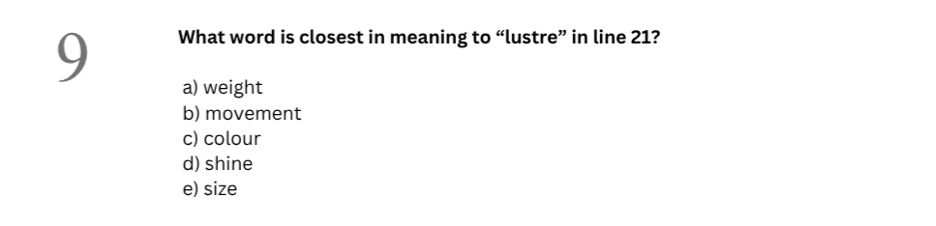
Vocabulary in context

Your son must work out what a word means in a specific sentence, often with several plausible options. This could involve synonyms, antonyms or related phrases.

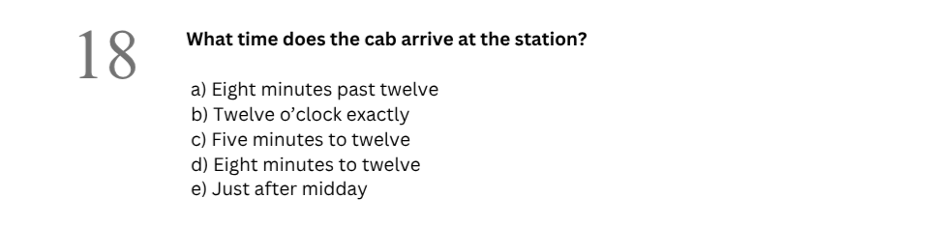
Literal understanding

Picking out specific details or facts from the passage.

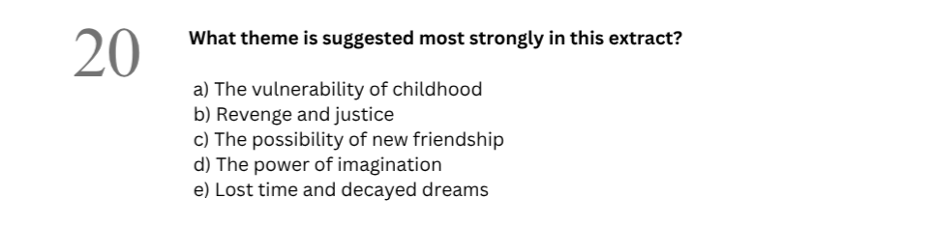
Inference

Reading between the lines to understand feelings, tone or hidden meaning. Your son may also have to comment on the overall atmosphere or authorial intentions behind paragraphs or the passage as a whole.

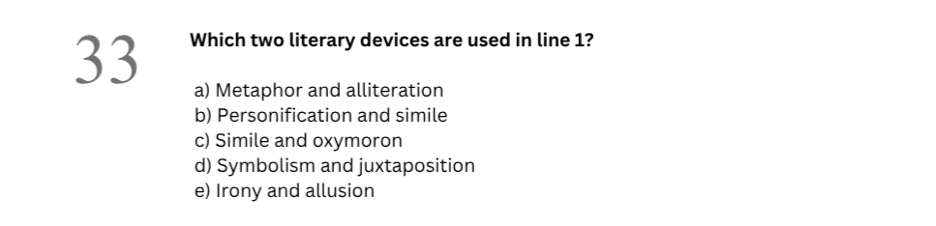
Author’s choices

Explaining why a word, phrase, or sentence structure has been used. Your son may also have to select the correct literary device (i.e. metaphors, similes or juxtaposition).

Word classes

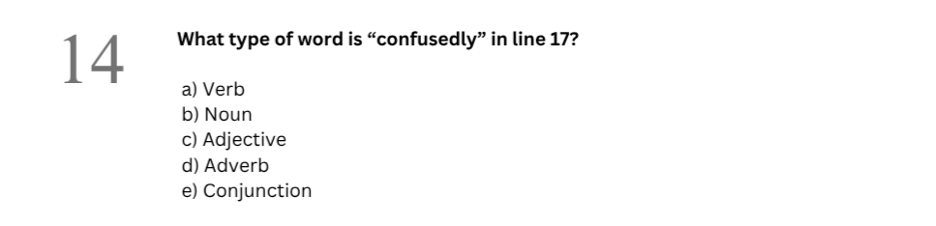
Testing grammar knowledge and word classes in context. For instance, asking whether a word is being used as a noun, verb, pronoun, adjective, determiner, conjunction or adverb. This links SPaG skills into comprehension, showing whether your son can interpret how language works in practice.

Unlike SPaG, comprehension doesn’t always rely on fixed rules. Success here comes from experience, wide reading, and regular practice with texts at the right level.

How to Improve 11+ Comprehension Skills

Comprehension is often the part of the 11 Plus that parents find hardest to support at home. With SPaG, there are clear rules. But comprehension feels fuzzier. More about “gut feeling” and less about ticking boxes. That’s why some children struggle: they can read fluently, but when asked, “Why did the character do this?” or “What does this word mean in the context of this sentence?” they’re unsure.

The truth is, comprehension can be improved, but it has to be taught as an active process. Many children fall into passive reading, where their eyes skim the text without processing it. The goal is training your child to slow down, notice details, and think critically.

How do you fix poor comprehension?

The best way to improve weak comprehension is to make reading more interactive. Children need to learn to engage with a text, not just finish it. Here are some of the best practical strategies:

  • Read aloud together: This slows children down and helps them hear how punctuation shapes meaning. If your son races through in his head, he’s likely to miss details.
  • Pause for discussion: Stop every few paragraphs and ask questions like, “Why do you think the character reacted that way?” or “How does this word choice change the mood?” These conversations turn reading into analysis without feeling like a test.
  • Encourage prediction: Pause mid-way through and ask, “What do you think will happen next?” This helps children learn to pick up on foreshadowing, tone, and authorial hints.
  • Make links: Ask your child if the scene reminds them of another book, film, or even real-life experience. Linking texts to wider knowledge strengthens recall and confidence.
  • Keep it short: Practise with just a single paragraph, asking about tone, mood, word meanings, or figurative language — to build skills without overwhelming your child.

By making reading interactive, you’re training your son to think about the why behind a passage, not just “getting through” it.

Related reading: How to improve reading speed and comprehension

How to pass 11+ comprehension?

At this point, it’s worth remembering: there’s no formal pass mark at QE Boys. Places go to the highest-scoring candidates, so every comprehension mark matters. Passing isn’t about meeting an arbitrary threshold. It’s about building strategies to consistently pick the best answer, even under pressure.

To help your son shine in the 11+, here are a few more high-level comprehension strategies:

  • Annotate the passage: Teach your son to underline key words, circle tricky vocabulary, and jot down quick reminders in the margin. Active annotation prevents skimming and builds focus.
  • Practise inference: Many questions won’t ask directly, “How is the character feeling?” Instead, they’ll hint at tone, action, or subtle details. Encourage your child to look for clues that aren’t stated outright.
  • Work under timed conditions: Comprehension is as much about stamina as skill. Use our QE Boys 11 Plus practice papers with two passages back-to-back, so your son learns to manage his time.
  • Review answers thoroughly: Don’t just tick and move on. Sit down and discuss why the right answer was correct — and just as importantly, why the others weren’t. That’s why we include a full glossary and complete, parent-friendly explanations with every exam paper. This process teaches your child how examiners think.

But in short, the key to strong comprehension is active engagement. Children who learn to deeply focus, question and interact with a text will always outperform those who read and guess. With regular practice (and the right balance of strategies, timed papers and careful review) your son can go into the exam confident he has the tools to tackle even the trickiest passages.

Achieve Learning: Helping Your Child Succeed in the QE Boys 11+

The QE Boys 11 Plus English exam doesn’t give parents or children the option of choosing between SPaG and comprehension. Both are tested. Both matter. And both are difficult in their own ways.

SPaG is fast-paced, rule-driven and unforgiving. Comprehension is longer, more interpretive and dependent on vocabulary. Together, they form one of the toughest English entrance exams in the country.

At Achieve Learning, we’ve built resources tailored specifically for QE Boys:

  • SPaG-only packs for focused technical practice. With a bonus “Word Class” section.
  • Full-length QE Boys 11 Plus practice papers (two comprehension passages + SPaG) for realistic preparation.
  • Mock exams, academic consultancy and tuition to build confidence ahead of exam day.

Explore our full range of QE Boys 11 Plus practice papers today, and help your child achieve their full potential.

SPaG vs Comprehension in the QE Boys 11+: What’s the Difference? Read More »

Top SPaG Mistakes in the QE Boys English 11+ Exam (and How to Avoid Them)

Preparing for the Queen Elizabeth’s School (QE Boys) entrance exam is one of the most daunting challenges a family will face in their educational journey. With up to 4,000 applicants competing for fewer than 200 places, every mark can make the difference between a place and a near miss. 

With so many variables, English is often the hardest section to prepare for. But what sometimes comes as a surprise is just how heavily QE weighs SPaG (that’s spelling, punctuation and grammar).

It’s tempting to think of SPaG as a “secondary” skill compared to comprehension. After all, many bright boys are natural readers who can interpret texts well. But at QE Boys, the SPaG section is not just a bolt-on. It’s a rigorous, stand-alone test of precision.

In this article, we walk through everything parents need to know about the SPaG element of the QE Boys 11+ English exam. We’ll explain the paper format, how grammar is tested, common mistakes and crucially, how to help your son avoid them.

What’s the format of the QE Boys English 11+ Paper?

The QE Boys English 11 Plus paper is split into two main parts: Comprehension and SPaG. Children initially tackle two passages with around 15–20 questions each, testing close reading and inference. The SPaG section then has three parts: spotting spelling mistakes, identifying punctuation errors, and completing sentences with the most suitable word or phrase.
In total, boys have 45-50 minutes to complete the paper. Here’s the format in a little more detail…

  • Comprehension: two extracts, usually one taken from a classic novel (Dickens, Hardy or Austen are favourites) and another from a modern or non-fiction source. 
  • Comprehension questions are extremely detailed and test inference, vocabulary, figurative language and the ability to interpret subtle nuances. 
  • Each extract has 15-20 questions. So roughly 35 comprehension questions in total.
  • SPaG (Spelling, Punctuation and Grammar): a shorter but equally challenging section, broken into three sub-sections. Each section has roughly 10 questions each, so 30 questions in total.
  • Spelling: about ten questions testing trickier words, irregular patterns and occasionally archaic terms. “Spot the mistake” format.
  • Punctuation: ten questions spotting punctuation mistakes, from misplaced commas to incorrect semicolons and dialogue punctuation. Again, multiple-choice “spot the mistake” format.
  • Sentence completion/grammar: another ten questions requiring students to select the grammatically correct or most literarily appropriate option to complete a sentence.

In total, SPaG is worth nearly half of the English paper, meaning that a child who neglects it is almost guaranteed to lose out on vital marks.

What also makes QE unique is the level of precision. While other selective exams may stick to Year 6 grammar, QE Boys questions push far beyond — often into skills more commonly taught late into GCSE English.

How is SPaG tested in the QE Boys 11 Plus exam?

Unlike most grammar school 11+ exams, QE Boys don’t test SPaG through creative writing. Instead, they use short, targeted questions that test rules, application and accuracy. 

Here are the main ways this shows up:

  • Word class identification: Although not a section in its own right, students are often asked to identify the grammatical role of a word in a particular sentence as part of the comprehension task. This requires not just knowing word class definitions but understanding context.
  • Clause punctuation: Examiners often present complex sentences and ask students to identify the mistake (and remember, the sentence might be correct too, which can catch some students out). Subordinate clauses, fronted adverbials and embedded phrases are favourites.
  • Verb tense control: Children must be able to spot errors in tense consistency, often across longer sentences. This most often appears as part of the Sentence Completion section, helping boys choose the correct option to finish the sentence.
  • Apostrophe use: Not just the basics, but also tricky singular and plural possessives (including words already ending with an “s”) and contractions. For instance, knowing when to use: who’s or whose…
  • Sentence construction: Again, as part of the punctuation section, questions check whether students can recognise a complete sentence versus a fragment, or spot a run-on sentence that needs correcting.

The key point: SPaG at QE is about flexibility and application. Knowing a definition is never enough. Your child must be able to apply rules in pressured, unfamiliar contexts.

What are the most common SPaG mistakes in the QE exam?

The QE Boys English paper is one of the toughest parts of the 11+, not just because of the content but because of the pace. With around 65 questions to answer in only 45 minutes (that’s about 40 seconds per question), it’s no surprise that even the most capable boys slip up. In fact, the exam is designed to push them under time pressure, so small errors are almost inevitable.

The good news is that these mistakes often follow familiar patterns. Over the years, we’ve seen the same issues crop up, and once children know what to look out for, they can quickly learn how to avoid them. 

Below, we’ve outlined the most common errors, why they happen and strategies for overcoming them. All the examples are taken from Achieve Learning practice papers (which exactly mirror the real test), so your child can build accuracy, confidence and speed before the big day.

1. Misidentifying word classes

Why it happens: Children often learn word class definitions by rote (“a verb is a doing word”), but struggle when words shift function. English is full of words that can be both nouns and verbs, or adjectives and adverbs.

For example:

  • “The storm caused the river to flood.” (flood = verb)
  • “The flood swept through the valley.” (flood = noun)

Common mistake: A student calls flood a verb in both sentences, misidentifying the word class.

How to avoid it:

  • Practise with “chameleon words” (e.g. light, play, run, watch). Use them in different sentences and contexts.
  • Encourage your child to ask: What job is the word doing here?
  • Don’t just focus on “common” KS2 word classes like nouns, pronouns, verbs and adjectives. Remember connectives, interjections, adverbs, determiners, imperatives and prepositions too!
  • Use Achieve Learning’s SPaG glossaries, which provide multiple examples for each word class in context.

Have a go… the sentence in question is: “Mr. Bingley was good-looking and gentlemanlike: he had a pleasant countenance, and easy, unaffected manners.”

2. Incorrect punctuation in clauses

Why it happens: Many children understand the basics of punctuation but haven’t practised applying it to complex clauses. The QE exam loves sentences that include subordinating conjunctions (although, because, if), fronted adverbials and relative clauses (who, which, that).

For example: “Although the rain poured down he carried on walking.”

Common mistake: Writing this without a comma. The sentence should actually read: “Although the rain poured down, he carried on walking.”

How to avoid it:

  • Teach children to read aloud and listen for pauses.
  • Revise how commas are used with main and subordinate clauses.
  • Practise editing poorly punctuated sentences with short, sharp bursts of SPaG-only practice papers.

Have a go… try spotting the mistake:

3. Verb tense inconsistencies

Why it happens: Under pressure, children may rush and slip between tenses. This is especially common in longer, multi-clause sentences. It’s most relevant for the Sentence Completion section, where boys must rapidly choose between multiple, seemingly plausible options.

For example:

  • On first reading, “She grabbed her coat and walks quickly to the bus stop.” might appear correct. However, in this case, the student has mixed past tense (grabbed) with present (walks).
  • The sentence should read: “She grabbed her coat and walked quickly to the bus stop.”

How to avoid it:

  • Build proofreading time into exam practice (especially the sentence completion section).
  • Use drills where children deliberately correct mixed tenses.
  • Link this to 11+ reading (building both speed and understanding). Ask them to spot tense shifts in books.

Have a go… which option best completes the sentence?

4. Overuse, misuse or missing apostrophes

Why it happens: Apostrophes are taught early but rarely mastered. Under exam stress, many boys either omit them or sprinkle them in where they don’t belong.

For example:

  • “The boys coat was torn.” (boy’s coat)
  • “The dogs tail wagged.” (dog’s tail)
  • “The dogs’ tails wagged.” (plural possessive)

Common mistake: Not spotting missing apostrophes, ones added where they don’t belong, or forgetting special cases (like singular words ending in s or confusing “its” with “it’s”). These slip-ups are small but cost marks because examiners are looking for precision.

How to avoid it:

  • Teach the “ownership test” — who owns what?
  • Practise plural vs. singular possessives. Don’t forget rules for words that already end in “s” too.
  • Avoid the trap of overusing apostrophes where none are needed (its vs it’s or who’s vs whose, for instance).

Have a go… spot the punctuation mistake:

5. Sentences with no mistake

Why it happens: In both the spelling and punctuation sections, not every sentence has an error. Because boys are told to “spot the mistake,” they often assume there must be one. This can lead to wasted time or even changing a correct answer into a wrong one.

For example: “The antique lanterns flickered eerily against the stone walls.” There’s no mistake here. All the spellings are right, even though words like “flickered”, “eerily” and “antique” may look unusual under pressure.

How to avoid it: Mix practice with both correct and incorrect sentences so boys get used to the idea that sometimes the best option is “no mistake.” Encourage them to trust their instincts. If nothing looks wrong, move on. This saves time and avoids the trap of “fixing” what was fine all along.

Have a go… is there a spelling mistake in this sentence?

6. Misusing colons and semicolons

Why it happens: Colons and semicolons are some of the trickiest punctuation marks to master — even university students often get them wrong. They’re rarely taught in detail at primary school, yet the QE exam expects boys to know the difference and use them under time pressure.

For example: “She enjoyed three hobbies; painting, reading and swimming.” Here, a semicolon is incorrectly used to introduce a list. A colon would be better (i.e.  “She enjoyed three hobbies: painting, reading, and swimming.”)

How to avoid it:

  • Teach the clear difference: colons introduce information (lists, explanations), while semicolons link two related sentences that could stand on their own.
  • Practise spotting and correcting examples in real sentences so children learn to apply the rule instinctively.

Have a go… spot the punctuation mistake:

Struggling with any of these answers? All our QE Boys English papers (both full-length and SPaG-only) include parent-friendly answers and explanations, alongside a complete glossary of English terminology.

Which grammar topics should my child revise for the QE 11+?

The SPaG section of the QE Boys exam casts a wide net, and preparation can feel daunting. But the good news is that the test draws on recurring patterns, and by concentrating on a handful of core grammar topics (such as word classes, verb tenses and punctuation marks), you can cover the vast majority of what comes up year after year. 

Think of it less as learning every rule in the book, and more about sharpening the areas that matter most under timed conditions.

Revision checklist:

  • Word classes in different contexts: Don’t stop at the basic five. Make sure your child recognises determiners, conjunctions, and prepositions, and can explain their role in a sentence. Practise “tricky words” that can belong to more than one class, like light, watch, play and fast.
  • Punctuation: Start with commas in clauses, but don’t ignore higher-level marks like colons and semicolons. Dialogue punctuation is also extremely common in QE exams, and children need to know exactly where to place inverted commas, commas and capital letters.
  • Verb tenses: Beyond simple past and present, revise present perfect and past perfect forms. QE likes to test whether children can spot subtle shifts between these.
  • Sentence construction: Teach children to recognise fragments and run-ons. A comma splice or a run-on sentence joined only by “and” is a common QE trap.
  • Homophones and tricky spellings: Words like whose/who’s, its/it’s, stationary/stationery, and practice/practise are favourites. Common prefixes and suffixes are also helpful. Keep revisiting them.
  • Vocabulary through reading: Exposure to rich, challenging texts is the single best way to strengthen vocabulary. Encourage your son to read classics (as well as modern texts) aloud — it trains both his ear for grammar and his eye for punctuation.

Practical revision strategies:

  • Break revision into short bursts (10–15 minutes on punctuation or homophones, incorporating Achieve Learning SPaG-only papers). This avoids overload and keeps knowledge fresh.
  • Balance with longer timed practices. Achieve Learning’s full-length papers mimic the pressure and style of the real exam, building exam stamina.
  • Encourage your child to read aloud. This brings punctuation and grammar to life. For example, if they naturally pause while reading but there’s no comma in the text, ask them why.

Considering more top London schools? Don’t miss our QE comparisons with Latymer, Watford Grammar, Tiffin Boys, Dame Alice Owen’s, St Olave’s and Habs Boys.

QE Boys English 11+ Exam: QuickFire Questions

Parents often have the same burning questions about the QE Boys English paper, and for good reason. With the exam’s reputation for rigour, every detail matters — from how punctuation is tested to how much time should be spent on revision. 

To wrap up, we’ve pulled together clear, straightforward answers to the most common QE English questions.

Are there any SPaG questions unique to the QE paper?

No. There aren’t any SPaG sections unique to the QE paper. The exam is divided into three SPaG sections: spelling, punctuation, and sentence completion, and you’ll find similar questions on most GL Assessment familiarisation materials.

However, the QE SPaG questions are harder than most other 11+ exams. What sets QE apart is the complexity of the sentences, the level of vocabulary, and the expectation of near-perfect accuracy.

Is punctuation heavily tested in the QE 11 Plus English paper?

Yes. Punctuation carries equal weight alongside spelling and sentence completion (all with around 10 questions each). It’s not just about spotting missing commas or capital letters. Expect tougher challenges, such as correcting dialogue punctuation, using colons correctly, and distinguishing between semicolons and commas. This is where precision really matters.

What’s the word class section in the QE English exam?

There isn’t a dedicated “word class” section on the QE English exam, but these questions often appear in comprehension. For example: “What word class is light as used in line 14?”

This can be a real trap. In one context, light might be a noun (“The light was dim”), in another an adjective (“The feather was light”), and in another a verb (“Please light the candle”). Children need to look at the function, not just the word.

How much time should my child spend on SPaG revision?

We recommend two to three short sessions per week (10–15 minutes each), focused on accuracy. 

Combine these with regular exam practice papers under timed conditions. SPaG isn’t something you “learn once and forget.” It’s about constant refresh and reinforcement, so that the rules become second nature.

What score is needed in the SPaG section to pass the QE Boys 11+?

There is no fixed pass mark for the SPaG section (or the QE 11+ exam as a whole), because places are awarded on rank order. With around 180 Year 7 places up for grabs, only the top scoring 180 boys secure a place. It’s that simple.
But realistically, aim for 90%+ accuracy in SPaG. With 4,000 applicants chasing just 180 places, only the top 4–5% secure a spot. Even a handful of lost marks can make the difference.

Can strong comprehension make up for weak SPaG in the QE exam?

Unfortunately, no. In our experience, boys who neglect SPaG almost always fall short, even if they are excellent readers. 

QE Boys looks for all-round ability, and the exam is designed so that weak grammar will be exposed. With competition so high, students simply can’t afford to have a “weaker” or “stronger” section. Think of SPaG as “easy marks” if your child is well-prepared, but “painful losses” if it’s ignored.

Where can I find realistic practice papers for QE Boys?

At Achieve Learning, we’ve created realistic practice papers specifically tailored to mimic the QE Boys exam format. They include answers, full explanations and glossaries so children (and parents!) can learn from mistakes as you go.

Our materials are designed to feel just like the real thing. We provide full-length English papers that combine classic and modern comprehension texts with SPaG sections. We also offer SPaG-only papers (with bonus word class sections) focusing on tricky grammar and punctuation under time pressure. 

This balance means your child can build stamina for the full exam while also targeting specific weak spots in more manageable sessions.

Achieve Learning: Helping your child prepare for QE Boys

The QE Boys 11+ exam isn’t just about knowledge; it’s about precision, resilience and the ability to perform under pressure. SPaG may look like a smaller part of the English paper, but in reality, it’s often where places are won or lost.

At Achieve Learning, we’ve developed a range of QE 11+ resources that go beyond worksheets. Our bespoke SPaG practice papers are modelled directly on the QE format, complete with worked solutions and glossaries. Our full-length English papers also replicate the pacing, style and difficulty of the real exam, helping your son learn to manage his time while maintaining accuracy.

Looking for more help?

We also offer 11+ tuition, academic consultancy, and realistic mock exams designed to take the guesswork out of preparation. With the right guidance, your child can build the accuracy, confidence and stamina to succeed.

Top SPaG Mistakes in the QE Boys English 11+ Exam (and How to Avoid Them) Read More »

QE Boys vs Wilson’s School: Which Top Grammar Is Best for Your Son?

Last updated: July 2026 — updated with current entry data for QE Boys and Wilson’s School.

If you’ve been researching grammar schools in England, two names will almost certainly have come up again and again: Queen Elizabeth’s School, Barnet (QE Boys) and Wilson’s School, Sutton. These two schools consistently top national league tables, often trading places in the rankings from year to year, widely regarded as the best boys’ grammar schools in the country.

For parents, the choice between them is both exciting and daunting. Competition is fierce, entry standards are sky-high, and securing a place at either requires significant preparation. But beyond the numbers, each school has its own culture, history, and ethos — and the right fit will depend as much on your son’s personality as on his academic ability.

In this guide, we explore what makes each school unique, answer parent FAQs, and help you decide which is best for your son.

QE Boys vs Wilson’s: Introducing the Two Schools

Founded in 1573 by royal charter from Queen Elizabeth I, QE Boys has a long tradition of academic excellence and ambition. Its Barnet location makes it popular with North London and Hertfordshire families, though it accepts boys from all over thanks to its no-catchment policy. Wilson’s has a similarly illustrious history, founded in 1615. The school was originally based in Camberwell and later moved to its current site in Sutton, South London.

QE Boys is known for its formal, structured ethos, where homework is set daily, lessons move at a fast pace, and academic achievement is celebrated. At the same time, it has thriving music, drama, debating and sports programmes, with many boys representing the school nationally. Its Oxbridge record is one of the strongest in the country, with 40–50 offers most years.

Like QE, Wilson’s is a fully selective grammar school for boys, and it shares the same reputation for academic rigour. What sets Wilson’s apart, however, is its strong emphasis on pastoral care, co-curricular opportunities, and sporting success. Indeed, the school has two specialist entry pathways, for musical or footballing excellence.

As such, Wilson’s combines the traditional feel of a historic grammar with a more rounded, balanced approach to education. Oxbridge outcomes are excellent too (around 30-40 offers), though the school is equally proud of students securing places at top Russell Group universities and pursuing diverse pathways.

Quick Comparison Table: QE Boys vs Wilson’s School

Feature Queen Elizabeth’s School 

(QE Boys)

Wilson’s School
Location Queen’s Road, Barnet, Hertfordshire, EN5 4DQ Mollison Drive, Wallington, Sutton, SM6 9JW
Single Sex or Co-Ed Boys only Boys only
School Size ~1,300 pupils ~1,300 pupils
Sixth Form Size ~290 students; boys only

No additional sixth form entry. Often a Grade 7 or above is required to progress from GCSE.

~360 students; boys only. Most progress internally, but small number of external places available.
Selective Status Fully selective grammar school Fully selective grammar school
Catchment Area No fixed catchment; places awarded strictly by performance No fixed catchment. Distance only considered in a tie-break between two standardised 11+ scores, when awarding last places.
Competition Extremely high (over 3,500 applicants for ~180 places) Very high (approx. 1,200 second-stage applicants for ~185 places)
Entry Requirements 11+ entrance exam (GL Assessment) with top scores only Two-stage Sutton Selective Eligibility Test (SET) plus second-stage exam (School-set)
Exam Format GL Assessment (Single-Round English and Maths papers, Multiple Choice) SET Stage One: Maths & English (multiple-choice). Stage Two: longer written English & Maths papers.
Reputation Traditional, disciplined, academically elite Balanced, academic, strong pastoral and sporting ethos
Ranking Regularly ranked among the top five grammars in the UK across multiple League Tables Regularly ranked among the top five grammars in the UK; named “State Secondary School of the Year” by The Sunday Times in 2024
Ofsted Rating Outstanding in all areas Outstanding in all areas
Oxbridge Success High (35–45 offers most years)

44 Oxbridge offers in 2025/26 — 202 over four years.

In 2024, a staggering 13 students attended Oxford with 40 going on to Cambridge.

Around 30-40 Oxbridge offers most years.
Pupil Transport Well connected to Northern Line and local bus routes, as well as 10 dedicated school coach services Purely public transport: served by Sutton and Croydon rail/bus routes (train to either Wallington or Waddon stations)
Fees Free (state-funded) Free (state-funded)
Religious Affiliation None None


Parent FAQs: Your Questions Answered

Choosing between QE Boys and Wilson’s isn’t just about league tables — it’s about matching your son’s personality and needs to each school’s culture. Here’s a deeper look at parents’ most common questions, with added insights into what daily life is actually like.

Wilson’s School

Is Wilson’s School private?

No. Wilson’s is a state-funded selective grammar school, which means there are no tuition fees. Like many top grammars, the school welcomes voluntary donations from parents, but these are optional and never a condition of entry.

What makes Wilson’s stand out is how much it rivals (and often outperforms) leading independent schools, without the £25k+ fees. Parents describe it as a “hidden gem” — the grounds are unusually spacious for a London school, with football pitches and sports facilities that even private schools would envy. 

The boys wear blazers and ties, and the school has a proud sense of tradition, but the ethos is known for being a little friendlier and less rigid than some other highly academic grammars.

Is Wilson’s the best school?

Many would say yes, or certainly one of the very best. Wilson’s regularly ranks in the top five state schools in the UK (currently third) and was named State Secondary School of the Year 2024 by The Sunday Times. It has also been recognised as one of the happiest schools in the country — a title backed up by the fact that 99% of Wilson’s parents (over a five-year period) said their child is happy there.

Exam results speak for themselves. At GCSE, around 62% of grades are at Level 9, and over 94% are at 7–9. At A Level, almost 40% of grades are A*, with more than 93% at A*–B, and a 100% pass rate. Oxbridge success is also striking, with a recent year seeing 37 boys receiving offers.

But being “the best” depends on what you value. Wilson’s is academically ambitious, but it doesn’t feel like an exam factory. Its football programme is nationally respected, and music, house competitions and a wide co-curricular offer give boys a balance alongside their studies. Parents often say the school has a strong sense of community and independence, helping boys grow into responsible, capable young men who enjoy their school years.

What rank is Wilson’s School?

Wilson’s consistently sits in the very top tier of grammar schools. In the Sunday Times Parent Power rankings, it’s currently third nationally, just behind QE Boys and Henrietta Barnett.

Ofsted also rated the school Outstanding in every category, praising both teaching quality and the positive school culture. Inspectors noted that boys are focused and ambitious in lessons, but also genuinely enjoy school life. 

On a day-to-day level, Wilson’s feels disciplined and purposeful, but not intimidating. The atmosphere at break is lively, with plenty of laughter and a huge range of clubs, music groups, and sports teams to keep boys engaged.

How hard is it to get into Wilson’s School?

In short, very hard. But not impossible with the right preparation! Wilson’s is one of the most oversubscribed schools in the country. Each year, around 6,000 boys sit the Sutton Selective Eligibility Test (SET), which is shared by six local grammar schools. From this pool, about 1,200 boys are invited to Wilson’s second stage, giving roughly a 15% chance of progression at that point.

The second-stage exams are tougher and more in-depth, requiring extended writing in English and multi-step Maths problem-solving. Unlike some 11+ exams, there’s no verbal or non-verbal reasoning — but the written papers demand focus, resilience, and the ability to think creatively under timed conditions. 

Parents often comment that the process feels very fair: if your son earns a place, it’s because he genuinely performed at the very top on both days.

How do I get into Wilson’s School?

To get into Wilson’s School, there are three main admission routes:

  • Stage One: The Sutton Selective Eligibility Test (SET). This consists of two multiple-choice exams (English and Maths). Each lasts 40–50 minutes. The test is created by the schools themselves and is sat by thousands of boys across Sutton and South London. Verbal and non-verbal reasoning are not included.
  • Stage Two: Written papers. Boys who meet the SET threshold (around 212+ in recent years) are invited to sit longer, open-ended exams. English involves extended comprehension and creative writing (which means figurative language, advanced vocabulary and SPaG are all important), while Maths focuses on multi-step problem-solving. These are shared with Sutton Grammar and Wallington County Grammar.
  • Aptitude routes: Wilson’s also offers a small number of specialist places each year (18 in total — 9 music and 9 football). These are awarded through separate aptitude assessments.

In practice, this means preparation needs to cover both speed and accuracy (for multiple-choice) and depth of reasoning (for written work). The school doesn’t release past papers, though sample questions for the English and Maths SET are available. 

Stage Two papers are based on the Key Stage 2 curriculum (no sample papers available), but at a very high level. As a result, many parents use other high-level grammar practice papers (particularly QE Boys practice material) to build the right skills.

What’s the pass mark for Wilson’s School?

There isn’t a fixed pass mark for Wilson’s School. Each year, after the tests are marked and standardised, participating schools set their own thresholds. However, in recent years:

  • Stage One: a minimum standardised score of around 212 has been required to progress.
  • Stage Two: results from the written exams are combined with Stage One to produce a final standardised score. The minimum combined score has often been around 480.

A good benchmark is that boys consistently scoring 85–90% or above on high-level practice papers are in the competitive range. However, Stage Two often tips the balance. Boys who can write fluently, think creatively and problem-solve under pressure often edge ahead. This is very much in keeping with Wilson’s ethos of rewarding all-round academic strength rather than just exam technique.

Queen Elizabeth’s School (QE Boys)

What rank is QE Boys?

QE Boys is frequently ranked as the top-performing state school in England. For several years, it has taken first place in the Sunday Times Parent Power rankings, and it regularly tops national A Level league tables. In the Sunday Times Parent Power Guide 2026, QE Boys won five national and regional awards — including State Secondary School of the Year for the fourth time — and tops the Sunday Times State School rankings for combined GCSE and A Level results.

Backing up these impressive rankings are raw results. Almost every boy achieves top grades (think 96% grades 9-7 in GCSE and 98% A*-B at A Level), and Oxbridge success is extremely high. Last year, 40+ boys went on to Cambridge alone.

As such, the school’s reputation is one of academic intensity and elite performance. Parents often see QE as the “gold standard” of grammar schools: incredibly demanding, but also incredibly rewarding for boys who thrive in that environment.

Want to learn how QE Boys stacks up against other top schools? Explore our in-depth comparisons with Latymer, Watford Grammar, Tiffin Boys, Dame Alice Owen’s, St Olave’s and Habs Boys.

Does QE Boys have a catchment area?

No. QE Boys has no catchment area, no sibling policy, and no priority routes of any kind. It doesn’t matter where you live — every boy is competing on exam performance alone. This means the intake is hugely diverse, with boys coming from Barnet, Hertfordshire, Enfield, North London, and further afield. 

Dedicated coaches run from multiple areas, but many boys have long commutes, which can make the already heavy workload harder to juggle. The lack of catchment is both a blessing and a challenge: it gives all families a chance, but it also means you’re up against thousands of applicants from across the country.

How many places are in QE Boys?

Around 180–190 boys are admitted into QE’s Year 7 each year. With over 3,500 applicants, the odds are very tough. Fewer than 1 in 18 boys are successful. 

The sheer volume of applications makes it one of the hardest schools in the country to get into. Parents should expect the competition to be relentless, with the bar for entry higher than almost anywhere else. 

That said, once boys are in, QE offers a structured yet supportive environment where high performance is the norm. Lessons are fast-paced, homework is frequent and boys are expected to be self-motivated. Nonetheless, there’s a strong focus on pastoral care alongside a peer mentoring scheme. Many thrive on this driven yet encouraging atmosphere, finding satisfaction among like-minded peers.

Is QE Boys selective?

Yes, and to an extreme degree. QE Boys is one of the most selective schools in the UK. Admission is purely based on the 11+ exam (including multiple-choice English and Maths papers), with no consideration given to location or family background. As such, the expectation is that only the very top applicants will be offered a place. 

For boys, this means being not just good, but outstanding, across English and Maths. For parents, it means preparation is key. Regular use of realistic practice papers, timed mock exams and building skills alongside stamina are all essential. Day-to-day, the selectivity translates into an atmosphere where almost every boy is high-achieving, which creates both opportunities and pressures.

What are the entry requirements for QE?

At 11+, boys sit two multiple-choice GL Assessment papers (English and Maths), both lasting around 45 – 50 minutes, on the same day. There’s no second stage: everything rides on those two tests. To win a place, boys need to be in roughly the top 4–5% of applicants.

  • In English, students face two comprehension passages as well as a challenging SPaG section. Around 60-65 questions.
  • In Maths, students face a single paper (usually progressing in difficulty). Around 60 questions.

At Sixth Form, requirements are also strict (even for internal candidates). Pupils must have at least seven GCSEs at grade 7 or above, and many subjects require a grade 8 or 9 to continue. For example, boys wanting to study Sciences or Maths at A Level are expected to already have top grades in those subjects. All these Sixth Form places are taken by existing pupils.

What’s the pass mark for the QE 11+ exam?

There’s no fixed pass mark for the QE Boys 11+ exam. Instead, candidates are ranked, and places offered from the top down until all are filled. 

In recent years, the lowest successful combined score has been in the 220–230 range after standardisation. For parents, this translates to needing consistent 90%+ scores on high-level practice materials

Unlike Wilson’s, QE doesn’t have a second stage, which means boys have only one chance to prove themselves. The pressure is intense, but for the boys who succeed, it’s the start of an academic journey in one of the UK’s most prestigious schools.

So… Which School Is Better?

The truth is, there’s no single answer. It depends on your son’s personality, ambitions, and what kind of environment he will thrive in. Both QE Boys and Wilson’s are exceptional, but they offer slightly different flavours of excellence.

QE Boys may be the better choice if:

  • You want a fee-free education that outperforms almost every private school in the country.
  • Your son thrives in a high-pressure, academically competitive environment where expectations are sky-high.
  • He is aiming for Oxbridge, medicine, or another highly selective pathway.
  • Your family can commit to the demanding preparation required for the 11+, and the commute is manageable.
  • You like the idea of a school culture that is structured, disciplined, and laser-focused on results.

Wilson’s may be the better choice if:

  • You want an equally strong academic education but with a slightly more balanced, all-round school feel.
  • Your son would enjoy a school with strong traditions but also big on sport, music and house activities.
  • You like the idea of a two-stage admissions process that rewards both sharp exam technique and deeper written skills.
  • Your family already lives near Sutton, making the journey to school easier and less tiring.
  • You want a school with excellent Oxbridge and Russell Group outcomes, but where boys also have space to explore other talents and interests.

In reality, both schools are right at the very top of the grammar system. The decision will come down to location, exam performance, and where your son feels most at home — whether that’s the highly disciplined, almost “private-school” atmosphere of QE, or the more rounded but equally ambitious community at Wilson’s.

For more parent-friendly breakdowns, catchment tips and school rankings across North London and Hertfordshire, don’t miss our guides to: 

Preparing your son for the QE Boys 11+ English exam?

Of all the subjects tested in the QE Boys 11+ exam, English is the paper most candidates find hardest to prepare for — two demanding comprehension passages, classical texts most ten-year-olds have never encountered, and a rigorous SPaG section under strict time pressure.

Our QE Boys English practice paper packs are written specifically for Queen Elizabeth’s School — not adapted from generic GL materials. Each pack includes two full-length comprehension papers and a bonus SPaG paper, calibrated to match the exact difficulty and question style of the real exam.

Private 11+ tutors and mock exam tutors charge £50-80 per session. These packs give your child the equivalent of a full exam session with expert materials, detailed answers and vocabulary support — for £19.99.

QE Boys English Practice Pack — Classic Texts Set 1 — £19.99

QE Boys English Practice Pack — Classic Texts Set 2 — £19.99

QE Boys English Practice Pack — Mixed Genres Set 1 — £19.99

QE Boys English Practice Pack — Mixed Genres Set 2 — £19.99

Created by 11+ content specialists with over 22 years of experience preparing children for Queen Elizabeth’s School.

Frequently Asked Questions 


Is Wilson’s School harder to get into than QE Boys?
Both are extremely competitive but through different processes. QE Boys has over 3,500 applicants for 180 places in a single-round exam. Wilson’s has around 6,000 boys sitting the initial SET test, with roughly 1,200 progressing to Stage Two for around 185 places. Wilson’s two-stage process means strong performance is needed on two separate occasions, while QE Boys places everything on one exam day.

Can a North London family realistically apply to Wilson’s School?
Yes — unlike some South London grammars, Wilson’s has no catchment area, with distance only used as a tie-break for the final places. However, the practical commute from North London or Hertfordshire to Wallington in Sutton is substantial and worth considering carefully before committing to the demanding preparation and daily journey.

What is the Sutton Selective Eligibility Test (SET)?
The SET is a shared entrance test used by six grammar schools in the Sutton area, including Wilson’s, Sutton Grammar and Wallington County Grammar. Stage One is a multiple choice English and Maths test. Boys who meet the threshold — typically around 212 — are invited to Stage Two, which involves longer written papers in English and Maths.

Does Wilson’s School offer music or sports scholarships?
Yes. Wilson’s offers 18 specialist aptitude places each year — 9 for music and 9 for football — assessed through separate aptitude tests alongside the standard academic entry process. QE Boys does not offer any aptitude-based entry routes.

Which school has happier pupils — QE Boys or Wilson’s?
Wilson’s has specifically measured this — 99% of parents surveyed over a five-year period said their son is happy at the school, and it has been recognised as one of the happiest schools in the country. QE Boys does not publish comparable wellbeing data, though Ofsted has praised its pastoral care and peer mentoring scheme. Both schools are rated Outstanding for pupil wellbeing by Ofsted.

Is Wilson’s School as academically rigorous as QE Boys?
Very nearly. Wilson’s achieves around 94% of GCSE grades at 7-9 versus QE Boys’ 96%, and similar strength at A Level. Both schools are considered among the top five grammar schools in the country. QE Boys holds a slight edge in Oxbridge numbers — 44 offers in 2025/26 versus Wilson’s typical 30-40 — but the academic gap between the two schools is genuinely narrow.

QE Boys vs Wilson’s School: Which Top Grammar Is Best for Your Son? Read More »

How Hard is the QE Boys 11 Plus English Exam?

Last updated: July 2026 — updated with current QE Boys exam format and 2026 admissions data

If you’re looking into Queen Elizabeth’s School, Barnet, you probably already know that it’s one of the most competitive grammar schools in the UK. Year after year, QE Boys tops the league tables, sends dozens of students to Oxbridge, and produces some of the strongest GCSE and A Level results in the country. 

But with that prestige comes serious pressure. Especially when it comes to the 11 Plus English paper.

This guide has been updated for 2026 to reflect the current QE Boys exam format and admissions landscape.

The QE Boys entrance process can feel like a whirlwind of practice papers, tutoring, deadlines and decoding unfamiliar question types. It’s completely normal to wonder whether your child is up to the challenge, and how best to support them. 

In this blog, we’ll take you through exactly what makes the QE Boys 11+ English paper so difficult, how it compares to other grammar schools, and how to help your child prepare with confidence.

And if you’d like more hands-on support, we’ve also written a guide to the best QE Boys English practice papers — ideal for building skills and speed before the real thing.
Preparing for QE Boys?
Our QE-specific English practice papers are designed to closely reflect the format, pace and difficulty of the entrance exam.

View QE Boys Practice Papers →

What’s in the QE Boys English paper?

The QE Boys entrance exam is written by GL Assessment (the UK’s leading 11+ provider). But it’s not your average GL paper. It’s tougher. More time-pressured. And, crucially, it includes two comprehension texts (not just one). There’s also a demanding SPaG (spelling, punctuation and grammar) section to round things off.

So what’s the format for the QE Boys English exam?

Most years, children sit a single multiple-choice paper lasting around 50 minutes. There’s no creative writing task, and no room for waffling — it’s all about precision, reading speed and deep understanding. 

Here’s what the paper includes:

  • Two comprehension texts: one is often a literary classic, such as a passage from The Secret Garden, Treasure Island, or something similarly dense and descriptive. The second might be modern, and could even be non-fiction. But it still comes with high-level vocabulary and sophisticated structure.
  • Comprehension questions: roughly 32 to 35 in total, with a mix of question types. Children are asked to interpret character thoughts, make inferences, identify language techniques (such as similes, metaphors and more) and explain meaning in context. There may also be questions about tone, mood, structure or narrative perspective — designed to stretch even the strongest readers.
  • SPAG section: including challenging questions on spelling and punctuation, often in a “spot the mistake” format, where children identify the error within a sentence. There are also sentence completion questions, where students choose the correct word to complete a passage appropriately and grammatically.
  • Word class identification: subtle and time-pressured, such as picking the proper noun, adjective, connective or imperative verb in a complex sentence or spotting errors in tenses or agreement. They might feature as part of the comprehension or sentence completion sections.

In total, there are around 65 questions, all multiple choice. That means strong exam technique is essential. Children must learn to pace themselves, guess sensibly when needed, and avoid getting stuck on any single question.

Unlike some other grammar school exams, QE doesn’t assess creative writing or free-response answers in English. Instead, it’s a test of comprehension accuracy, grammatical knowledge and vocabulary depth — all under serious time pressure.

Put simply, this is a paper that rewards both natural ability and excellent preparation.

Why is the QE Boys English paper so difficult?

The QE Boys English paper is designed to stretch the very top end of ability. 

With over 3,500 applicants each year and only 180 places available, the school needs a way to distinguish between children who are not just capable, but exceptional under pressure. 

What makes it particularly challenging is the combination of high-level reading with intense time pressure. The comprehension texts are often adapted from Victorian or early twentieth-century novels. Think The Secret Garden, Great Expectations, Treasure Island, or similar. That means unfamiliar vocabulary, longer sentence structures and old-fashioned phrasing that most ten-year-olds aren’t used to.

Many children aren’t exposed to this type of language in school (or even as part of homeschooling), and it can come as a shock — especially when asked to interpret tone, emotion or motivation. It’s not just a matter of understanding what’s happening in the passage, but how it’s written and why.

Then there’s the SPAG section, which isn’t a gentle check-up on Key Stage 2 grammar. It expects a level of accuracy and understanding that goes beyond most primary classrooms — including things like subordinate clauses, fronted adverbials, comma splices and more. And because it’s all multiple choice, small errors can be costly.

Most challenging of all, though, is the timing. Two comprehensions and a SPAG section in under an hour is no small feat. Children need to read quickly without rushing, keep calm under pressure, and avoid getting bogged down on one tricky question. It’s as much about exam strategy as it is about English ability.

How many children apply to QE Boys — and how selective is it?

Each year, QE Boys receives between 3,500 and 4,000 applications for just 180 Year 7 places. There’s no catchment area and no appeals based on distance. Just pure test scores.

This level of selectivity makes the school one of the most academically competitive in the country. The bar is high. But the process is actually quite clear and simple. If your child scores in the top 5% of applicants across both papers (English and Maths), they’re in.

That’s why preparing well (and preparing smart) is so important. So let’s quickly chat about pitfalls to avoid, and what sets the QE Boys English exam apart from other 11 plus exams.

What are the most difficult parts of the QE English exam?

It’s easy to assume the hardest parts of the QE Boys English paper is the vocabulary or the speed. And yes, those are big factors. But even academically strong students (those reading above their age level or getting full marks in school comprehension tests) can stumble in this exam. 

Why? Because it’s designed to stretch and sift. It isn’t just testing English skills in isolation. It’s testing a child’s ability to cope under pressure, manage time and adapt quickly to unfamiliar material.

Here’s a breakdown of the most common pitfalls:

1. Limited exposure to literary texts

Modern childrens’ books tend to be fast-paced, dialogue-heavy, and straightforward in tone. That’s not what this exam uses. The passages often come from 19th- or early 20th-century fiction. They’re descriptive, formal and rich in old-fashioned vocabulary. 

If a child isn’t used to reading this style of writing, they’ll not only read slowly, but struggle picking-up on subtle meanings.

2. Inference-based questions

One of the most common areas for lost marks. Children may be able to recall what happened in the passage, but the questions go deeper than that. They might ask what a character is feeling (without it being stated directly), or how the writer’s tone changes from one paragraph to the next. 

Many students are used to “what happened?” style questions — but the QE paper wants “why did it happen, and how do you know?” With multiple-choice options that are all almost right, precision matters.

3. Applying grammar knowledge under pressure

In lessons, a child might confidently identify a noun or a conjunction. But in the heat of an exam, when options are subtle and time is ticking, that same knowledge becomes harder to apply. Many of the SPAG questions rely on recognising small differences, so intense attention to detail matters.

4. Timing and question management

There’s no room for dawdling. With around 65 questions in under an hour, students need a quick and steady pace — and avoid pauses on tricky sections. Some children waste too much time on the first comprehension, leaving the second rushed. Others fly through grammar and miss out on accuracy. 

All of these are fixable with practice. But they’re common pitfalls without it.

5. Vocabulary guesswork

There are often questions that ask children to select the closest meaning (or opposite meaning) of a word in context. Without a solid bank of synonyms and word roots, some children end up guessing — and many of the options are designed to be close in meaning. 

These questions require children to read sentences carefully, understand nuance and apply logic.

6. Not reading the question properly

It sounds basic, but it’s surprisingly common. Some questions ask about the whole passage; others are about a specific word or phrase. Some ask what the author implies, while others look for what’s explicitly stated. If a child is rushing or panicking, they might miss these distinctions. 

Misreading the question often leads to choosing the tempting but incorrect answer.

7. Second-passage fatigue

This one’s easy to underestimate. Many children start strong but lose focus during the second comprehension passage. The combination of time pressure, tiredness, and a denser text often means that attention drops — and so do marks. That’s why building stamina through regular practice with two-text papers is so valuable.

How does the QE Boys exam compare to other grammar schools?

It’s a question parents often ask, especially if they’re applying to multiple schools across North London and Hertfordshire. Is QE Boys genuinely harder than others? Is the English paper that different?

In short: yes, it is.

While plenty of top grammar schools have competitive entrance exams, QE Boys stands out for both the difficulty level of the English paper and the extreme selectivity of the process. 

For instance:

  • Latymer uses a bespoke English paper, but the passages are usually more accessible, and the question styles less analytical. They also include creative writing, giving children scope for flair. Latymer gives priority to children who live within its catchment, meaning not every top-scorer competes for a place.
  • Tiffin Boys has a two-stage process. Multiple-choice Maths and English tests first, then a written paper second. The second-round English often includes extended writing, not just comprehension. That means the skill set is slightly different. Children have more time to explain their answers or show creative ability.
  • Dame Alice Owen’s also includes creative writing and comprehension, but again, it’s a different format. The texts tend to be simpler, and only a portion of the intake is selected based on academic performance — the rest is distance-based or via music places. It’s also double stage: Verbal Reasoning, followed by English and Maths papers.

On the whole, the QE Boys English exam is different because it’s significantly harder. There are two long comprehension texts, lots of inference and a tough SPaG section. All under strict time pressure. It’s all multiple choice, so there’s no room to “explain” or make up marks in creative writing sections.

For more parent-friendly breakdowns, catchment tips and school rankings across North London and Hertfordshire, don’t miss our guides to: 

What level should my child be working at by Year 5 or 6?

By the time your child reaches the start of Year 6, they should ideally be reading at a level closer to Year 7 or 8. Not necessarily racing through every classic, but feeling confident with more formal language, longer paragraphs and unfamiliar vocabulary. 

We’ve talked about how QE uses tough comprehension texts, often adapted from older novels, so regular exposure to that kind of writing makes a real difference.

Section 1: Comprehension

The goal isn’t to memorise Dickens, but to read widely and slowly, noticing how language is used and learning new words in context. Books like The Secret Garden, Treasure Island, Little Women or The Railway Children are perfect training grounds — and mixing in rich modern fiction (Eva Ibbotson, Michelle Magorian, Katherine Rundell) helps balance things out.

Don’t worry if your child finds them challenging at first. That’s exactly the point. Reading alongside a parent and discussing vocabulary can be hugely helpful.

And don’t forget non-fiction. High-quality articles or factual books help build speed and subject range, useful if the second QE passage is non-fiction.

Section 2: SPaG

On the spelling and grammar side, your son should know all the usual word classes, punctuation rules, and sentence types. But more importantly, they should be able to apply that knowledge under time pressure. The SPAG section doesn’t reward vague confidence. It rewards precision and fast thinking.

Vocabulary expectations

The vocabulary in the QE Boys English paper is often closer to KS3 than KS2. Expect words like melancholy, resolutely, beckoned, indignation — and expect your child to not only know them, but understand how they work in context.

That means vocabulary-building should be part of everyday learning. Try:

  • Keeping a word journal
  • Practising synonyms and antonyms
  • Learning word roots and prefixes
  • Talking about tone and word choices in reading

A wide, confident vocabulary also supports the SPAG section, especially for sentence completion questions where children need to select the word that fits both grammatically and stylistically.

SPaG mastery

By Year 6, your child should be confident in:

  • Word classes: such as noun, verb, adjective, adverb, preposition, conjunction, determiner, pronoun, interjection
  • Types of sentences: simple, compound, complex, active vs passive (etc.)
  • Punctuation rules: including commas (including for clauses and lists), apostrophes, brackets, colons, semicolons, dashes
  • Spotting grammar mistakes: for instance, subject–verb agreement, punctuation errors, and misused conjunctions

Your child absolutely doesn’t need to be perfect. But they do need to be building stamina, growing vocabulary and getting used to how this specific kind of exam works. With consistent practice and the right materials, it really is something they can get to grips with.

Final thoughts: how to prepare for the QE Boys English paper

The QE Boys 11+ English paper is hard. It’s fast, detailed, and it expects a lot from ten-year-olds. But with the right preparation (and the right mindset), it’s absolutely achievable.

Our QE Boys English practice paper packs are written specifically for this exam — two full-length comprehension papers using the same classical and modern text types QE uses, a challenging SPaG section, and detailed answers explaining exactly why each answer is correct. Not generic GL papers. Papers built specifically for QE Boys.

Of all the subjects tested in the QE Boys 11+ exam, English is the paper most candidates find hardest to prepare for specifically. These papers are designed to change that.

QE Boys English Practice Pack — Classic Texts Set 1 — £19.99

QE Boys English Practice Pack — Classic Texts Set 2 — £19.99

QE Boys English Practice Pack — Mixed Genres Set 1 — £19.99

QE Boys English Practice Pack — Mixed Genres Set 2 — £19.99

Created by 11+ content specialists with over 22 years of experience preparing children for Queen Elizabeth’s School.

FAQ

Does QE Boys have a catchment area for the 11+ exam?
No. Queen Elizabeth’s School has no catchment area. Boys from across London, Hertfordshire and beyond are eligible to apply. Admission is based purely on entrance exam score with no geographic preference given.

How long is the QE Boys 11+ English exam?
The QE Boys English paper lasts approximately 50 minutes and contains around 65 multiple choice questions covering two comprehension passages and a SPaG section. There is no creative writing component.

Is the QE Boys English paper multiple choice?
Yes. The entire QE Boys English paper is multiple choice — there are no written or extended answers. This means exam technique is critical. Children must learn to pace themselves, eliminate wrong answers systematically and avoid spending too long on any single question.

What reading age does a child need for the QE Boys English exam?
Children sitting the QE Boys exam should ideally be reading at a Year 7 or Year 8 level by the time they sit the exam in September of Year 6. The comprehension passages are often adapted from Victorian or early twentieth century literature — texts most ten-year-olds will not have encountered in school.

What is the pass mark for the QE Boys 11+ exam?
The minimum qualifying score for QE Boys is 220 across both English and Maths combined. However in recent years the actual score needed to secure a place has been significantly higher — around 235 for 2025 entry — due to the volume and quality of applicants. Meeting the minimum does not guarantee a place.

Can girls sit the QE Boys 11+ entrance exam?
No. Queen Elizabeth’s School is a boys-only grammar school. Girls in the same area typically apply to Henrietta Barnett School for Girls in Barnet, which is equally competitive and uses a similar GL Assessment-based entrance process.


How Hard is the QE Boys 11 Plus English Exam? Read More »

Best 11 Plus English Practice Papers for QE Boys (2027 Guide)

Last updated: July 2026 — updated with current QE Boys exam format and 2027 entry information.

Once you start thinking seriously about the QE Boys 11+ exam, it’s natural to turn to practice papers. Not just for revision, but to get a feel for what the exam even looks like.

This guide has been updated for 2026 to help parents find the most effective practice materials for the current exam cycle.

Most grammar school English papers involve a single comprehension and some familiar question types. But QE goes much further. There are two long reading passages, over 60 tightly written multiple-choice questions, and a full SPAG section testing everything from punctuation to word class. All under serious time pressure.

Many parents only realise the full challenge after trying a few papers — and occasionally finding their child surprised (or overwhelmed) by the format. That’s why choosing the right kind of practice materials is so important. 

Whether you’re early in your preparation or just starting to build up stamina, we’ll explain what makes QE’s English exam so unique, how to prepare effectively, and what to look for in a practice pack.

And if you’re considering one of our QE-specific bundles, we’ll also give you a feel for how they work and what’s included. So you can help your child excel.

Preparing for QE Boys?
Our QE-specific English practice papers are designed to closely reflect the format, pace and difficulty of the entrance exam.

View QE Boys Practice Papers →

What should a good QE Boys English practice paper include?

This is one of the first questions parents have, especially if you’ve started looking through general 11+ resources and are wondering whether they’re really enough. The truth is, most standard comprehension papers don’t prepare children for the specific demands of the QE Boys format.

The QE English paper isn’t just harder. It’s structurally different. It combines reading speed, stamina, and a more advanced style of comprehension and grammar analysis than most ten-year-olds have encountered. That’s why it’s so important to practise with materials that reflect the real challenge. And that’s where Achieve Learning comes in.

Here’s what sets a QE-style paper apart:

  • Two comprehension texts (not one) — including a mix of classic fiction (often Victorian or early 20th century) and more modern or non-fiction texts. Children have to adjust quickly to different writing styles and tones, and confidently identify language techniques (such as similes, metaphors and more).
  • Around 65 multiple-choice questions — many of which are subtle, analytical or inference-based. The answer options are deliberately similar to test precision and close reading.
  • No written or creative responses — everything is multiple choice, so children need to think fast and pick the best option first time. There’s no credit for imaginative writing or partial answers.
  • Strict time limit of 50 minutes — with no extra time to read the texts. Children need to move quickly, keep focus, and manage their time confidently across all sections.

A high-quality practice paper should replicate all of this. Not just the types of questions, but the feel of the paper: the layout, the pressure, the density of the texts. 

Even the most academically able students can struggle if they’re not used to switching between two demanding passages and tackling a detailed grammar section at speed.

That’s why Achieve Learning bundles match the QE format exactly. Not just in content, but in spacing, formatting and flow. So when your child sits the real paper, they’ve seen what the exam looks and feels like — and they know how to handle it.

For more QE Boys insights and admissions advice, don’t miss our school comparisons with Tiffin Boys, Dame Alice Owens, Watford Grammar and Latymer.


Is QE GL or CEM — and why aren’t standard GL or CEM papers enough?

QE Boys uses GL Assessment to set its entrance exams, so you’d think any GL paper would be suitable.

But there’s a key distinction: the GL papers used by QE are bespoke, written specifically for the school. They’re far more demanding than the general GL materials you’ll find in shops or online. While those commercial papers can be a helpful starting point in Year 4 or early Year 5 (especially for building familiarity with multiple-choice formats), they’re not designed to match QE’s level of complexity.

Here’s how the difference plays out in practice:

  • Comprehension texts are shorter and simpler in most GL packs, with fewer layers of meaning or challenging phrasing.
  • Questions tend to focus on basic recall, with less emphasis on tone, inference, or literary technique — all of which QE tests heavily.
  • SPaG is often missing entirely, even though it’s a major section in the real QE paper.
  • Language is modern and accessible, whereas QE often uses older or more formal extracts with tougher vocabulary.

So while it’s perfectly normal to begin with “standard” GL materials, those papers need to be phased out once you get closer to QE-style preparation. Otherwise, children can feel caught off guard when the real thing feels longer, harder and much more fast-paced than they’re used to.

That’s where specialist QE-style practice becomes essential — not just for boosting scores, but for helping children feel confident and familiar with the actual shape and challenge of the exam.

How are Achieve Learning QE Boys practice papers different?

We created these practice papers because, frankly, we couldn’t find materials that truly reflected the QE experience. Even from the big publishers. With over 22 years of tutoring and school admissions experience, we decided to build our own.

Our QE-style papers are:

  • Designed specifically for QE by tutors, former grammar school students and content specialists.
  • Structured to match the real paper: two challenging texts, 60+ questions, SPAG included.
  • Literary and age-appropriate: at least one text is taken from a classic novel, and the other might also be a classic, modern text or non-fiction.
  • Full of subtle inference, tone and technique: not just simple comprehension questions.
  • Backed with detailed explanations and glossary: so you can review effectively, even if you’re not confident with every answer or grammar term.

Here’s a snapshot from a real extract we use:

Followed by questions like:

We also build in SPAG sections like this:

These aren’t your straightforward spelling, grammar and sentence completion questions. They’re tricky, realistic, and exactly the kind of thing that appears on the real exam.

What kinds of QE-style English practice papers do you offer?

We’ve structured our QE Boys 11+ practice packs to give children a clear, progressive pathway through QE-style English practice — and to help parents choose what fits best for their child’s stage.

You can choose between:

Classic Comprehension + SPAG Pack 1 and Pack 2

  • 2 full-length papers
  • Classic fiction texts adapted from challenging Year 7–8 level books
  • Emphasis on high-level vocabulary, mood, tone and literary style
  • Full SPAG sections covering spelling, punctuation and sentence completion
  • Glossary, answers and parent-friendly explanations included

Perfect for children ready to tackle more formal language and older-style extracts. Great for building confidence with QE’s preferred text types.

Mixed & Modern Comprehension + SPAG Pack 1 and Pack 2

  • 2 full-length papers with a mix of modern fiction, non-fiction, and classic texts
  • Broader range of topics and tone (e.g. travel writing, opinion pieces, modern fiction)
  • Full SPAG sections covering spelling, punctuation and sentence completion
  • Glossary, answers and parent-friendly explanations included

A great follow-up to the classics pack — useful for boosting variety and ensuring children can adapt quickly to different writing styles.

SPAG Boost Pack

  • 32 high-level multiple-choice spelling and grammar questions
  • Sentence completion and error-spotting formats
  • Additional word class identification section
  • Ideal for short, focused revision sessions
  • Glossary, answers and parent-friendly explanations included

Use this one to sharpen up weak areas (like fronted adverbials, subordinate clauses, comma use and colons), build confidence under pressure, or simply fit in a bit of quick daily practice.

You can find all our QE-style packs on the Achieve Learning 11 Plus Exam Papers Shop

When and how should my child use QE Boys practice papers?

Once your child has a solid grasp of core comprehension and grammar (typically by the spring or early summer of Year 5) it’s the ideal time to start working with full-length QE-style practice papers. This isn’t just about testing what they know, but about building confidence, stamina, and technique over time.

While the exact timeframe differs for homeschooled children, the same principles apply.

The key is introducing the papers gradually, and treating them as part of a broader learning journey. Not just a one-off assessment. When used well (alongside targeted tuition and realistic mock exams), they can make a huge difference to how calm and prepared your child feels.

Here’s how to get the most out of them:

  • Start untimed: this removes pressure and gives your child space to understand the format, pace, and style of the questions.
  • Break it up across the week: when getting started, try Comprehension Text 1 on Monday, Comprehension Text 2 midweek, and SPAG on the weekend. This keeps things manageable and avoids overload.
  • Move to timed practice: by the summer term, your child should complete the full 45-minute paper in one go. This builds stamina and helps them practise working under pressure.
  • Use SPAG Boost in short, sharp bursts: 10–15 minutes a few times a week is enough to keep grammar fresh, targeting key areas like punctuation, tricky spellings, vocab and sentence structure.
  • Always review properly: encourage your child to explain why an answer is right or wrong. This deepens understanding and makes mistakes part of the learning process. Use the explanations document and in-depth glossary to check tricky words together.

And most importantly, don’t worry if scores are low at the start. These papers are designed to be challenging. The aim is confidence and accuracy over time. You’ll often notice progress not just in marks, but in how your child approaches the paper: more focused, more strategic, and much less fazed.

Our papers are there to guide that progress. They help children build skills and confidence steadily, so when the real exam comes around, they’re ready for it.

Achieve Learning: helping your child prepare for the QE Boys exam

Ready to start preparing for the QE Boys 11+ English exam?

Our practice paper packs are written specifically for Queen Elizabeth’s School — not adapted from generic GL materials. Each pack includes two full-length comprehension papers using the same classical and modern text types QE uses, a full SPaG section, detailed answers and a vocabulary glossary.

Of all the subjects tested in the QE Boys 11+ exam, English is the paper most candidates find hardest to prepare for. These papers are designed to change that.

QE Boys English Practice Pack — Classic Texts Set 1 — £19.99

QE Boys English Practice Pack — Classic Texts Set 2 — £19.99

QE Boys English Practice Pack — Mixed Genres Set 1 — £19.99

QE Boys English Practice Pack — Mixed Genres Set 2 — £19.99

Created by 11+ content specialists with over 22 years of experience preparing children for Queen Elizabeth’s School.


Frequently Asked Questions

Are there official QE Boys past papers available?
No. Queen Elizabeth’s School does not release past papers. GL Assessment provides basic familiarisation materials but these do not reflect the difficulty or specific format of the QE exam. Specialist QE-style practice papers are the most effective preparation.

How many practice papers does my child need for QE Boys?
Most children benefit from completing six to eight full-length QE-style papers in the months leading up to the September exam — starting untimed to build familiarity, then moving to timed conditions by summer term. Quality matters more than quantity. Papers should match the actual QE format.

When should my child start using QE Boys practice papers?
Most families start using full-length QE-style papers in the spring or early summer of Year 5, once core comprehension and grammar skills are solid. Starting too early with demanding papers can be counterproductive. Building foundational skills first, then introducing timed QE-style practice from Year 5, is the most effective approach.

What is the difference between Classic and Mixed Genre packs?
The Classic packs focus on Victorian and early twentieth century literary texts — the style QE most commonly uses in its comprehension passages. The Mixed Genre packs include a broader range of text types including modern fiction and non-fiction, helping children adapt quickly to different writing styles. Most families benefit from using both.

Do your practice papers include answers?
Yes. Every pack includes fully explained answers and a glossary of key vocabulary and grammar terms. The explanations show not just the correct answer but why it is correct — which is essential for children to understand their mistakes and improve.

Are your QE Boys papers suitable for girls applying to Henrietta Barnett School?
Yes. The Henrietta Barnett School uses GL Assessment and tests English comprehension and SPaG in a similar format to QE Boys. Our Classic and Mixed Genre comprehension packs are excellent preparation for HBS English as well as QE Boys.


Best 11 Plus English Practice Papers for QE Boys (2027 Guide) Read More »

QE Boys vs Habs Boys: Which is Right for Your Child?

Last updated: July 2026 — updated with current entry data for QE Boys and Haberdashers’ Boys’ School.

Choosing a school for your son is rarely as simple as comparing league tables. Yes, results matter, and both Queen Elizabeth’s School, Barnet (QE Boys) and Haberdashers’ Boys’ School (Habs) have them in abundance. But so do the culture, teaching style and opportunities beyond the classroom.

These two schools sit at the very top of boys’ education in Hertfordshire and North London. Yet they’re very different in what they offer and how they get pupils through the gates. 

QE is a state-funded grammar school with no fees and an ultra-competitive 11+ entrance exam. Habs, on the other hand, is a prestigious independent school with significant fees, a broader admissions process (including interview) and a co-educational campus shared with Habs Girls.

So how do you decide? 

This guide walks you through the key differences, from admissions to student experience, with detailed FAQs for each school and honest insights to help you work out where your son will thrive.

QE Boys vs Habs Boys: Introducing the Two Schools

QE Boys in Barnet is one of the UK’s most academically elite state schools. Every place is won through a single-round GL Assessment exam in English and Maths. Over 3,500 boys compete for fewer than 200 Year 7 places each year. On the other hand, Habs is a leading independent day school in Elstree, Hertfordshire. The school sits on a beautiful 100-acre co-educational campus alongside Haberdashers’ Girls’ School.

Queen Elizabeth’s School, Barnet (QE Boys)

At QE Boys, there’s no catchment area, meaning families apply from far and wide. The atmosphere is academically intense, with high expectations for self-discipline, independent study and sustained effort. 

The school is known for producing exceptional exam results year after year, alongside high Oxbridge and Russell Group university offers. Excellent extracurricular activities exist (from music and sport to debating), but the primary focus is academic. Parents often comment it’s a school for boys who enjoy challenge and thrive in a high-pressure environment.

Haberdashers’ Boys’ School (Habs)

Founded in 1690, Habs Boys is part of the historic Worshipful Company of Haberdashers. For many, it offers the best of both worlds: single-sex teaching in most lessons, plus mixed activities, drama productions and social events.

Academics are strong, but Habs is equally known for its breadth. Pupils benefit from a huge range of extracurricular options — from elite sports teams and orchestras to robotics clubs, Philosophy reading groups, and a thriving Duke of Edinburgh programme. 

Entry at Year 7 involves a computer-based test followed by an interview, letting the school assess potential as well as current attainment. The facilities are outstanding, and pastoral care is a key strength, with small tutor groups and a well-resourced wellbeing team.

Interestingly, in recent years we’ve seen parents who might once have chosen the private route consider QE instead — often citing its academic results, Oxbridge success rate and cost-free status as reasons to apply. But Habs still draws families looking for balance: strong academics combined with rich extracurricular provision and exceptional facilities.

Quick Comparison Table: QE Boys vs Habs Boys

Feature Queen Elizabeth’s School (QE Boys) Haberdashers’ Boys’ School (Habs)
Location Queen’s Road, Barnet, Hertfordshire, EN5 4DQ Butterfly Lane, Elstree, Hertfordshire, WD6 3AF
Single Sex or Co-Ed Boys only Boys only (shared co-ed campus with Habs Girls)
School Size ~1,300 pupils ~1,500 pupils
Sixth Form Size ~290 students; boys only

No additional sixth form entry. Often a Grade 7 or above is required to progress from GCSE.

~160 students; admits external applicants
Selective Status Fully selective grammar school Selective independent school
Catchment Area No fixed catchment; places awarded strictly by performance No catchment; places awarded based on exam and interview performance
Competition Extremely high (over 3,500 applicants for ~180 places) High; academic and interview performance both matter
Entry Requirements 11+ entrance exam (GL Assessment) with top scores only Computer-based 11+ exam, plus interview
Exam Format GL Assessment (Single-Round English and Maths papers, Multiple Choice, around 45-50 minutes each) Online test covering: Maths, Verbal and Non-Verbal Reasoning, Puzzles and Problem-solving, English and Creative Writing (two hours, 15 minutes total)
Reputation Traditional, disciplined, academically elite Academically strong, well-rounded, with exceptional extracurricular provision
Ranking Regularly ranked among the top five grammars in the UK across multiple League Tables Consistently ranked among the UK’s top 10 private boys’ schools
Ofsted / Independent Schools Inspectorate Rating Outstanding in all areas Excellent in all areas (ISI) with “significant strengths” for their co-curricular programme and English teaching.
Oxbridge Success Very high (35–45 offers most years)

44 Oxbridge offers in 2025/26 — 202 over four years. In 2024, 40 Cambridge and 13 Oxford.

High (15–25 offers most years)
Pupil Transport Well connected to Northern Line and local bus routes, as well as 10 dedicated school coach services Extensive coach network across Herts, North London, and beyond
Fees Free (state-funded) ~£25,000-£31,000 per year (plus extras)
Religious Affiliation None Christian foundation, inclusive


Parent FAQs: What You Need to Know

Once you’ve narrowed your shortlist to QE Boys and Habs, the important questions start to surface. Parents want to know not just about entry requirements, but also about the atmosphere, expectations and how each school shapes its students. 

Below, we’ve answered the most common queries for each school — drawing on exam data, inspection reports, and the lived experiences of pupils and families.

Queen Elizabeth’s School (QE Boys)

Is QE Boys a private school?

No. QE Boys is a state-funded selective grammar school, meaning there are no tuition fees. It’s completely free to attend, but competition for places is fierce. In fact, many families who could comfortably afford private education still apply, because QE’s academic results frequently outstrip those of leading independents.

This mix of prestige and accessibility creates a socially and geographically diverse cohort. You’ll find boys whose parents commute into the City alongside local Barnet families and others travelling from further afield. The common thread is every boy has scored exceptionally highly in the entrance exam.

For parents, QE can feel like the “best of both worlds”: the academic firepower of a top private school without the fees — but it also comes with pressure and workload that high performance demands.

What’s the Ofsted rating for QE?

QE Boys is rated Outstandingin every category by Ofsted — and it’s not just the results that impressed inspectors. They praised the ambitious, scholarly culture that runs through every part of the school, as well as the fact that boys are genuinely happy and safe.

The report highlights:

  • Pupils’ love of learning and pride in their work.
  • A strong culture of mutual respect between staff and students.
  • Older boys mentoring younger pupils, both academically and pastorally.
  • A calm but lively atmosphere at breaks and lunchtimes.
  • A wide range of clubs and societies, many student-led, from debating and chess to robotics and music ensembles.

One particularly telling observation is that pupils are encouraged to “adopt the study habits of professionals” — something you don’t often see in secondary education. That means treating academic work seriously, taking ownership of learning, and building the sort of discipline that will serve them for life.

It’s worth noting that Ofsted also praised the pastoral care at QE, countering the perception that academic intensity must come at the cost of well-being.

What are the entry requirements for QE?

To be considered for entry, all boys must sit QE’s bespoke GL Assessment entrance test in English and Maths. Both papers are multiple-choice and last 50 minutes each. It’s important to know that these papers are much tougher than the average GL exam — they’re designed to sift the top few percent from a pool of over 3,500 candidates each year.

Key points to know about QE’s admissions:

  • Single-round testing: there’s no second stage, meaning it all comes down to performance on the day.
  • No catchment area: boys travel from across London, Hertfordshire and further afield.
  • No sibling policy: every place is earned solely on merit.
  • No appeals process based on proximity or special consideration: scores are ranked and offers go to the top scorers until places are filled.

Because of the competitive nature, many families begin preparation in Year 4 (focusing on core skills) and move into timed, exam-style practice in Year 5. For English in particular, the comprehension and vocabulary demands are higher than in most 11+ exams — which is why using realistic QE-style papers is essential.

How many places are in QE Boys?

QE admits around 180–190 boys into Year 7 each September. With over 3,500 applicants in most years, that’s fewer than one in twenty (or 5%) who make the cut.

While this might sound daunting, it’s also what keeps the cohort academically consistent. Every boy in the year group has scored exceptionally highly to be there, which means your son will be surrounded by peers who take learning seriously. This can be hugely motivating — though for some children, it may also feel competitive.

What is the standard score for QE Boys?

QE doesn’t set a fixed “pass mark” because results are ranked rather than benchmarked. Top scorers get places, and the cut-off moves slightly each year depending on performance.

However, in recent years, the lowest successful combined score has typically been around 220–230 after standardisation. But remember, the test is designed to stretch the most able. So even boys scoring highly may not secure a place if the year group performs particularly well.

Curious how QE Boys stacks up against other top schools? Take a look at our in-depth comparisons with Latymer, Watford Grammar, Tiffin Boys, Dame Alice Owen’s and St Olave’s.

Haberdashers’ Boys’ School (Habs Boys)

How hard is it to get into Haberdashers’?

Habs is one of the most selective independent boys’ schools in the UK. While the exact number of applicants isn’t published, most estimates put it somewhere between 1,300 and 1,500 boys competing for roughly 100 Year 7 places

That means only around 6–7% of applicants are successful. So the odds are comparable to some of the toughest grammar schools in the country.

What makes Habs different is that the admissions process is deliberately broad and rounded. It’s not just about the top scorers on a single test paper. The school is actively looking for boys who’ll contribute positively to the community, embrace challenges, and throw themselves into school life.

The entrance process starts with a computer-based assessment that tests a wide range of skills:

There’s also a 30-minute handwritten creative writing task. This offline piece gives admissions staff a chance to see a boy’s ability to write creatively and accurately, structure ideas and use figurative language (like metaphors, similes etc.) — all without the benefit of a spellcheck or keyboard.

Roughly half the candidates are then invited back for an interview. This is a friendly but probing discussion with senior staff, designed to explore a child’s curiosity, resilience and interests. Parents are also invited to meet members of the leadership team on the same day — a nice touch that allows families to see if the school feels like the right fit.

The important takeaway? At Habs, a boy who performs well on the test but really shines at interview may still win a place over someone who is purely “top of the scoreboard” academically.

How much does it cost to go to Haberdashers’ Boys’ School?

Tuition fees are between £25,000 and £30,000 a year (depending on the age of your son), with additional charges for lunches, trips and certain optional activities. For many families, this is a significant financial commitment. But Habs does offer a generous scholarship and bursary programme.

There are 11+ scholarships in a variety of areas, including:

  • Academic
  • Music
  • Sport
  • Art
  • Design Technology
  • Drama

Academic scholarships are highly competitive, but awards in music, sport, or the arts can be a route in for particularly talented boys. It’s always worth enquiring, even if you think the fees might be out of reach.

Is Habs worth it?

For many parents, absolutely. The school offers small class sizes, high-quality teaching, and a huge range of opportunities both in and out of the classroom. The shared campus with Habs Girls means boys get the social benefits of a co-educational environment, while still enjoying the academic focus of single-sex teaching.

Academically, the school is excellent. But it’s the breadth of opportunity that sets it apart from many high-performing grammars. From rowing to robotics, debating to drama, Habs encourages boys to explore their talents beyond exam results.

In terms of university destinations, Habs sixth form pupils head to a broad spread of institutions, from Russell Group universities like UCL and Queen’s Belfast to St Andrews and Lancaster. Increasingly, boys are also pursuing degree apprenticeships with top employers like HSBC and PwC.

The school has a growing number of US university placements too. Recent leavers have gone on to Harvard, Stanford, Columbia, UC Berkeley, UCLA, and even the Rhode Island School of Design.

Oxbridge results are strong for an independent: in 2024, 8 leavers went to Cambridge and 8 to Oxford. While QE Boys may dwarf that number in raw terms, Habs is producing equally impressive individual candidates.

What’s the ranking of Habs Boys?

Habs consistently appears in the top tier of independent school league tables. It’s currently ranked the 6th best independent boys’ school in the UK and 24th overall for GCSE results when compared to all independent schools (including girls’ and co-ed).

While QE Boys edges ahead in pure academic metrics, Habs’ rankings reflect its wider remit — excelling in sport, music, drama and leadership alongside strong exam results. This makes it particularly appealing to parents looking for a balanced, whole-child education rather than a laser focus on grades.

What are the GCSE results for Habs Boys?

Habs’ GCSE academic performance is extremely strong. In 2024:

  • 92% of all GCSE grades were at 9–7 (A*/A equivalent)
  • 99% were passes (Grade 4 or higher)
  • In Maths, 127 out of 163 boys achieved a Grade 9 — that’s an incredible 77% scoring the top possible grade. The rest achieved either Grade 8 or 7, with no student scoring lower than that.
  • Similar excellence was seen in subjects like Music, Design Technology and Religious Studies, reflecting strong performance across more than just STEM subjects.

So… Which School Is Better?

It really does come down to what matters most for your son and your family. Both QE Boys and Habs Boys are exceptional, but they offer quite different experiences once you look past the headline results. 

One is a state-funded grammar with a strong focus on academics, the other an independent school that blends results with a broader, more rounded education.

QE Boys may be the better choice if:

  • You want a fee-free education with academic results at the very top of UK league tables.
  • Your son thrives in a high-pressure, disciplined environment.
  • Oxbridge entry is a major goal.
  • You live within a manageable commute and can commit to the demanding entrance preparation.

Habs may be the better choice if:

  • You value a more balanced education, with excellent academics plus exceptional extracurricular choice.
  • Your family can afford the fees (or secure a scholarship/bursary).
  • You want single-sex teaching with mixed social opportunities.
  • You prefer an admissions process that considers personal qualities alongside test performance.

For more parent-friendly breakdowns, catchment tips and school rankings across North London and Hertfordshire, don’t miss our guides to: 


Preparing your son for the QE Boys 11+ English exam?

Of all the subjects tested in the QE Boys 11+ exam, English is the paper most candidates find hardest to prepare for — two demanding comprehension passages, classical texts most ten-year-olds have never encountered, and a rigorous SPaG section under strict time pressure.

Our QE Boys English practice paper packs are written specifically for Queen Elizabeth’s School — not adapted from generic GL materials. Each pack includes two full-length comprehension papers and a bonus SPaG paper, calibrated to reflect the level of difficulty, pace and question style expected in a demanding QE-style English paper.

Compared with the cost of private tutoring or mock exam sessions, these packs offer a focused and affordable way to practise QE-style English at home.

QE Boys English Practice Pack — Classic Texts Set 1 — £19.99

QE Boys English Practice Pack — Classic Texts Set 2 — £19.99

QE Boys English Practice Pack — Mixed Genres Set 1 — £19.99

QE Boys English Practice Pack — Mixed Genres Set 2 — £19.99

Created by 11+ content specialists with over 22 years of experience preparing children for Queen Elizabeth’s School.

Frequently Asked Questions

Is Haberdashers’ Boys’ School better than QE Boys academically?
Both schools are exceptional but QE Boys edges ahead in pure academic metrics — 96%+ GCSE grades at 7-9 versus Habs’ 92%, and significantly more Oxbridge offers per year. However Habs offers a broader education with outstanding extracurricular provision that QE Boys’ more focused academic environment doesn’t prioritise in the same way. The better school depends entirely on what your son needs.

How much does Haberdashers’ Boys’ School cost per year?
Fees are approximately £25,000-£31,000 per year depending on year group, plus additional costs for lunches, trips and optional activities. Habs offers academic, music, sport, art, drama and design technology scholarships at Year 7 entry — worth enquiring about even if fees seem out of reach.

Can a child apply to both QE Boys and Haberdashers’?
Yes. The two schools have different entrance processes and different exam dates so families regularly apply to both. QE Boys uses GL Assessment English and Maths papers in September. Habs uses a computer-based assessment covering Maths, Verbal Reasoning, Non-Verbal Reasoning and English plus a creative writing task, followed by an interview for shortlisted candidates.

Does Habs Boys have a catchment area?
No. Like QE Boys, Haberdashers’ Boys’ School has no catchment area. Places are awarded based on performance in the entrance assessment and interview. Boys travel from across North London, Hertfordshire and beyond.

What is the Ofsted rating for QE Boys and the ISI rating for Habs?
QE Boys is rated Outstanding in all areas by Ofsted. Haberdashers’ Boys’ School is inspected by the Independent Schools Inspectorate rather than Ofsted and is rated Excellent in all areas — the highest ISI rating — with significant strengths noted in co-curricular provision and English teaching.

Which school is better for a boy who is academic but also creative?

Habs may be the better fit for a boy who is strongly academic but also highly creative, particularly if he would benefit from extensive opportunities in drama, music, art, design technology and wider co-curricular life.

QE Boys also offers excellent clubs, music and enrichment opportunities, but its defining strength is academic intensity and exceptional exam performance. For a boy who thrives on academic challenge and is comfortable in a highly competitive environment, QE can be an outstanding choice. For a boy whose creativity and broader interests are central to his development, Habs may offer the more natural fit. 

QE Boys vs Habs Boys: Which is Right for Your Child? Read More »

QE Boys vs St Olave’s: Which Top Grammar is Right for Your Child?

Choosing between Queen Elizabeth’s School, Barnet (QE Boys) and St Olave’s Grammar School, Orpington is no easy task. Both are among the UK’s most competitive and academically successful boys’ grammars, regularly topping national league tables and sending impressive numbers of students to Oxbridge and other leading universities.

But beyond the headline results, these schools have very different characters, admissions processes and day-to-day experiences. One uses a single-round GL Assessment exam, the other has a two-stage process with its own unique style. Both offer challenge — but the right fit for your son may come down to subtler factors like school culture, travel time and the kind of pressure they’ll thrive under.

In this guide, we’ll introduce both schools, provide a quick side-by-side comparison, then answer parents’ most pressing questions. By the end, you’ll have a much clearer sense of which could be the best match for your child.

QE Boys vs St Olave’s: Introducing the Two Schools

Queen Elizabeth’s School in Barnet and St Olave’s Grammar School in Orpington are two of the most sought-after boys’ grammars in the UK. Both are state-funded, academically elite, and have long histories of producing exceptional students. Yet they offer quite different day-to-day experiences, shaped by their locations, culture and approach to school life.

Queen Elizabeth’s School (QE Boys)

Set in the leafy north London suburb of Barnet, QE Boys occupies an impressive, traditional red-brick building surrounded by well-kept playing fields and sports facilities. The school has a reputation for formality and discipline, with a strong academic ethos running through every aspect of school life. 

Its culture is unapologetically high-achieving. Boys are expected to work hard, stay organised and aim high, with support from a teaching staff who are subject specialists and leaders in their fields. While the environment is intense, it’s also close-knit, with boys forming strong friendships through shared academic and extracurricular commitments.

St Olave’s Grammar School

Located in Orpington, Kent, St Olave’s blends historic prestige with a modern, purpose-built campus. The main buildings are set within attractive grounds, with dedicated science laboratories, music facilities and extensive sports pitches

The school’s ethos is one of academic excellence balanced with opportunities for individual talent to shine — whether through extras like the Duke of Edinburgh award or World Challenge, the Choristership Scheme, or a broad range of clubs and competitions. 

St Olave’s is known for being welcoming but highly competitive, with students drawn from across London and beyond. The atmosphere is ambitious, diverse and dynamic, with a strong sense of pride in the school’s traditions.

Quick Comparison Table: QE Boys vs St Olave’s

Feature Queen Elizabeth’s School (QE Boys) St Olave’s Grammar School
Location Queen’s Road, Barnet, Hertfordshire, EN5 4DQ Goddington Lane, Orpington, Kent, BR6 9SH
Single Sex or Co-Ed Boys only Boys only (Mixed in Sixth Form)
School Size ~1,300 pupils ~1,085 pupils
Sixth Form Size ~290 students; boys only

No additional sixth form entry. Often a Grade 7 or above is required to progress from GCSE.

~Not published, but likely around 350 students; mixed; selective external entry (Requires GCSE Grade 7 or above in chosen subjects)
Selective Status Fully selective grammar school Fully selective grammar school
Catchment Area No fixed catchment; places awarded strictly by performance No fixed catchment; places awarded strictly by performance
Competition Extremely high (over 3,500 applicants for ~180 places) Very high (1,500+ applicants for ~124 places)
Entry Requirements 11+ entrance exam (GL Assessment) with top scores only Two-stage 11+ exam; also Choristership route (4 places available)
Exam Format GL Assessment (Single-Round English and Maths papers, Multiple Choice) Stage 1: English, Maths, Verbal and Non-Verbal Reasoning (Multiple-Choice); Stage 2: English & Maths papers (including Creative Writing)
Reputation Traditional, disciplined, academically elite Academic, historic, strong music & sport
Ranking Regularly ranked among the top five grammars in the UK across multiple League Tables Consistently top 5 grammar in UK
Ofsted Rating Outstanding in all areas Outstanding in all areas
Oxbridge Success High (35–45 offers most years)


In 2024, a staggering 13 students attended Oxford with 40 going on to Cambridge.

Very high (often 20-25 offers per year)
Pupil Transport Well connected to Northern Line and local bus routes, as well as 10 dedicated school coach services Good road, bus and rail links from South East London & Kent (Orpington Station); school coach network
Fees Free (state-funded) Free (state-funded)
Religious Affiliation None Church of England


Parent FAQs: Your Questions Answered

Once you start weighing QE Boys against St Olave’s, the questions begin to pile up. How do the exams compare? What’s the culture like? How intense is the Oxbridge push? And would my son be happier in a more traditional, regimented environment or one with slightly broader entry routes?

Well, let’s find out.

Queen Elizabeth’s School (QE Boys)

Is QE Boys a good school?

Academically, QE Boys is in a league of its own. 

It’s consistently ranked among the very top grammar schools in the UK, not just for raw exam results but also for its university destinations — including an unusually high number of Oxbridge offers each year. The most recent Ofsted report rated it Outstanding across the board, highlighting the school’s “culture of ambition” and the sense of purpose among its pupils.

QE has a very strong academic ethos. Lessons move quickly, homework is set daily, and the pace is relentless compared to most schools. Most parents see this as a huge advantage — their sons are constantly stretched and rarely bored — but it’s worth being honest about the intensity. 

Another key part of its reputation is the student body. The school attracts highly motivated, academically capable boys from across London and beyond, creating a peer group where hard work is normal and high achievement is celebrated. For many parents, this positive, proactive culture is just as important as the grades.

Where are QE Boys ranked?

QE Boys has one of the most consistent track records of any grammar school when it comes to rankings. Whether you look at GCSE results, A Level performance, or Oxbridge entry rates, it’s almost always in the top handful of state schools nationally.

In The Sunday Times Parent Power 2025 rankings, QE was named the UK’s top state school for A Level results (joint with Henrietta Barnett) and the second overall state-funded school for combined performance. Year after year, its position barely slips, making it a reliable choice for families whose priority is academic excellence.

The numbers speak for themselves:

  • In 2024, 13 students went to Oxford and 40 to Cambridge — a staggering figure for any school, let alone a state grammar.
  • A significant proportion of the rest progress to Russell Group universities or top global institutions.

Does QE Boys have a catchment area?

No, QE Boys doesn’t have a catchment area. All places are allocated purely on performance in the entrance exam, with no geographical priority and no sibling policy.

This open admissions policy means the Year 7 cohort is drawn from a wide area. Some boys live close enough to walk or take a short bus ride, while others travel for over an hour each way, often from neighbouring boroughs or even other counties.

The upside is that distance won’t hold your son back if he’s academically suited to the school. The downside is that long commutes can limit after-school activities, increase tiredness, and make logistics trickier for families. So it’s worth carefully weighing-up whether journey times will impact your child’s energy levels, social life and homework routine.

How many marks is the QE exam?

QE does not publish a fixed “pass mark” because its admissions process is based on rank order of scores rather than meeting a set threshold. 

That said, the competition is fierce. With over 3,500 applicants each year for around 180 places, your son needs to finish in the top 4–5% of all candidates to secure a place.

The entrance exam consists of GL Assessment papers in English and Maths (usually around 50-65 questions in each subject), taken in a single round, with all questions in multiple-choice format. Each exam lasts roughly 50 minutes. 

The exact format may change from year to year, meaning there’s no “set” amount of marks on offer.

What is the lowest score on the QE Boys exam?

The exact cut-off score for QE Boys changes every year depending on how the cohort performs. That said, in recent years, boys have usually needed a combined standardised score of 220–230 to gain a place.

But in years where the overall standard is exceptionally high, even boys with very strong raw scores may miss out. Because places are allocated strictly in rank order, there is no flexibility for “borderline” cases — a boy ranked 181st will not be offered a place unless another family turns it down. 

The takeaway for parents is every single mark counts, and preparation should focus not just on covering the syllabus, but on minimising avoidable mistakes in exam conditions.

Want to learn how QE Boys stacks up against other top schools? Explore our in-depth comparisons with Latymer, Watford Grammar, Tiffin Boys, Dame Alice Owen’s and Habs Boys.

St Olave’s Grammar School

Is St Olave’s a fee-paying school?

No. St Olave’s is a state grammar school, which means there are no tuition fees. Parents only pay for extras such as uniform, trips and optional activities. For a school that costs nothing to attend, its academic outcomes and university destinations rival the very best independents.

The 2024 leaver data is the kind of thing that makes parents’ jaws drop:

  • 203 students went on to UK universities, plus two to US institutions.
  • 24 students secured Oxbridge offers (14 to Cambridge, 10 to Oxford).
  • 43 went on to study Medicine, Veterinary Science, or Dentistry.
  • A handful opted for gap years to travel, gain work experience, or volunteer.

It’s this combination — a free education with world-class outcomes — that makes St Olave’s one of the most sought-after boys’ grammars in the country.

What rank is St Olave’s Grammar School?

St Olave’s regularly features in the UK’s top 10 grammar schools and often sits just behind QE Boys in national league tables. The Sunday Times Schools Guide 2025 ranked it 4th nationally among all secondary schools for academic performance.

Recent exam results also underline its academic strength:

  • A Level: 93.4% A*–B, with 37% A*, 74% A*/A, and 49 pupils securing three or more A*s. That puts St Olave’s 3rd among all Boys’ Academic State Schools.
  • GCSE: 95.3% grades 9–7, with 57% at grade 9, 84% at grades 9/8, and 12 pupils achieving all grade 9s. That’s 2nd in the Boys’ Academic State Schools ranking.

In short: if you’re looking for national-level performance, St Olave’s is firmly in the top bracket.

How do I get into St Olave’s Grammar School?

For most boys, entry at Year 7 means preparing for both stages of the school’s highly competitive academic selection process. There are no shortcuts — it’s designed to test a wide range of skills, from reasoning and problem-solving to extended writing.

The main routes in are:

  • Year 7 entrance (124 places, plus up to 4 extra via the Wakeham Choristership Scheme).
  • Year 12 entry for sixth form, based on GCSE grades.
  • Alternative routes: up to 10 Year 7 places reserved for boys on Pupil Premium.

The Choristership route is particularly worth noting if your son has exceptional musical ability — but successful applicants must meet both academic and voice test standards.

Does St Olave’s have a catchment?

No, just like QE Boys, St Olaves doesn’t have a catchment. And that’s a key difference from most other grammars in the country. There’s no geographical catchment, no sibling policy, and no feeder school links. Every place is awarded purely on performance in the entrance tests.

The result is a Year 7 cohort drawn from around 90 different primary schools, with pupils commuting in from across Kent, London and further afield.

Is St Olave’s GL or CEM?

Neither. Instead of working with providers such as GL or CEM, St Olave’s uses its own bespoke papers, with a two-stage testing process:

Stage 1 – Selective Eligibility Test (SET)

Stage 2 – English and Mathematics

English

  • Section One: multiple-choice questions on a fiction or non-fiction passage, plus basic grammar.
  • Section Two: two parts — (a) written responses analysing and justifying inferences from a text (often including poetry), and (b) extended creative writing, assessing structure, figurative language, vocabulary and SPaG.

Mathematics

  • A 60-minute paper of increasing difficulty.
  • Based on the National Curriculum up to Level 4, but with problems that require deeper application and unfamiliar contexts.
  • Topics include number, algebra, shape, space, measure, and data handling.

The school publishes sample questions for both stages, but not past papers. Successful candidates often prepare using a mix of independent school papers, advanced GL papers, and materials for other top grammars like QE Boys.

How hard is it to get into St Olave’s Grammar School?

Entry to St Olave’s is extremely competitive. Around 1,500 boys apply each year for just 124–128 places. The two-stage format means many boys don’t progress beyond Stage 1, and even among those who do, the competition is fierce.

To give a rough idea: only the top 450 move from Stage 1 to Stage 2, and of those, fewer than a third will ultimately receive an offer.

The demands of the exams — especially the extended writing and problem-solving elements — mean preparation needs to be carefully planned. Many families start in Year 4 or early Year 5, building strong core skills before moving into timed paper practice.

So… Which School is Better?

We’ll be honest, there’s no universal answer here. Both QE Boys and St Olave’s are exceptional schools with outstanding results. The “better” choice depends on your son’s personality, priorities and the type of environment in which he’ll thrive.

QE Boys might suit…

  • Boys who excel in a fast-paced, high-pressure academic environment.
  • Families looking for a single-round entrance process focused purely on English and Maths.
  • Students with a clear focus on top-tier university destinations, particularly Oxbridge, medicine, law, and engineering.
  • Families happy to travel, as QE admits from anywhere with no catchment area.

St Olave’s might suit…

  • Boys who want an equally strong academic environment but with broader entry routes, including music and sport aptitude places.
  • Students who would relish the challenge of a two-stage selection process that tests both reasoning skills and extended written work.
  • Families who value a long-established sense of tradition alongside modern facilities.
  • Boys with a genuine interest in music, given the unique Choristership scheme.

Ultimately, you’re looking at two of the most competitive and high-achieving grammar schools in the UK. The decision will come down to where your son will feel most motivated, confident and supported — both academically and personally.

For more parent-friendly breakdowns, catchment tips and school rankings across North London and Hertfordshire, don’t miss our guides to: 

Ready to Give Your Child the Best Chance of Entry?

Achieve Learning offers specialist 11+ tuition, mock exams and academic consultancy for QE Boys, St Olave’s, and other top selective schools. 

Our expert tutors know exactly what each school is looking for, and how to help your child get there.

So get in touch today, and let’s help your child thrive.

QE Boys vs St Olave’s: Which Top Grammar is Right for Your Child? Read More »

QE Boys vs Tiffin Boys: Which Top Grammar is Right for Your Child?

Last updated: July 2026 — updated with current entry data for QE Boys and Tiffin School for Boys.

If your son’s flying through his 11+ preparation and you’re starting to think seriously about top grammar school choices in London, two standout names are likely to be on your list: Queen Elizabeth’s School (QE Boys) in Barnet, and Tiffin School for Boys in Kingston upon Thames.

Both are fully selective, all-boys grammar schools, and both have a national reputation for academic excellence. But while they share many similarities — single-sex, state-funded, league-table-topping — the reality is these two schools have different approaches. Especially when it comes to entrance exams, school culture and day-to-day experience.

In this blog, we’ll take you through a detailed comparison of QE Boys and Tiffin Boys, including the entry process, priority areas, exam format, school size and overall environment. So you can decide which school is the best match for your child.

QE Boys vs Tiffin Boys: Introducing the Two Schools

Let’s begin by getting to know the schools.

Queen Elizabeth’s School (or QE Boys) is based in High Barnet and often ranked the top state school in the country. It’s known for rigorous academic standards, a traditional ethos and high-pressure environment. On the other hand, Tiffin School (Kingston upon Thames) is known for a slightly more balanced feel, with strong performance across both STEM and the arts.

QE Boys entry is through a single-stage 11+ exam (English and Maths), with no catchment area or sibling policy. Just pure performance on the day. Students travel from across London, Hertfordshire and beyond, and the school is famed for its Oxbridge success rate and strong STEM focus.

Tiffin School is also one of the highest-performing grammar schools in the UK. Like QE, it is a fully selective boys’ grammar, but its admissions process is quite different. Tiffin uses a two-stage entrance process with a priority area — meaning students not living locally won’t be considered. No matter how high they score.

Both schools are state-funded, free to attend, and attract ambitious students from a wide catchment. But deciding between them depends on more than just rankings. It’s about exam formats, eligibility, culture and the environment your child thrives in.

Quick Comparison Table: QE Boys vs Tiffin Boys

Feature Queen Elizabeth’s School (QE Boys) Tiffin School for Boys
Location Queen’s Road, Barnet, Hertfordshire, EN5 4DQ Queen Elizabeth Road, Kingston upon Thames, Surrey, KT2 6RL
Single Sex or Co-Ed Boys only Boys (Years 7-11), Mixed Sixth Form
School Size ~1,300 pupils ~1,400 pupils
Sixth Form Size ~290 students; boys only

No additional sixth form entry. Often a Grade 7 or above is required to progress from GCSE.

~550 (co-ed); encourages external candidates.
Accepts approximately 120 new pupils each year.
Selective Status Fully selective grammar school Fully selective grammar school
Catchment Area No fixed catchment; places awarded strictly by performance Yes. Priority area with local postcodes applies in Stage 2
Competition Extremely high (over 3,500 applicants for ~180 places) ~2,000 applicants for ~180 places
Entry Requirements 11+ entrance exam (GL Assessment) with top scores only 11+ entrance exam. Up to 10% of places are also reserved for music or sporting aptitude. 
11+ Entry Exam Format GL Assessment (Single-Round English and Maths papers, Multiple Choice) Two-stage entrance process. Stage One consists of English and Maths tests. Candidates who perform strongly are invited to Stage Two, which includes further English and Maths assessment. Tiffin School states that it works with Quest to create its Year 7 entrance tests.
Reputation Traditional, disciplined, academically elite Academic, well-rounded, slightly more balanced atmosphere
Ranking Regularly ranked among the top five grammars in the UK across multiple League Tables Regularly places in the top 10-20 grammar schools nationally
Ofsted Rating Outstanding in all areas Good overall; Outstanding for behaviour and attitudes, personal development and sixth form provision.
Oxbridge Success High (35–45 offers most years)

44 Oxbridge offers in 2025/26 — 202 over four years

In 2024, a staggering 13 students attended Oxford with 40 going on to Cambridge.

Strong (around 30 offers per year)

In 2024, 17 students attended Cambridge, with 16 going on to Oxford.

Pupil Transport Well connected to Northern Line and local bus routes, as well as 10 dedicated school coach services Excellent rail links via Kingston station, strong local bus routes. No dedicated coach service.
Fees Free (state-funded) Free (state-funded)
Religious Affiliation None None

Parent FAQs: Your Questions, Answered

When it comes down to QE Boys or Tiffin School, the big decisions hinge on the smaller details. How do the exams work? What’s the atmosphere like once they’re in? And which school will bring out the best in your child: academically, socially and emotionally?

In the sections below, we’ve tackled the most common parent questions, so you know what to expect and which school could be the perfect fit for your family.

Tiffin School for Boys

Is Tiffin Boys a private school?

No, Tiffin School is not a private school. It’s a fully state-funded grammar school. Although it shares the academic reputation and selective entry style of some top-tier independent schools, there are no tuition fees, and admissions are strictly based on academic performance and priority area.

That said, like many grammar schools, Tiffin School invites voluntary contributions from parents (via the “Tiffin Education Fund”) to support enrichment activities and extracurricular resources.

How hard is it to get into Tiffin Boys School?

Tiffin is an extremely competitive school, but in a different way from QE. Over 1,500 boys (sometimes approaching 2,000) apply each year, giving a success rate under 10%.

The entrance process is split into two stages. In Stage One, all candidates sit multiple-choice English and Maths tests (set by GL Assessment). Only the 600-650 top performers from Stage One are invited to take Stage Two, which includes written English and Maths papers set and marked by the school.

But even a brilliant Stage Two performance won’t guarantee a place unless the applicant lives within the priority area. While 2,000 boys may apply each year, the final offer pool is shaped both by score and postcode.

What’s the pass mark for Tiffin Boys?

Tiffin doesn’t have an official pass mark, as the score to qualify for a place changes each year.

Offers are made to those scoring strongest across both exam stages (so Stage One is just as important as Stage Two!), and crucially live in the priority area

In general, your son will need to be in the top 10% of candidates in both stages (with consistent skills across both English and Maths) to be in the running for an offer.

How many pupils are at Tiffin Boys?

Tiffin has around 1,450 students in total, making it slightly larger than QE. The sixth form is one of the largest selective sixth forms in London, with around 550 students, including girls. 

External candidates of either sex are welcomed in Year 12, subject to high GCSE performance (usually Grade 7 or above in their chosen subjects).

What’s the priority area for Tiffin Boys?

To be eligible for a place at Tiffin Boys after Stage Two, applicants must live within the designated priority area, which includes Kingston, Richmond, Merton, Wandsworth, Sutton and other parts of South West London. If you live within 10-kilometres of Tiffin Boys, you’ll be in the priority area.

It’s important to note that no boys living outside the priority area have secured entry since 2019. So if you’re outside of this 10-kilometre radius, it’s wise to look at other options.

For more parent-friendly breakdowns, catchment tips and school rankings across North London and Hertfordshire, don’t miss our guides to: 

Queen Elizabeth’s School (QE Boys)

Is QE Boys a private school?

No. Just like Tiffin School, QE Boys is a state-funded grammar school. It’s often (and quite rightly!) compared to top independent schools in terms of results, facilities and academic standards. But there are no fees and entrance is solely decided by 11+ scores. 

The school encourages parental donations via its “Friends of QE” programme to support extracurricular activities, music and enrichment. But these are voluntary and at parents’ discretion.

How old is QE Boys School?

QE Boys was founded in 1573, making it one of the oldest grammar schools in England. It has a long and proud history (including a royal charter from Queen Elizabeth I) and has maintained its high academic standards and stellar reputation for centuries. 

Over time, QE Boys has evolved into one of the most elite grammar schools in the UK. Its historic motto, “Dieu et mon droit” (meaning “God and my right”, referring to the divine right of rule) harkens back to the school’s prestigious roots.

Curious how QE Boys stacks up against other top schools? Take a look at our in-depth comparisons with Latymer, Watford Grammar and Dame Alice Owen’s.

How big is QE Boys?

There are around 1,300 students at Queen Elizabeth’s, with around 180–190 boys admitted in Year 7. 

The sixth form is fairly small, with just under 300 students, and no places offered to external applicants. That size keeps things feeling connected and community-focused. Older students often support younger ones, whether it’s helping with schoolwork or just being a friendly, familiar face around the corridors. 

As a whole, the atmosphere at break and lunchtimes is relaxed and friendly, with pupils from different year groups chatting and playing games together. Ofsted noted the school’s strong sense of community, and it’s clear that students take real pride in being part of it.

What is the lowest score on the QE Boys exam?

QE Boys uses age-standardised scores and ranks candidates by performance. Reaching the minimum qualifying score does not guarantee a place; in practice, successful candidates usually need to perform within the top few percent of the applicant cohort.

Because there is no second stage, preparation needs to be focused and realistic. Some families use tutors or mock exams, while others prepare successfully at home, but all candidates need exceptionally strong core Maths, demanding comprehension practice, SPaG accuracy and confidence under timed conditions.

If you’re starting to think about QE Boys prep, it’s worth focusing on both comprehension and maths problem-solving under pressure.

  • In English, your child will need to read quickly but carefully, spotting key details, tone and vocabulary. Questions often touch on language features like similes or metaphors, so knowing techniques and terminology helps. A good grasp of grammar (especially word classes and sentence structure) is useful too.
  • In Maths, confidence with multi-step problems, number patterns and quick mental calculations is key. Accuracy matters just as much as speed. KS2 SATs papers are a great place to begin, building a solid foundation before moving on to trickier 11+ style questions.

Is there a catchment area for QE Boys?

No. QE Boys has no catchment area. It is one of the few grammars where geography plays no part in admissions. Places are awarded strictly based on exam score, meaning students come from across North London, Hertfordshire, Essex, and sometimes even further afield.

That said, the school strongly recommends that families consider travel time carefully. They discourage commutes of over an hour, which can be tiring for the children — particularly with the academic expectations QE is known for.

So… Which School Is Better?

Both QE Boys and Tiffin Boys are elite grammar schools, and both will stretch and challenge bright, hard-working students. But your decision shouldn’t be based on rankings alone. It should be about fit.

QE Boys might suit your son if:

  • He thrives under pressure and enjoys fast-paced learning.
  • You’re looking for a school with no catchment limits.
  • He’s aiming for Oxbridge, medicine or elite academic pathways.
  • He prefers a structured, traditional school culture.

Tiffin Boys might be a better fit if:

  • You live in South West London and meet the priority area criteria.
  • Your child is academically strong but also enjoys writing, debate or music.
  • You’re open to a slightly more rounded and creative school environment.
  • You want a school with a larger sixth form and external entry routes.

It’s a good idea to visit both schools, attend open days and talk to current staff and pupils if possible. This will give you an idea of that all-important atmosphere, and whether you feel it’s the best school for your son.

What’s the Most Prestigious Boys’ School in London?

If you’re looking purely at academic results, the answer is fairly straightforward: Queen Elizabeth’s School is currently ranked as the top grammar school in the UK. Its GCSE and A Level results are consistently record-breaking, and its Oxbridge success rate puts it on par (if not better) than leading independents. The only other boys’ grammar of a similar status is Wilson’s Grammar in South London.

However, Tiffin School isn’t far behind. It regularly ranks in the top 10-15 nationally (currently ranked 13th), with a strong reputation for both academic achievement and balance — particularly in music, drama and debate.

In the private sector, some of the most prestigious London boys’ schools include:

These schools offer outstanding academic outcomes, but also carry fees of £30,000 per year — and an admissions process featuring interviews as well as 11+ entry exams.

Ultimately, prestige only matters if the environment works for your child. A school can be top-ranked on paper but feel totally wrong for their personality, pace or learning style. The right choice is the one that combines challenge with confidence, and helps your son flourish.

Preparing your son for the QE Boys 11+ English exam?

Of all the subjects tested in the QE Boys 11+ exam, English is the paper most candidates find hardest to prepare for — two demanding comprehension passages, classical texts most ten-year-olds have never encountered, and a rigorous SPaG section under strict time pressure.

Our QE Boys English practice paper packs are written specifically for Queen Elizabeth’s School — not adapted from generic GL materials. Each pack includes two full-length comprehension papers and a bonus SPaG paper, calibrated to reflect the level of difficulty, pace and question style expected in a demanding QE-style English paper.

Compared with the cost of private tutoring or mock exam sessions, these packs offer a focused and affordable way to practise QE-style English at home.

Each pack gives your child the equivalent of a full exam session, with expert-written materials, detailed answers and vocabulary support — for £19.99.

QE Boys English Practice Pack — Classic Texts Set 1 — £19.99

QE Boys English Practice Pack — Classic Texts Set 2 — £19.99

QE Boys English Practice Pack — Mixed Genres Set 1 — £19.99

QE Boys English Practice Pack — Mixed Genres Set 2 — £19.99

Created by 11+ content specialists with over 22 years of experience preparing children for Queen Elizabeth’s School

Frequently Asked Questions


Can a North London family apply to Tiffin Boys?
Technically yes — any boy can sit the Stage One test. However no boys living outside the 10km priority area have secured a place at Tiffin Boys since 2019. For families in North London, Hertfordshire or Harrow, Tiffin Boys is effectively not a realistic option regardless of how high their son scores. QE Boys — which has no catchment area — is the more realistic superselective target for these families.

Does Tiffin Boys have a sixth form open to girls?
Yes. Tiffin Boys is boys-only from Year 7 to Year 11 but opens its sixth form to external candidates of either sex. The sixth form has approximately 550 students — one of the largest selective sixth forms in London. Entry requires strong GCSE results, typically Grade 7 or above in chosen A Level subjects.

Which school is harder to get into — QE Boys or Tiffin Boys?
Both are extremely competitive but in different ways. QE Boys has over 3,500 applicants for 180 places with no geographic restrictions — purely the top scorers get in. Tiffin has around 2,000 applicants for 180 places but restricts final offers to boys within a 10km priority area. For boys within the Tiffin priority area, both schools are comparably difficult. For boys outside it, QE Boys is the only realistic option.

What is the Tiffin Boys entrance exam format?
Tiffin uses a two-stage process. Stage One is a GL Assessment multiple choice test in English and Maths — around 600-650 boys are invited to Stage Two based on their scores. Stage Two uses school-set written papers in English and Maths, marked by Tiffin staff. Both stages matter — a strong Stage One performance does not guarantee a Stage Two invitation if the cohort performs exceptionally well.

Does QE Boys have a sixth form open to external candidates?
No. QE Boys does not accept external sixth form applications. All sixth form places go to existing Year 11 students who meet the internal progression requirements — typically Grade 7 or above at GCSE. This is a significant difference from Tiffin, which actively welcomes external sixth form applicants.

Which school has better Oxbridge results — QE Boys or Tiffin Boys?
QE Boys significantly outperforms Tiffin Boys for Oxbridge. QE typically achieves 35-45 Oxbridge offers per year — 44 in 2025/26 and 202 over four years. Tiffin achieves around 30 offers per year — 33 in 2024 with 17 to Cambridge and 16 to Oxford. Both are exceptional by national standards but QE Boys has a clear edge for families with Oxbridge ambitions.

QE Boys vs Tiffin Boys: Which Top Grammar is Right for Your Child? Read More »

QE Boys vs Dame Alice Owen’s: Which School is Right for Your Child?

Last updated: July 2026 — updated with current entry data for QE Boys and Dame Alice Owen’s School.

If your child is approaching secondary transfer and you’re aiming for the top-performing schools in North London or Hertfordshire, two names are likely to be on your radar: Queen Elizabeth’s School (QE Boys) and Dame Alice Owen’s School.

Both have stellar reputations, excellent exam results and strong university outcomes. But they’re very different in style, structure and admissions. While QE Boys is highly academic, fully selective and boys-only, Dame Alice Owen’s is partially selective, co-ed and known for its all-round education.

Choosing between them can feel daunting, especially when both look exceptional on paper. But it’s those finer details, from entrance tests and catchments to school culture and pressure levels, that make all the difference.

In this guide, we’ll walk you through a clear, parent-friendly comparison between QE Boys and Dame Alice Owen’s. You’ll find side-by-side stats, answers to common questions, and insights to help you figure out which school is the best fit for your child.

QE Boys vs Dame Alice Owen’s: Introducing the Two Schools

Let’s start with a brief look at what each school offers.

Queen Elizabeth’s School is one of the most prestigious grammars in the UK, consistently ranking number one in national league tables. It’s a fully selective, boys-only school in High Barnet, offering an academic and disciplined environment. Dame Alice Owen’s, in Potters Bar, is a partially selective, mixed school. It’s not a grammar, but its results often rival those of the best. 

For QE Boys, entry is based entirely on exam performance, with no catchment area or sibling policy. If your son scores in the top 180 or so, he gets in. Regardless of postcode. But competition is fierce, and the pace of learning is intense.

What makes Dame Alice Owen’s (or “DAO” for short) different is its combination of academic places, music aptitude places, and catchment-based admissions. That means students come from a wider range of academic and social backgrounds. DAO is known for its inclusive ethos, balance between academics and extracurricular life, and strong pastoral care.

While both schools offer academic excellence, they cater to slightly different types of students. So your child’s personality, interests and resilience under pressure will shape which is the better fit.

Quick Comparison Table: QE Boys vs Dame Alice Owen’s

Feature Queen Elizabeth’s School Dame Alice Owen’s School
Location Queen’s Road, Barnet, Hertfordshire, EN5 4DQ Dugdale Hill Lane, Potters Bar, Hertfordshire, EN6 2DU
Single Sex or Co-Ed Boys only (all years) Mixed
School Size ~1,300 pupils ~1,460 pupils
Sixth Form Size ~290 students; boys only

No additional sixth form entry. Often a Grade 7 or above is required to progress from GCSE.

~400; mixed, external entry encouraged
Selective Status Fully selective grammar school Partially selective: up to 65 places selected on academic ability, up to 10 places on musical ability.
Catchment Area No fixed catchment; places awarded strictly by performance Priority postcode areas and distance
Competition Extremely high (over 3,500 applicants for ~180 places) Medium (around 750 applications for ~200 places)
Entry Requirements 11+ entrance exam (GL Assessment) with top scores only 11+ entrance Exam (GL Assessment / School Set); music test; distance and sibling routes
11+ Entry Exam Format GL Assessment (English and Maths, Multiple Choice) Part One: Verbal Reasoning
Part Two: English and Maths
Reputation Traditional, disciplined, academically elite Balanced, inclusive, nurturing
Ranking Regularly ranked among the top five grammars in the UK Top 50 UK state schools
Ofsted Rating Outstanding in all areas Outstanding in all areas
Oxbridge Success High (35–45 offers most years)

44 Oxbridge offers in 2025/26, 202 over four years. In 2024, 40 students attended Cambridge with 13 going to Oxford.


Strong (15-25 most years)

In 2024, 15 students attended Cambridge, with 10 going to Oxford.

Pupil Transport Well connected to Northern Line and local bus routes, as well as 10 dedicated school coach services. Several bus routes operate via the school, Potters Bar train station.
Fees Free (state-funded) Free (state-funded)
Religious Affiliation None None

Parent FAQs: Your Questions, Answered

Once you’ve narrowed it down to QE Boys and Dame Alice Owen’s, the real questions begin. How do the entry routes actually compare? What’s the pressure like once they’re in? And would my child thrive more in a high-octane academic setting… or somewhere with a little more balance and variety?

To help you weigh things up, we’ve answered common parent queries about each school, covering everything from competition and catchment to culture and student experience.

Dame Alice Owen’s School

Is Dame Alice Owen’s selective?

Yes, Dame Alice Owen’s is selective, but only partially. One third of places are awarded through academic (i.e. 11+ tests) or music aptitude testing. The rest are allocated via catchment area, sibling priority, or education health and care plans (EHCPs).

Here’s the breakdown:

  • 65 places for children with top scores in the academic 11+ test
  • 10 places for students with the highest scores in a separate music aptitude test
  • The remaining places go to children living nearby, siblings of current students, and others with specific priority needs

This mixed approach creates a broad mix of students, blending high academic expectations with a more comprehensive, community-focused intake.

How hard is it to get into Dame Alice Owen’s?

It depends on how you’re applying.

If your child is going for one of the 65 academic places at Dame Alice Owen’s, they’ll be up against around 1,000+ other children — meaning a success rate of about 5%.

The music places are also competitive, with strong instrumentalists and vocalists applying each year.

That said, entry through catchment and sibling routes is more straightforward, though still oversubscribed. Living within the priority area (particularly the inner catchment) gives you a much stronger chance. Details of exact policies and priority areas are available from the school’s admissions pages.

How many children apply to Dame Alice Owen’s?

Not every child who sits the test formally applies to Dame Alice Owens. On average, just over 750 children apply each year. With only 200 places, this means just under a third pupils who apply are successful. 

It’s also important to remember that only 65 of these places are based on academic aptitude, making this entry route even more competitive.

The Dame Alice Owen’s entrance exam is a two-stage process:

  • Stage 1: Verbal Reasoning (GL Assessment, multiple choice) — only the highest-ranked 325 pupils progress to the next stage
  • Stage 2: English and Maths (School Set, with English involving both Comprehension and Creative Writing) — marks are standardised and combined with verbal reasoning, with candidates offered places in rank order.

Dame Alice Owen’s is consistently oversubscribed, and often listed as a first choice for families from Islington, North London and surrounding Herts boroughs. So if you’re applying for anything other than a postcode place, thorough preparation is key.

You can find familiarisation papers on the school’s website. It’s also worth working with Maths KS2 papers (to build core skills), as well as plenty of verbal reasoning, reading and comprehension practice.

Is Dame Alice Owen’s a good school?

Yes, by almost every measure! Dame Alice Owen’s is a fantastic school. It boasts an Outstanding Ofsted rating, excellent academic results (89% of GCSE students achieved a Grade 5 or above in English and Maths, and 87% of A Level grades were A*-B) and strong university destinations.

But what really sets it apart is its ethos. The school combines academic success with a warm, inclusive atmosphere. Students speak highly of pastoral care, and there’s a strong focus on extracurricular life — from music and sport to debate, chess, drama and Duke of Edinburgh.

It’s the kind of school where students feel supported and stretched, without feeling overwhelmed. That’s why it remains such a popular choice.

What’s the ranking of Dame Alice Owen’s?

Dame Alice Owen’s was named Comprehensive School of the Year 2025 for the Southeast by the Sunday Times Parent Power Guide, an award it shared with St Andrew’s Catholic School in Surrey. It’s the third time since 2017 the school has earned a similar accolade, highlighting its sustained academic excellence and strong all-round offering.

The guide also placed Dame Alice Owen’s as the top-performing non-fully selective state school in the country.

In addition to academic results, the school ranked highest in the Potters Bar, Welwyn and Hatfield area in a recent Sunday Times table of “happiest schools”, with 97% of parents saying their child is happy at the school.

While it doesn’t top national charts like QE Boys, Dame Alice Owen’s consistently outperforms most partially selective schools, making it one of the strongest comprehensive options in the country.

Queen Elizabeth’s School

Is QE Boys a good school?

In terms of academic performance, QE Boys is arguably the best state school in the UK. Results are consistently exceptional, and the school sends dozens of students to Oxbridge, Imperial, UCL, and other Russell Group universities every year. In 2025/26, 44 QE students received Oxbridge offers — with 202 offers secured over the last four years.

But it’s not just about results. The school offers a wide range of clubs, music ensembles, and sports teams — although the emphasis remains very much on academic achievement first.

It’s the right school for boys who are self-motivated, resilient, and ready to thrive in a fast-paced, demanding environment. This might not be the best fit for everyone, but for the right student, it’s a powerful springboard.

Looking for more QE Boys comparisons? Don’t miss our guides to Queen Elizabeth’s School vs Latymer, Watford Grammar School for Boys and Tiffin Boys.

What is the Ofsted rating for QE Boys?

QE Boys was rated Outstanding across the board at its most recent Ofsted inspection — and not just for results. Inspectors were especially impressed by how the school balances high academic standards with a supportive environment.

Students were described as thriving. Not just in the classroom, but in how they carry themselves day to day. They’re proud of their work, ambitious for the future and genuinely enjoy learning. Lessons were calm and focused, with pupils fully engaged and showing real independence in study.

Ofsted also highlighted the school’s strong sense of community. Older students take on leadership roles, mentoring younger boys and volunteering in the wider community. Clubs and societies are buzzing, with many set up and run by the students themselves. While expectations are high, the atmosphere is caring and inclusive.

All in all, the report paints a picture of a school that’s not only academically elite, but also full of energy, pride and purpose.

How hard is it to get into QE Boys?

In short, it’s very hard. QE Boys is one of the most competitive grammar schools in the UK. It doesn’t have a catchment area, so this means only the top academic scorers (from anywhere in the country) secure a place. Many families are even prepared to relocate if their son secures a passing grade on the entrance exam.

There’s no catchment. No interviews. No appeals for near-misses.

Each year, around 180–190 places are offered. Entry is based purely on scores in the GL English and Maths multiple-choice papers, with candidates placed in rank order

If your son isn’t in the top 5% of all applicants, he won’t receive an offer. As a result, early preparation (usually starting in Year Four), including specialist tuition, mock exams and plenty of practice papers is essential.

How many people apply to QE Boys?

Each year, around 3,500 boys sit the QE Boys entrance exam. In some years, that figure has edged closer to 4,000. With fewer than 200 places available, only the very top scorers are offered places.

To stand a chance, your child will need to be confident and quick in both English and Maths. The exams are multiple-choice, set by GL Assessment.

  • The QE English paper typically tests how well children can read, understand and interpret texts under pressure. That means they’ll need to pick out meaning, tone and key vocabulary efficiently, and be able to spot language features like similes or metaphors. A solid grasp of grammar (including things like sentence types and word classes) also helps.
  • In Maths, the questions go beyond the basics. Expect multi-step problems, patterns, number reasoning and tricky word problems. Speed and accuracy are the name of the game. One good way to start is by working through KS2 SATs papers. These cover the full curriculum and offer a solid foundation before moving on to tougher 11+ style questions.

What rank is QE Boys?

Queen Elizabeth’s School regularly takes the top spot in national grammar school rankings — and has done so for years. From The Sunday Times Parent Power Guide to The Telegraph and other school performance tables, QE Boys is consistently listed as one of the very best state schools in the country.

In 2025, The Sunday Times named it Top State School for A-Levels, sharing the title with The Henrietta Barnett School. It also ranked second overall in the state sector, just behind Henrietta Barnett.

And exam results back it up. Around 96% of GCSEs at QE are awarded grades 7–9, and 95% of A Level results fall in the A*–B range. This isn’t just one of the best schools in Barnet, or even in London — it’s routinely among the top-performing state schools nationwide.

So… Which School Is Better?

There’s no universal answer. Queen Elizabeth’s School and Dame Alice Owen’s are both exceptional establishments. Ultimately, it’s about what’s best for your child.

QE Boys might be right if your son:

  • Is driven, focused, and academically exceptional.
  • Enjoys structured learning, competition and stretch.
  • Is targeting Oxbridge, medicine or elite STEM pathways.
  • Is ready to handle a fast pace and consistent pressure.

Dame Alice Owen’s might suit your child if they:

  • Are bright and hard-working, but thrive with balance.
  • Prefer a co-educational, inclusive and creative setting.
  • Would benefit from a strong music, sport or arts programme.
  • Live within a reasonable distance or have a sibling already attending.

You should also consider:

  • Commute: both schools are accessible, but travel time matters.
  • Wellbeing: would your child thrive or struggle in a high-pressure grammar?
  • Admissions strategy: do you have realistic backup plans, with other schools in the local area?

For alternative options, there’s a wide range of excellent boys’ and co-ed schools across North London and Hertfordshire. To help your decision-making, explore our detailed guides, catchment insights and school rankings:

What’s the Most Prestigious Boys’ School in the UK?

To wrap up, it’s a question that comes up a lot, especially from parents trying to navigate rankings, reputation, and long-term outcomes. But the answer really depends on what you mean by “prestigious.” Are you looking for the best academic results? The most historic name? The strongest Oxbridge pipeline? Or the school with the best all-round reputation?

If you’re focused on the state sector, Queen Elizabeth’s School is one of the most prestigious boys’ grammar schools in the country. It’s regularly ranked top nationally for exam results, and year after year, sends dozens of students to Oxbridge. What’s especially remarkable is that it does all this without charging a penny — despite standards, facilities, and results that rival top-tier independents. 

If you’re considering other grammar options, Wilson’s School in South London is also highly respected, consistently ranking among the top grammar schools in the UK.

In the independent sector, the conversation shifts slightly. Names like St Paul’s School, Eton College, King’s College School, Wimbledon and Westminster School are frequently mentioned as the most prestigious boys’ schools in the country. These schools offer world-class facilities, elite-level teaching, global alumni networks and stunning extracurricular opportunities. But they also come with eye-watering fees, upwards of £30,000 per year.

In the end, prestige is only part of the picture. What really matters is finding a school where your son can thrive. Not just academically, but personally too.

Preparing your son for the QE Boys 11+ English exam?

Of all the subjects tested in the QE Boys 11+ exam, English is the paper most candidates find hardest to prepare for — two demanding comprehension passages, classical texts most ten-year-olds have never encountered, and a rigorous SPaG section under strict time pressure.

Our QE Boys English practice paper packs are written specifically for Queen Elizabeth’s School — not adapted from generic GL materials. Each pack includes two full-length comprehension papers and a bonus SPaG paper, calibrated to match the exact difficulty and question style of the real exam.

Private 11+ tutors and mock exam tutors charge £50-80 per session. These packs give your child the equivalent of a full exam session with expert materials, detailed answers and vocabulary support — for £19.99.

QE Boys English Practice Pack — Classic Texts Set 1 — £19.99

QE Boys English Practice Pack — Classic Texts Set 2 — £19.99

QE Boys English Practice Pack — Mixed Genres Set 1 — £19.99

QE Boys English Practice Pack — Mixed Genres Set 2 — £19.99

Created by 11+ content specialists with over 22 years of experience preparing children for Queen Elizabeth’s School.

Frequently Asked Questions


Is Dame Alice Owen’s harder to get into than QE Boys?
For the academic places, both are extremely competitive. QE Boys has around 3,500 applicants for 180 places — a 5% acceptance rate. Dame Alice Owen’s has around 1,000 applicants for 65 academic places — also approximately 5-6%. However QE Boys is fully selective while Dame Alice Owen’s also offers catchment and music places, giving more routes into the school overall.

Can a child apply to both QE Boys and Dame Alice Owen’s?
Yes. The two schools have different entrance exam dates and processes so families regularly apply to both simultaneously. QE Boys tests in September via GL Assessment. Dame Alice Owen’s uses a two-stage process — a GL Verbal Reasoning paper followed by a school-set English and Maths paper. Check each school’s registration deadlines carefully.

Does Dame Alice Owen’s have a catchment area?
Yes. Unlike QE Boys, Dame Alice Owen’s allocates the majority of its places based on distance from the school after academic and music places are awarded. Living within the priority postcode area significantly increases your chances. Check the school’s admissions page for the current priority area boundaries.

Which school is better for a child who is strong academically but also musical?
Dame Alice Owen’s offers up to 10 dedicated music aptitude places assessed through a separate test — making it the better option for musically talented children. QE Boys has a strong music programme but offers no music aptitude places in admissions.

Do either QE Boys or Dame Alice Owen’s require an interview?
No. Neither school uses interviews in their admissions process. Entry to QE Boys is based purely on GL Assessment scores. Entry to Dame Alice Owen’s academic places is based on combined scores from the two-stage entrance exam. Offers are made strictly in rank order.

What happens if my child doesn’t get into QE Boys or Dame Alice Owen’s?
Both schools are heavily oversubscribed and many strong candidates don’t receive offers. The South West Herts Consortium schools — including Parmiter’s, St Clement Danes and Watford Grammar — are excellent alternatives for families in Hertfordshire. Latymer School in Enfield and the Henrietta Barnett School for Girls are strong North London alternatives.


QE Boys vs Dame Alice Owen’s: Which School is Right for Your Child? Read More »

QE Boys or Watford Grammar School for Boys? Which Is Right for Your Child?

Last updated: July 2026 — updated with current entry data for QE Boys and Watford Grammar School for Boys.

If your son has done well in his 11+ prep and you’re weighing up top schools in and around North London or Hertfordshire, chances are you’ve found yourself asking: QE Boys or Watford Grammar?

Both schools have excellent reputations, strong academic results, and bright, ambitious students. And both are state-funded, with no tuition fees. But they’re not identical. Far from it. From the level of academic pressure to the entrance process and school culture, some differences matter, especially depending on the environment your son is likely to thrive in.

In this blog, we’ll walk you through a detailed, parent-friendly comparison of Queen Elizabeth’s School (Barnet) and Watford Grammar School for Boys. We’ll talk rankings, entry requirements, pressure levels and more — to help you decide: which one is right for your child?

In this article:

QE Boys vs Watford Grammar: Introducing the Two Schools

Queen Elizabeth’s School (QE Boys) is one of the most famous grammar schools in the UK. Based in High Barnet, it’s an academically elite all-boys grammar that tops national league tables. Now compare that with Watford Grammar School for Boys (WGBS) — a historic, high-performing school in central Watford. It’s technically a partially selective academy (not a fully selective grammar), but it’s up there in terms of standards and reputation. 

QE Boys is known for being highly structured, rigorous and competitive. Ideal for high-achieving students who thrive in focused environments. In terms of admission policies, there’s no catchment area, just pure academics. If your son scores high enough on the entrance exam, and you choose the school as your first choice, he’s in. Otherwise, there are no second chances.

Watford Grammar is slightly larger, but still boys-only. It’s well known for offering a strong all-round education. Academic, yes, but not only academic. It’s less pressured than QE Boys, with a more balanced atmosphere and greater diversity in interests and strengths.

It’s easy to see why families living in the North West London / Herts border might be torn. If you’re lucky enough to have both schools as an option, it really comes down to what your child needs. Where he’ll feel motivated, supported and challenged in the right ways.

Quick Comparison Table: QE Boys vs Watford Grammar School for Boys

Feature Queen Elizabeth’s School 

(QE Boys)

Watford Grammar School for Boys
Location Queen’s Road, Barnet, Hertfordshire, EN5 4DQ Rickmansworth Road, Watford, Hertfordshire, WD18 7JF
Single Sex or Co-Ed Boys only Boys only
School Size ~1,300 pupils ~1,500 pupils
Sixth Form Size ~290 students; boys only

No additional sixth form entry. Often a Grade 7 or above is required to progress from GCSE.

~400 students; boys only. Welcomes applications from external candidates.
Selective Status Fully selective grammar school Partially selective academy
Catchment Area No fixed catchment; places awarded strictly by performance Priority catchment area: 47 places reserved for the “Watford Area” and 31 places reserved for the “Rest of the Admissions Area” (based on nearby postcodes).
Competition Extremely high (over 3,500 applicants for ~180 places) Medium (around 1,000 applicants for ~200 places)
Entry Requirements 11+ entrance exam (GL Assessment) with top scores only 11+ entrance exam and priority area; with some specialist music places
11+ Entry Exam Format GL Assessment (English and Maths, Multiple-Choice) GL Assessment (Maths and Verbal Reasoning, Multiple-Choice)
Reputation Traditional, disciplined, academically elite Vibrant, well-rounded, creative-leaning, less intense.
Ranking Regularly ranked among the top five grammars in the UK across multiple League Tables Ranked sixth in the South East, 123rd nationally (Sunday Times Parent Power)
Ofsted Rating Outstanding in all areas Outstanding in all areas
Oxbridge Success High (35–45 offers most years)


In 2024, a staggering 13 students attended Oxford with 40 going on to Cambridge.

Strong (around 15 offers most years)
Pupil Transport Well connected to Northern Line and local bus routes, as well as 10 dedicated school coach services Several bus routes, overground links and Metropolitan Line station right outside the school. No school coach service.
Fees Free (state-funded) Free (state-funded)
Religious Affiliation None Church of England

Parent FAQs: Your Questions, Answered

Once you’ve narrowed things down to two or three schools, it’s totally normal for all the small-but-important questions to come flooding in. What score does my child need? What’s the real pressure like day to day? Is it worth pushing for the most academic school, or would they be happier somewhere more balanced?

Here are the most common parent questions about each school, with honest, expert insights to help you decide what’s right for your son.

Queen Elizabeth’s School (QE Boys)

How hard is it to get into QE Boys?

We won’t sugarcoat it. QE Boys is one of the most competitive grammar schools in the UK. Every year, over 3,000 boys sit the GL Assessment entrance exam, which includes multiple-choice English and Maths papers. Around 180 places are available, meaning only the very top scorers receive offers. There’s no second round or interview. 

It’s important to note that QE doesn’t offer sample papers (although there are GL familiarisation materials), so preparation often relies on working with experienced tutors or mock exams under timed conditions. For many families, QE represents the academic gold standard. But with that comes serious pressure to perform.

Is QE Boys a private school?

No. QE Boys is a fully state-funded grammar school. It can feel like an independent school in terms of standards, discipline and tradition (and many parents compare it favourably to nearby private schools), but there are no tuition fees. 

The school invites voluntary contributions for extras and enrichment (with donations organised by “The Friends of Queen Elizabeth’s”, a registered charity), but there’s no requirement to pay.

How do you prepare for QE Boys?

In light of the intense competition, many families begin building core skills in Year 4 and move into more structured exam preparation during Year 5. However, an early start is not essential for every strong candidate. The key is to match preparation to the child’s current level, motivation and maturity.

Because QE places are awarded by ranked standardised score, it is not enough simply to meet the minimum qualifying threshold. Your son needs to perform strongly against a very competitive cohort. In practice, successful candidates are usually in approximately the top 3-5 percent of applicants.

That’s why successful candidates have extensive practice with realistic papers, regular mock exams and targeted tuition to help them build speed, resilience and stamina.

English

Strong comprehension skills are essential, especially under time pressure. Your child will need to read quickly but carefully, picking out key information, tone, and meaning from a range of texts. Language technique questions are common, so make sure your child knows how to identify metaphors, similes, personification and more. 

It also helps to revise grammar topics such as word classes and sentence types, as these often appear in 11+ English papers. Focused reading, vocabulary-building, and timed comprehension practice will all go a long way.

Maths

Your child will need to feel confident with all Key Stage 2 Maths topics, particularly word problems, multi-step reasoning, number patterns and mental maths under pressure. While speed is important, accuracy is even more critical, especially when working without a calculator.

To get started, we recommend using KS2 Maths SATs papers to build confidence with exam-style questions. These are a good benchmark of what your child should know by the end of primary school — and a helpful stepping stone for tackling more advanced 11+ material.

What’s the pass mark for QE Boys?

There’s no official pass mark for admission to QE Boys. This is because entry is ranked by score rather than a fixed threshold. However, in recent years, children have typically needed over 90% in each paper to be in with a chance — and even that doesn’t guarantee a place. Think of it more as a top-percentile school than one with a static “pass” grade.

Watford Grammar School for Boys

What is Watford Grammar School ranked for boys?

WGBS is often ranked within the top 5–10 non-independent schools in Hertfordshire and the outer North West London area. It currently sits at number six in the South East and 123rd nationally in the Sunday Times Parent Power list.
While it doesn’t top national league tables like QE Boys, results are still excellent — with a large number of students going on to Russell Group universities, including medicine, engineering and law. The school also offers strong results without the intense pressure associated with top grammar schools.

Is Watford Grammar School good?

Yes, and not just in terms of academic results. What sets WGBS apart for many parents is its balanced, inclusive ethos. The school is academically strong, but places real value on co-curricular life, pupil wellbeing and community engagement. 

Music, sport, debating and drama (including LAMDA) are all thriving, and students are encouraged to pursue their individual interests (with extra-curricular clubs including art, astronomy, baking and more) alongside strong academic foundations.

Is Watford Grammar selective?

Watford Grammar operates under a partially selective admissions system. Around 35% of admissions are “specialist places” allocated based on music ability or academic performance in the 11+ exam (arranged by the South West Hertfordshire Consortium). Other “community places” go to children with EHCP plans, siblings of existing pupils, and those within specific catchment zones. 

This means the academic bar is still high, but it’s not quite the “top scores only” model seen at QE Boys. For academically able students who may not thrive in high-pressure settings, it’s a welcome alternative.

What score do you need to get into Watford Grammar?

The score needed for entry to Watford Grammar varies from year to year, depending on the strength of the cohort. The entrance test is a standardised GL-style Maths and Verbal Reasoning paper. Offers are based on ranked performance, but also consider distance from the school and other criteria like sibling priority. 

A strong performance (top 10–15%) will usually secure a selective place, but many families gain entry via catchment or music aptitude routes too. It’s competitive, but less all-or-nothing than QE.

So… Which Is Better?

We’ll be honest: there’s no simple answer — and that’s a good thing. Both QE Boys and Watford Grammar School for Boys offer an outstanding education. But they’re designed for slightly different types of students, and families will naturally be drawn to one or the other depending on their priorities.

QE Boys might suit…

  • Boys who are highly motivated and academically driven, especially in Maths and Science.
  • Families seeking a school that’s purely merit-based, with no catchment restrictions — just results.
  • Students aiming for Oxbridge, medicine, or elite academic pathways who thrive under pressure.

Watford Grammar might suit…

  • Boys who want strong academics but also value a well-rounded, less intense environment.
  • Families already living within the Watford area or nearby, especially with siblings or music strengths.
  • Children who would benefit from a more inclusive ethos, wider co-curricular focus, or sixth form flexibility.

You might also want to consider:

  • Commute: especially important at QE, where pupils travel in from all over London and Herts.
  • Pressure: QE is high-performing because it’s high-pressure; Watford offers more breathing space.
  • Entry style: QE is rank-only based on exam score; Watford has multiple pathways (exam, catchment, music, siblings).
  • Long-term fit: Think about sixth form, university goals, personality, and the day-to-day environment your son will thrive in. Attending open days and chatting to staff and pupils is the best way to get a feel for a school.

If you’re exploring boys’ grammar schools across North London and Hertfordshire, there’s even more to discover. For more parent-friendly breakdowns, catchment tips and school rankings, don’t miss our full guides to: 

What’s the Number One Grammar School in the UK?

If you’re asking in terms of academic results, then the answer is straightforward: Queen Elizabeth’s School, Barnet, is regularly ranked as the number one grammar school in the UK, based on both GCSE and A Level performance.

But (and it’s a big but), that doesn’t mean it’s the right school for every high-achieving child.

For many families, a more rounded, slightly less pressurised environment is a better long-term fit. Watford Grammar School for Boys is often described as the “best of both worlds” — academic excellence with a strong pastoral foundation and real room for personal growth. It offers more access routes (not just top scores), greater flexibility, and a more inclusive feel.

If you’re considering London secondary options more broadly, it’s also worth exploring schools like:

Each has its own strengths and the “best” will depend on your son’s personality, academic profile, and what kind of school environment will help him flourish.

Preparing your son for the QE Boys 11+ English exam?

Of all the subjects tested in the QE Boys 11+ exam, English is the paper most candidates find hardest to prepare for — two demanding comprehension passages, classical texts most ten-year-olds have never encountered, and a rigorous SPaG section under strict time pressure.

Our QE Boys English practice paper packs are written specifically for Queen Elizabeth’s School — not adapted from generic GL materials. Each pack includes two full-length comprehension papers and a bonus SPaG paper, calibrated to reflect the level of difficulty, pace and question style expected in a demanding QE-style English paper.

Compared with the cost of private tutoring or mock exam sessions, these packs offer a focused and affordable way to practise QE-style English at home.

QE Boys English Practice Pack — Classic Texts Set 1 — £19.99

QE Boys English Practice Pack — Classic Texts Set 2 — £19.99

QE Boys English Practice Pack — Mixed Genres Set 1 — £19.99

QE Boys English Practice Pack — Mixed Genres Set 2 — £19.99

Created by 11+ content specialists with over 22 years of experience preparing children for Queen Elizabeth’s School.

Frequently Asked Questions

Is Watford Grammar School fully selective?
No. Watford Grammar School for Boys is partially selective. Around 78 places are allocated through the 11+ entrance exam — split between priority catchment postcodes and wider area applicants. The remaining places go to community applicants based on sibling priority, EHCP plans and distance. This makes it more accessible than fully selective schools like QE Boys but still highly competitive for the academic places.

Can a child apply to both QE Boys and Watford Grammar?
Yes. Both schools test in September but on different dates, so families regularly apply to both simultaneously. QE Boys uses GL Assessment English and Maths papers. Watford Grammar uses GL Assessment Maths and Verbal Reasoning papers. The exam formats differ — preparing for both requires covering all three subjects.

What score do you need for Watford Grammar School for Boys?
The qualifying score for Watford Grammar varies each year based on cohort performance. Academic places are allocated by ranked score within each priority area. A strong performance in the top 10-15% of applicants is typically required for the academic places. Check the school’s admissions page for the most recent standardised score data.

Does Watford Grammar have a catchment area?
Yes. Unlike QE Boys, Watford Grammar allocates places partly by postcode priority. The Watford Area postcodes receive 47 academic places and the wider Rest of Admissions Area receives 31 places. Families outside these areas can still apply but face stronger competition for fewer places.

Which school has better A Level results — QE Boys or Watford Grammar?
QE Boys consistently achieves higher A Level results — 95%+ at A*-B versus Watford Grammar’s 66% at A*-B in 2025. However both are rated Outstanding by Ofsted and send strong numbers of students to Russell Group universities. QE Boys has a significantly higher Oxbridge success rate — 35-45 offers per year versus Watford Grammar’s typical 10-15.

Is QE Boys harder to get into than Watford Grammar?
Yes, significantly. QE Boys has over 3,500 applicants for 180 places — around 5% acceptance rate with no catchment advantage possible. Watford Grammar has around 1,000 applicants for 200 places with multiple entry routes including catchment, siblings and music. For an academic place specifically, both are competitive but QE Boys is considerably more so.

QE Boys or Watford Grammar School for Boys? Which Is Right for Your Child? Read More »

QE Boys or Latymer? Which Top School is Right for Your Child?

Last updated: July 2026 — updated with current entry data for QE Boys and Latymer School.

Choosing between two of London’s best grammar schools isn’t easy. You might feel like you’re comparing perfection with… well, perfection. On paper, Queen Elizabeth’s School (known as QE Boys) and The Latymer School look remarkably similar. Both have sky-high academic results, selective entry, and a reputation that stretches far beyond North London.

But look a little closer, and some important differences start to appear. Whether it’s their approach to sixth form, transport options, entry criteria or overall school culture, it’s those finer details that help parents decide what’s truly the best fit for their child.

In this blog, you’ll find an in-depth comparison between QE Boys and Latymer, answers to parents’ most common questions about both schools, and personal insights to help you feel more confident in your choice — whether you’re considering 11+ options or planning ahead for sixth form.

In this article:

QE Boys vs Latymer: Introducing the Two Schools

Queen Elizabeth’s School (Barnet) is consistently ranked the top grammar school in the country. It’s a boys’ grammar located in High Barnet, with a traditional academic ethos, a strong focus on discipline, and incredible exam results. The Latymer School (Edmonton) is another North London powerhouse. It’s a co-educational grammar school located in Edmonton, Enfield. 

QE Boys doesn’t admit girls at any point (not even in sixth form). It appeals to families looking for an all-boys academic environment with strong structure.

While Latymer is still highly academic and competitive, it’s often perceived as slightly more relaxed and creative in ethos — with a strong music and arts programme, a mixed-gender setting, and a large, thriving sixth form that welcomes students from outside.

Both schools are state-funded and completely free to attend. But competition is fierce and entry isn’t guaranteed, even for the brightest students. Catchment areas, admissions policies, transport, and your child’s individual strengths all play a role.

So how do you choose between them?

Quick Comparison Table: QE Boys vs Latymer

Feature Queen Elizabeth’s School 

(QE Boys)

The Latymer School
Location Queen’s Road, Barnet, Hertfordshire, EN5 4DQ Haselbury Road, Edmonton, London, N9 9TN
Single Sex or Co-Ed Boys only (all years) Mixed (boys and girls)
School Size ~1,300 pupils ~1,350 pupils
Sixth Form Size ~290 students; boys only

No additional sixth form entry. Often a Grade 7 or above is required to progress from GCSE.

~230 students; mixed (boys and girls), external candidates accepted
Selective Status Fully selective grammar school Fully selective grammar school
Catchment Area No fixed catchment; places awarded strictly by performance Strict catchment area based on nearby postcodes
Competition Extremely high (over 3,500 applicants for ~180 places) Very high (often 3,000+ applicants for ~190 places)
Entry Requirements 11+ entrance exam (GL Assessment) with top scores only 11+ entrance exam; must also live within priority area
11+ Entry Exam Format GL Assessment (English and Maths, Multiple Choice) GL Assessment (Maths and Verbal Reasoning), School Assessed (English Comprehension and Creative Writing).
Reputation Traditional, disciplined, academically elite Mixed, vibrant, slightly more creative feel
Ranking Regularly ranked among the top five grammars in the UK Usually within top 10–20 UK grammar schools
Ofsted Rating Outstanding in all areas Good or outstanding 
Oxbridge Success High (35–45 offers most years)


In 2024, a staggering 13 students attended Oxford with 40 going onto Cambridge.

Strong (20–30 offers most years)
Pupil Transport Well connected to Northern Line and local bus routes, as well as 10 dedicated school coach services Well served by overground, buses and tube links (Hammersmith and Ravenscourt Park). No school coach service.
Fees Free (state-funded) Free (state-funded)
Religious Affiliation None None

Parent FAQs: Your Questions, Answered

Once you’ve started narrowing down your school choices, the questions naturally start flowing in — and if you’re anything like most parents we speak to, they come in clusters. Is it hard to get in? How selective is it, really? What’s the vibe like day to day? And does it actually matter where you live?

In this section, we’ve gathered the most frequently asked questions from parents comparing QE Boys and The Latymer School — with clear answers to help you understand what each school is really like.

Queen Elizabeth’s School (QE Boys)

What is QE Boys ranked?

Queen Elizabeth’s School is consistently ranked the number one grammar school in the UK, and not just by one league table. It’s been topping lists from The Sunday Times Parent Power, The Telegraph, and Top Schools Guide for several years now. 

In 2025, The Sunday Times named QE Boys “Top State Secondary School for A-levels”, jointly with Henrietta Barnett School. It also came second (just behind Henrietta Barnett) in the overall state-funded school rankings.

Underpinning this success are raw results: think 96% of GCSEs at grades 7–9, and 95% A*-B A Level grades. It’s not just top in Barnet or North London — it’s usually top full stop.

Is QE Boys selective?

Yes, and in the most literal sense. QE Boys is one of the most academically selective schools in the country. Admission is based purely on the entrance exam score. There’s no catchment area, no consideration of distance, and no interviews or references. Every place is allocated according to rank order. 

If your son scores in the top 180 or so (reflecting the number of Year 7 places), he gets a place, wherever you live. That said, competition is fierce, and the raw score needed each year tends to creep upwards as more and more bright students apply.

How hard is it to get into QE Boys?

Put it this way. Around 3,500 boys typically apply for 180-200 places at QE Boys. That gives an admission percentage of 5-6%.

But it’s also worth considering that these 3,000+ students will be among the most academically gifted to even consider QE Boys entry. So it’s among the most competitive schools in the country.

The entrance exam is set by GL Assessment and includes multiple-choice papers in English and Maths. What makes it tough isn’t just the content, but the speed and accuracy required. 

It’s also worth noting that the school does not publish past papers, so preparation can feel a little opaque compared to other schools. However, most families work with experienced 11+ tutors, specialist practice papers or mock exams under timed conditions to help their son cope with the pressure.

How good are QE Boys?

In academic terms, QE Boys is truly exceptional. But it’s worth thinking beyond the numbers. The school has a reputation for being rigorous, highly disciplined, and, in some cases, a little intense. Homework expectations are high, as is pupil motivation. 

That suits many bright, self-driven boys perfectly, especially those who are ambitious about Oxbridge, medicine, or engineering. But it can also feel overwhelming for those who need a gentler pace, or who thrive with more emotional or creative support. 

There are fantastic clubs and extracurriculars (and the music and sports provision is strong) but QE isn’t a school that leads with those things. Its strength lies in academics first and foremost.

Does QE Boys have a catchment?

No, and this is something that really sets QE apart. Unlike many grammar schools, there’s no geographic limit or priority zone. If your son is in the top 180 scorers, he’ll be offered a place, even if you live in Croydon or Cambridge (though the practicality of a daily commute may be another matter). 

That said, the school does ask parents to consider travel time seriously. They advise against commutes over 90 minutes each way, and in reality, most students live in North London, Hertfordshire, or just inside the M25. 

The Latymer School

What rank is Latymer School in the UK?

The Latymer School often falls within the top 10 grammar schools in national rankings. In 2025, it made it to Number 9 in The Sunday Times Parent Power list. Although not quite top spot, that’s still incredibly impressive — especially considering Latymer also admits students based on local residency, which gives it a different intake profile from QE.

GCSE results are typically excellent, with 85.4% achieving grades 7–9, and A Level outcomes are equally strong (86.3% A*-B), with high rates of entry into top universities. In many ways, Latymer is a school that combines top-level results with a broader approach to education. It’s proud of its success, but not narrowly defined by it.

Is Latymer a selective school?

Yes, but with an important difference. Latymer is fully selective, but only within a defined priority area. To even sit the entrance exam, your child must live within a certain radius of the school (usually around 3–5 miles, depending on your postcode). Proof of address is required before the application process begins. 

Within this priority area, selection is by performance in the entrance test. So while the school is selective, it also tries to ensure its cohort reflects the local community.

Is it hard to get into Latymer?

While Latymer’s catchment filter means that applicants are competing within a smaller pool, admission is still extremely competitive. Over 2,000 students often register for the exam, with about 190 places available.

The process starts with a multiple-choice Maths and Verbal Reasoning test (set and marked by GL Assessment), followed by a written English comprehension and creative writing paper (set and marked by the school). Only the top 700 scorers from the first round have their English papers marked, and all scores are standardised by age.

There are also up to 20 specialist music places available each year.

Because the tests go beyond multiple-choice, Latymer often suits students who enjoy thinking deeply, expressing ideas clearly, and showing working — it rewards flair as well as accuracy.

How good is Latymer School?

Latymer is a school that combines academic excellence with a broader educational ethos. It’s known for having a warm, inclusive atmosphere, and a strong tradition in music, drama and debate. The co-ed environment is another key selling point for many families, especially those who feel their child would benefit from a more “real world” social mix or who have siblings of different genders. 

While the school is high-achieving (it’s still top ten in the country!), the atmosphere is often described as slightly more relaxed or creative than QE. Students are still stretched academically, but there’s also more space for personal development, pastoral care and enrichment.

How much is Latymer per year?

Nothing. Latymer is a state-funded grammar school, so there are no fees. Like many grammar schools, Latymer invites voluntary contributions from parents (known as the “Latymer Champions”, around £50 per month if you’re able), but this is optional. There may also be extra costs for school trips, music lessons, or sports clubs, but no child is excluded based on ability to pay. 

If you’re comparing grammar schools to private options, Latymer offers incredible value: combining academic excellence with a rich extracurricular offering and inclusive ethos, all at zero cost.

So… Which Is Better?

We’ll be honest: there’s no one-size-fits-all answer. Both QE Boys and Latymer are excellent schools.

QE Boys might suit…

  • Boys who thrive in structured, high-pressure academic environments.
  • Families happy to travel for a top-tier school without catchment limits.
  • Students targeting Oxbridge, medicine or highly competitive STEM pathways.

Latymer might suit…

  • Students who want a more balanced experience in a co-ed setting.
  • Families already living within the priority area.
  • Children with strengths in both academics and creative arts.

We’d also suggest thinking about:

  • Commute (both schools discourage long travel times)
  • Whether your child thrives in a single-sex or mixed environment
  • If your child would benefit from more holistic or traditional learning styles

If you’re exploring secondary options, don’t miss our full breakdown of the best Grammar and private schools in North London and further afield. You can find more breakdowns, rankings and parent insights into:

What’s the Best Boys’ School in London?

To wrap up, it’s a question we hear all the time — often from parents trying to make sense of league tables, word-of-mouth recommendations, and what their child actually needs to thrive.

While there’s no single all-round answer, if we’re looking strictly at academic performance, two state schools stand out consistently:

Queen Elizabeth’s School (Barnet) and Wilson’s School (Sutton).

These two boys’ grammar schools regularly top national league tables for both GCSE and A Level results. Not just in London, but across the UK. QE Boys, in particular, has ranked number one in the country for multiple years running. Wilson’s also boasts exceptional Oxbridge offers, and like QE, it’s free to attend — though located in South London.

In the independent (private) sector, the competition is equally fierce, but different factors come into play. St Paul’s School in Barnes and King’s College School Wimbledon are widely considered two of the best boys’ schools in the country. Both offer world-class facilities, outstanding university preparation, and vast extracurricular opportunities including elite-level sport, music and debate. 

But they also come with eye-watering fees (£30,000+ per year), which understandably puts them out of reach for many families.

Preparing your son for the QE Boys 11+ English exam?

Of all the subjects tested in the QE Boys 11+ exam, English is the paper most candidates find hardest to prepare for — two demanding comprehension passages, classical texts most ten-year-olds have never encountered, and a rigorous SPaG section under strict time pressure.

Our QE Boys English practice paper packs are written specifically for Queen Elizabeth’s School — not adapted from generic GL materials. Each pack includes two full-length comprehension papers and a bonus SPaG paper, calibrated to match the exact difficulty and question style of the real exam.

Private 11+ tutors and mock exam tutors charge £50-80 per session. These packs give your child the equivalent of a full exam session with expert materials, detailed answers and vocabulary support — for £19.99.

QE Boys English Practice Pack — Classic Texts Set 1 — £19.99

QE Boys English Practice Pack — Classic Texts Set 2 — £19.99

QE Boys English Practice Pack — Mixed Genres Set 1 — £19.99

QE Boys English Practice Pack — Mixed Genres Set 2 — £19.99

Created by 11+ content specialists with over 22 years of experience preparing children for Queen Elizabeth’s School.

Frequently Asked Questions

Does Latymer School have a catchment area?
Yes. Unlike QE Boys, Latymer only admits students who live within a defined priority postcode area. Key eligible postcodes include E4, E17, EN1-EN5, N2-N22 and surrounding areas. Check the school’s admissions page for the full current list as postcodes are reviewed annually.

Can a child apply to both QE Boys and Latymer?
Yes. The two schools have different entrance exam dates so most families apply to both simultaneously. QE Boys tests in September, Latymer in September too but on different dates. Check each school’s registration deadlines — both typically close in July.

Which school has better exam results — QE Boys or Latymer?
QE Boys consistently ranks slightly higher academically — 96% of GCSEs at grades 7-9 versus Latymer’s 85.4%, and 95% A*-B at A Level versus Latymer’s 86.3%. However both schools are outstanding by any measure. The difference in results is smaller than parents often assume.

Is QE Boys harder to get into than Latymer?
Yes, marginally. QE Boys has around 3,500 applicants for 180 places — approximately 5% acceptance rate. Latymer has around 2,000 applicants for 190 places within its catchment area. However Latymer’s catchment restriction means the competition within the eligible pool is intense. A Harrow or Barnet family outside Latymer’s catchment cannot apply to Latymer at all.

Does Latymer School require an interview?
No. Admission to Latymer is based on the entrance exam scores from both rounds — the GL Assessment multiple choice paper and the school-set English comprehension and creative writing paper. There is no interview.

Which school is better for Oxbridge applications — QE Boys or Latymer?
Both schools have strong Oxbridge records. QE Boys typically achieves 35-45 Oxbridge offers per year. Latymer achieves 20-30. On a per-pupil basis both are exceptional. QE Boys has a slight edge in raw numbers but both schools provide excellent preparation for the most competitive universities.


QE Boys or Latymer? Which Top School is Right for Your Child? Read More »

Verbal Reasoning Question Types: Your Complete Guide

If you’re supporting your child through 11+ preparation, you’ve probably heard lots about verbal reasoning. It’s a mix of language skills, problem-solving and pattern-spotting that many adults have never formally encountered themselves. So if you’ve ever wondered, “What even is a word code?” or “How can I help them practise for that?”, you’re absolutely not alone.

Verbal reasoning can feel like a mystery at first—but with the right approach, it’s a puzzle your child can learn to solve (and yes, even enjoy!). And in many ways, it’s a skill that goes beyond exams. Verbal Reasoning builds attention to detail, flexible thinking and language confidence. So it’s worthwhile sticking with it.

In this guide, we’ll walk you through what verbal reasoning is, the types of questions your child might face (especially in the GL Assessment question types), and how you can help your child prepare with empathy, structure and a touch of fun.

What is verbal reasoning?

Verbal reasoning is all about how well your child can think using words. It sits somewhere in between English and non-verbal reasoning. It tests their ability to understand language, spot relationships between words and solve problems based on word patterns, meanings or letter sequences. It’s a form of logic, but one that works through language rather than numbers or diagrams.

In many GL Assessment 11+ exams (a key part of grammar school entry), verbal reasoning is a core paper. But it may be the one that feels most unfamiliar to parents. 

Unlike comprehension (based on reading a passage) or grammar (which focuses on sentence structure), verbal reasoning tasks are like mini language puzzles. They check whether a child can:

  • Understand and manipulate words and letters
  • Spot patterns in the alphabet or in the structure of words
  • Use reasoning to solve vocabulary and logic problems
  • Work quickly and accurately under pressure

It’s less about rote learning and more about flexible thinking. And although it’s challenging, many children grow to enjoy it once they start spotting the patterns.

What is an example of verbal reasoning?

The best way to understand verbal reasoning is to look at example questions. These aren’t your standard SPaG or comprehension questions. They require a bit more thinking and often involve patterns or connections.

For example, “odd one out” questions are a staple of verbal reasoning papers:

Q: Which word is different from the others?

  • A. Cat
  • B. Dog
  • C. Hamster
  • E. Lizard
  • D.Table

Answer: E) Table – The rest are all animals. This type of question checks your child’s ability to spot groupings or categories.

Another common question type is “letter codes”. For instance:

Q: If the code for CAT is DBU, what is the code for DOG? 

When approaching questions like this, your child needs to work out what the rule is: CAT → DBU means each letter moves forward by one in the alphabet (C→D, A→B, T→U). 

So:

  • D → E
  • O → P
  • G → H

Answer: EPH

These types of “letter code” questions test both logic and letter knowledge. They’re not about knowing what the words mean—but understanding how letters behave in patterns.

What are the topics in verbal reasoning?

Verbal reasoning questions may seem varied, but they fall into four broad categories. These are word meanings and vocabulary, spelling and word structure, logic and sequences, and word relationships. Understanding these themes can help you organise revision, spot areas where your child is struggling, and target practice effectively.

Here’s more detail on each.

1. Word meanings and vocabulary

This includes any question that asks your child to identify meanings, find synonyms or antonyms, or choose a word that fits a sentence. Vocabulary is a major part of verbal reasoning—and strong readers have a head start here.

  • Choose the word that means the same (synonym)
  • Pick the word that means the opposite (antonym)
  • Fill in the blank with the correct word based on meaning

2. Spelling and word structure

These questions focus on how words are built. Children might be asked to manipulate parts of words, spot common letter patterns, or rearrange letters to create new words.

  • Find the prefix or suffix
  • Spot a hidden word inside another word
  • Move letters around to create a real word

3. Logic and sequences

This is where things start to feel more like classic reasoning puzzles. Your child might need to use a letter or number code, follow a sequence, or crack a pattern.

  • What letter comes next in a sequence?
  • What does this letter code represent?
  • Which number code matches the word?

4. Word relationships

These questions look at how words connect to each other. Analogies are a common format—for example, “kitten is to cat as puppy is to…?” (dog). Other tasks include choosing pairs of related words or spotting the odd one out.

  • Complete the analogy
  • Match two related words
  • Find the unrelated word in a group

Most verbal reasoning papers include a mix of these four types. So balanced preparation is key.

Within these broad themes, there are dozens of specific question types children might encounter. That’s why most children benefit from focused, repeated exposure—and lots of reassurance that it gets easier with practice.

What are the types of questions for verbal reasoning?

If you’ve investigated GL Assessment 11+ papers (or discussed them on 11+ forums), you’ve probably come across the idea of “the 21 types” of verbal reasoning questions. These form the structure behind GL-style tests, and getting to know them can make a huge difference. 

Once children are familiar with each type, they’re not just guessing—they’re using strategies. And that makes the whole process a lot less stressful.

Here are the 21 types explained, with insights into what each question is testing and how to practise.

1. Insert a Letter: In these questions, children are shown two words with a missing letter in the same position, and they need to work out which single letter completes both words correctly. For example, F_OG and S_OG are completed by the letter L to make FLOG and SLOG.

    • It’s a quick way to test spelling patterns and word structure. Saying the words aloud can help children “hear” which letters sound right.

2. Move a Letter: Here, one letter is moved from one word to another to form two new real words. For example: Remove the “r” from “crane” and add it to “ace” to make “cane” and “race.” 

  • This type rewards flexible thinking and trial and error. Encourage your child to write both words out—it’s easier to spot what works that way.

3. Word Codes (Alphabet Codes): This is where each letter in a word is replaced by its position in the alphabet (A = 1, B = 2, and so on). For instance, DOG becomes 4, 15, 7.

  • These questions are great for testing memory and pattern recognition. If children are slow with the alphabet, using flashcards or a number-letter grid can speed things up.

4. Complete the Sum: This is a straight maths-based reasoning question: children are given a partial number sentence and must fill in the missing number to make both sides equal. For example: 26 + 7 = 18 + ? (Answer: 15)

  • It reinforces balance and number sense. Encourage your child to “solve it like a scale” — what would make both sides weigh the same? Practising inverse operations (like 33 – 18 = ?) can help.

5. Synonyms (Closest Meaning): Children are asked to find two words with the same or very similar meanings, often choosing one from each of two lists. Matching “small” and “tiny” would be a typical example. 

  • This is a vocabulary-based question, so regular reading and talking about new words makes a big difference.

6. Antonyms (Opposite Meaning): The opposite of synonyms—literally. Children are given two groups of words and asked to match up a pair with opposite meanings. “Kind” and “cruel” is a classic example.

  • This again relies on strong vocabulary. Regular chats about opposites in everyday life can help your child feel more confident.

7. Hidden Word: In this type, a word (which can be different lengths) is tucked away across two or more words in a sentence. For example, in the sentence “She can help fulfil the order if needed,” the word helpful is hidden across “help fulfil.”

  • These questions are all about careful observation. Reading the sentence aloud slowly and looking closely at where two words join can help you spot what’s hidden.

8. Compound Words (Match Halves): Children are given one part of a compound word and need to find another part to complete it. So if the word is “___ball,” answers might include “football,” “baseball” or “handball.” Children might also be given two groups of words and match one from each group to create a real compound word. For example, “sun” from one list and “light” from the other makes “sunlight.”

  • It’s a test of everyday vocabulary. Practising common compound words at home can be a quick and easy win. Saying the combinations aloud usually helps spot which pair works.

9. Reading and Logic Problems: A short paragraph of information, followed by a multiple-choice question. It’s not just about reading—it’s about working out who did what, when, or how long something took. For example: Emily left the house at 8:00am. She arrived at school 15 minutes later than Max, who arrived at 8:20am. Lucy arrived 5 minutes after Emily. Who arrived last? (Answer: Lucy).

  • This boosts real-world comprehension and logic skills. Encourage your child to draw simple timelines or note down what each person does. Reading puzzles, logic grid games and story-based maths problems are great practice.

10. One or Two Odd Ones Out: Here, your child will see five words and must choose the one that doesn’t belong. For example: Monday, Friday, Sunday, banana, Saturday—the odd one is clearly “banana.” Alternatively, your child may need to find two words that don’t fit with the rest. Naturally, this is a little trickier!

  • This question type tests how well children can categorise and make connections. A good approach is to ask what all the others have in common and work backwards from there.

11. Related Numbers: These questions show number relationships in small groups or brackets. For example, in (4 [10] 6), what links the outside numbers to the one in the middle? You might spot: 4 + 6 = 10. Next: (13 [27] 14), and then (16 [ ? ] 8)

  • This one’s all about logical thinking with a maths twist. Practise using number triangles or inventing your own puzzles using addition, subtraction, or doubling between outer numbers and the middle one.

12. Analogies: These are classic “A is to B as C is to…?” questions. Children identify a relationship between a pair of words, then apply that same logic to a second pair. For example: “Kitten is to cat as puppy is to… dog.” 

  • When approaching these questions, encourage your child to explain the first relationship before they try to finish the second. Familiarity with similes and metaphors also helps.

13. Word Pairs (Relationship Matching): This is another variation on analogies. Children are given one pair of related words—such as “brush” and “teeth”—and asked to find another pair that follows the same pattern, like “comb” and “hair.”

  • Spotting part-whole or function-based relationships is the key skill here.

14. Alphabet Sequences: This type involves recognising patterns in the alphabet. If the letters go A, C, E, G, what comes next? (Answer: I.) This builds on alphabet knowledge and pattern recognition.

  • It helps to recite the alphabet aloud while tracking each step.

15. Letter Connections: These questions test whether children can spot a shared feature between several words—usually the first and last letters. For example, the words “deed,” “level,” and “civic” all start and end with the same letter.

  • Underlining the first and last letters of each word can help reveal the pattern more easily.

16. Insert Missing Letters: In these questions, a longer word hides a smaller word inside it—but the three letters have been removed. Children need to work out which consecutive letters fit into the word and also form a real word themselves. For example, if the sentence is: “The children GATED in the hall,” the missing word could be HER (gathered).

  • This type boosts spelling, vocabulary, and reading fluency. Encourage your child to try inserting common three-letter words (like “her”, “and”, “the”, “out”) into unfamiliar words and see what happens.

17. Number Series: Children are given a sequence of numbers that follow a particular pattern—like going up in 2s, 3s or doubling each time—and have to figure out what comes next. For example: 3, 6, 9, 12, ? (Answer: 15)

  • These questions build confidence in patterns and mental maths. Use counting games, sequences with coins or Lego bricks, or quick-fire pattern spotting at home or in the car. Quick times tables, especially trickier numbers like 6s or 9s will also help.

18. Same Meaning (One Word Fits Both): This question type asks your child to find one word that fits both pairs of words. It’s like a double synonym task. For example, your child might see: (smart, clever) and (lamp, torch). Answer options: bright, bulb, shine, flash, neat. The answer is “bright,” as it fits both: a bright person and a bright light.

  • These questions test not just vocabulary, but the ability to think about words in more than one context. To practise, explore words with multiple meanings, or ask your child to describe how one word could mean different things.

19. Make a Word (Pattern Recognition): In these questions, your child will see two pairs of words. The first pair shows a connection — perhaps a shared set of letters, a spelling shift, or a meaningful transformation. The second pair is incomplete. For example: deer/dear and beer/? (answer: bear).

  • This type encourages children to think flexibly about how words can change while still making sense. Short spelling transformation games can help build this skill.

20. Complete the Word (Pattern Matching): In these questions, you’re shown two pairs of words that link through a shared structure or internal word. You need to find the word that fits with the third pair in the same way. For example: priced (dice), toned (done) and fined (?). Answer: dine.

  • This type relies on spelling and recognising hidden structures in words. It helps to write the words vertically and underline or circle shared letter patterns to spot overlaps.

21. Letter Maths (Letters for Numbers): Each letter is matched to a number. Children then solve a sum using the numbers and work out what letter the answer corresponds to. For example, if A = 5, B = 10, and C = 15, then A + B = 15 → which equals C.

  • It’s great for combining mental maths with letter awareness. Try giving your child a few letters and values and make up “quick-fire” sums using a written alphabet-number grid to help visualise it.

While these 21 types form the foundation of GL verbal reasoning, it’s worth knowing that a few newer question types have appeared in recent years. These aren’t covered in the official GL practice materials or many older workbooks, but they’ve been popping up in certain schools’ exams—including well-known ones like Henrietta Barnett.

For example, a “Related Words” question was seen recently for the first time. It involves spotting patterns and connections between words arranged in a grid, which can feel unfamiliar if your child hasn’t seen anything like it before. Other newer types include “Shuffled Sentences”, “Rhyming Synonyms” (practising homophones could also be handy here) and “Anagrams”—so there’s always the chance something unexpected might appear.

That’s why it’s a good idea to mix in past papers and mock tests from different schools and providers. The more variety your child sees, the more confident they’ll feel—even if a question doesn’t fit the usual mould.

How long should each verbal reasoning question take?

Most GL verbal reasoning papers are structured as 80 questions in 50-60 minutes (which can change depending on the school and local authority area), which gives children around 37-45 seconds per question.

That’s not a lot of time! So speed matters.

But so does pacing. It’s easy for children to get stuck on a tricky code and lose precious minutes. Helping them practise quick decision-making, and knowing when to move on and come back later, can make a big difference to their final score.

Timed practice papers, short bursts of daily revision, and getting used to the ‘feel’ of how long 35–40 seconds is will all help. Some children also benefit from doing 5-minute drills where they try to complete as many short questions as possible.

How to teach verbal reasoning: quick tips and advice

Verbal reasoning isn’t something children are taught as part of the national curriculum. That means parents often try teaching it themselves (especially if homeschooling), or work with a specialist 11+ tutor. But either way, your approach doesn’t have to be stressful or overly formal.

Here are a few quick tips to help your child improve their verbal reasoning,:

  • Turn it into a game: Word-based games like Boggle, Scrabble, or even Hangman can build pattern recognition and vocabulary without it feeling like “study time.”
  • Break questions down together: If your child gets stuck, talk through your thinking process. Show them how you spot patterns or eliminate options. Model how to approach each step calmly and logically.
  • Use everyday moments: See a word on a sign? Ask your child if they can think of a synonym. Waiting in a queue? Try to find an odd-one-out among nearby objects. Learning doesn’t always have to be a workbook.
  • Create vocabulary flashcards together: Let your child help choose tricky words from books or papers. You can test each other in both directions—definition to word and word to definition.
  • Build confidence with speed practice: Try timed drills—ten questions in ten minutes. Or even shorter, like five in three minutes. Gradually build stamina and speed without pressure.
  • Celebrate progress: Verbal reasoning improves with effort and familiarity. So praise your child for trying tricky questions—even if they don’t always get them right. Confidence is key.

With consistent support, verbal reasoning becomes less of a mystery and more of a skill your child can master. And once it clicks, many children enjoy the puzzle-solving challenge it brings. So good luck, and happy reasoning!

Looking for expert support with 11+ preparation?

At Achieve Learning, we offer one-to-one tuition, realistic mock tests and bespoke academic consultancy that helps children tackle exams with confidence and skill. Whether you’re just starting with 11+ preparation or working on the final touches, we’ll help your child feel ready, supported and empowered to succeed.

Get in touch today to discover how we can help your child shine.

Verbal Reasoning Question Types: Your Complete Guide Read More »

Word Classes: Definitions, Examples and Teaching Ideas

If you’ve ever found yourself staring at your child’s English homework, wondering what on earth a “determiner” or “adverbial” is, you’re certainly not alone. For many parents, school grammar lessons either didn’t cover these things in detail or did so in a very different way. 

Today, children are expected to understand grammar from a young age—particularly if they’re preparing for 11+ exams or aiming for high marks in Key Stage 2 SATs. And one of the key topics they’ll need to grasp is word classes.

Word classes are simply groups of words that perform similar roles in a sentence. 

This guide will walk you through everything to know about word classes, with clear explanations, real-life examples and ideas to help your child practise and understand them. Whether you’re supporting your child with schoolwork, home education or exam preparation, this resource is here to help.

What are word classes?

Let’s start with a simple definition. 

A word class is just a group of words that have the same grammatical role. You might also hear them called “parts of speech”. Each word in a sentence has a job to do—like building blocks in a structure or players in a team—and word classes tell us what kind of job that is. A noun names something, a verb shows action or being, an adjective describes something, and so on.

Understanding which word class a word belongs to helps children understand how sentences are built—and how to create their own. It also makes grammar questions far less intimidating, especially at exam time.

But while that might sound straightforward, the detail can quickly become confusing. For example, some words can belong to more than one class depending on their use. And explaining the difference between an adverb and an adjective isn’t always easy—especially when you’re on the spot.

Let’s explore some of the main word classes with examples.

What are word classes with examples?

So, word classes categorise words based on the role they play. Some name things, some show action, some describe and others link ideas. 

Knowing the class a word belongs to helps children understand sentence structure, improve their writing, and understand what they’re reading. And to get familiar with them, it’s helpful to see some basic examples that give a sense of how they work.

Some of the most common word classes include:

  • Nouns: apple, boy, music, truth – words that name things, people, places or ideas.
  • Verbs: run, think, was, become – words that show actions or states.
  • Adjectives: green, loud, tricky, honest – words that describe or qualify a noun.
  • Adverbs: quickly, often, yesterday, always – words that tell us more about a verb, adjective or another adverb.

But this is just the start. There are other important word classes too (in fact, nine), and understanding how they fit together can make a real difference to a child’s confidence and clarity.

We’ll start with these first four in a little more detail.

What are the four main word classes in English?

When children first learn about SPaG in Key Stages 1 and 2 (as part of the national curriculum), they’re introduced to four main word classes. These are nouns, verbs, adjectives and adverbs—the backbone of almost every sentence in English. If your child can recognise and use these confidently, they’ll already have a strong grasp of how sentences are put together.

1. Nouns

Nouns are the names of people, places, objects, animals, or abstract ideas. They answer the question: Who or what is this sentence about?

  • The cat sat on the mat.
  • We travelled to London.
  • She showed great bravery.

Within this broad category, there are different types of nouns. But your child is likely to only encounter these later in their primary education.

  • Common nouns: general names (e.g. girl, chair, mountain)
  • Proper nouns: specific names that begin with a capital letter (e.g. Alice, France, Monday)
  • Abstract nouns: things you can’t see or touch (e.g. friendship, sadness)
  • Concrete nouns: physical things (e.g. apple, house, ball)

2. Verbs

Verbs tell us what’s happening. They show actions (doing something), occurrences (something happening), or states (being something).

  • She runs every morning.
  • He is tired.
  • They seem happy.

Again, there are different types of verbs, such as:

  • Action verbs: showing physical or mental action (jump, think)
  • Linking verbs: connecting the subject with more information (be, seem)
  • Auxiliary (helping) verbs: working with other verbs to show tense or mood (have, do, will)

3. Adjectives

Adjectives add description to nouns. They tell us what kind, how many, or which one. And they’re a key part of writing powerful, engaging stories for 11+ exams, GCSE creative writing and beyond.

  • It was a cold night.
  • She wore a blue dress.
  • We had three pancakes.

Adjectives can be used for lots of different purposes. They can clarify questions, identify members of a group and even show possession. But in short, they help describe:

  • Appearance: beautiful, shiny, messy
  • Size: tiny, tall, enormous
  • Quantity: several, many, few
  • Opinion: brilliant, dull, horrible

4. Adverbs

Finally, there are adverbs! They’re easy to remember because they often “add to the verb”: ad + verb. Adverbs usually describe how something is done, but they can also tell us when, where, or how often

For example:

  • He ran quickly. (how)
  • She arrived late. (when)
  • They live nearby. (where)
  • We often visit Grandma. (how often)

Many adverbs end in -ly, but not all—think of words like soon, very, and well. Adverbs can modify:

  • Verbs: He ran quickly.
  • Adjectives: The film was incredibly moving. (‘incredibly’ modifies the adjective ‘moving’)
  • Other adverbs: She sang really beautifully. (‘really’ modifies the adverb ‘beautifully’)

What are the seven word classes?

As children move through Key Stage 2 and into secondary school, they’ll start learning about more word classes that add precision and depth to their understanding of how language works. These additional classes explain how words connect to each other and give more detailed meaning to a sentence.

We’ve covered the first four (nouns, verbs, adjectives and adverbs). But there are a few additional word classes that are helpful to know: prepositions, determiners and pronouns.

Here’s a breakdown of the full seven:

5. Prepositions

Prepositions show the relationship between two things, such as direction, time or position.

  • The book is on the table.
  • She arrived after dinner.
  • He hid under the bed.

Prepositions are usually followed by a noun or pronoun, forming a phrase (e.g. under the bed).

6. Determiners

Determiners come before a noun to give more information about it—such as how many, whose it is, or which one you mean.

  • The train is late.
  • I have some biscuits.
  • That is my coat.

There are a few different types of determiners:

  • Articles: a, an, the
  • Demonstratives: this, that, those
  • Quantifiers: some, many, few
  • Possessives: my, your, their

7. Pronouns

Pronouns replace nouns to avoid repetition, add variety or clarity. Think about these examples:

  • Tom is tired. He needs a rest.
  • This pen is mine.
  • Who did that? It was she.

Again, there are several different types of pronouns, depending on what you’re using them for.

  • Personal: I, you, he, we, they
  • Possessive: mine, yours, theirs
  • Reflexive: myself, yourself
  • Relative: who, which, that

What are the nine word classes?

To complete the picture, it’s helpful to look at the final two word classes that sometimes get left out of earlier grammar lessons. These are still important—especially as your child starts writing creatively or tackling more advanced comprehensions during GCSE or A Level study. With these two added, we have the full list of nine word classes!

8. Conjunctions

Conjunctions are joining words. A type of connective, they link words, phrases or clauses to make sentences smoother and more complex.

  • I wanted to go, but it was raining.
  • We can have pizza or pasta.
  • He stayed inside because it was cold.

Types of conjunctions include:

  • Coordinating: and, but, or
  • Subordinating: because, although, when

9. Interjections

Interjections are short words or phrases that express feelings, emotions or sudden reactions. They’re often followed by an exclamation mark.

    • Wow! That’s amazing.
    • Ouch! That hurt.
    • Oh no! We’re late.

Shh! Be Quiet! – an example of an imperative interjection.

They don’t always fit neatly into the sentence structure. But they bring emotion and character to writing, especially in dialogue.

How can you identify each word class?

It’s one thing to memorise the definitions of word classes, but spotting them in real sentences is where the real learning happens. This is especially important for younger children or those aiming for high 11+ scores, where grammar questions rely heavily on not just vocabulary, but recognising how words are used. 

A key challenge is that many words can change class depending on the context, so simply learning a word as a “noun” or “verb” isn’t always enough. Instead, it helps to give children practical strategies and fun activities that build their confidence and instincts around grammar, encouraging them to think about how a word behaves in a sentence.

Here are some tips and teaching ideas to help your child understand and identify word classes:

  • Focus on what the word is doing: Start by helping your child ask: what job is this word doing in the sentence? Is it naming something, describing something, showing action, or linking ideas? For example, the word “light” could be a noun (Turn on the light), an adjective (a light lunch), or even a verb (She will light the candle). Encourage your child to think about the role the word plays. This detective-style questioning helps build grammatical confidence.
  • Play with context to show flexibility: Context changes everything. Take two similar sentences and ask your child what the word class is. For instance: “Fast cars are exciting”. Here, “fast” is an adjective because it describes the noun. But in “He ran fast”, it’s an adverb because it tells us how he ran. Playing these spot-the-difference games helps children understand how flexible English can be.
  • Use colour-coded sentences: Grab some coloured pencils or highlighters and assign each word class a colour (e.g. blue for nouns, red for verbs, green for adjectives, orange for adverbs). Write out or print short sentences and challenge your child to colour-code the words correctly. This visual method reinforces the patterns and makes learning more interactive—helpful for visual learners.
  • Create a word class sorting game: Write words on slips of paper or flashcards, then ask your child to group them into categories. This could be done as a race, a relay, or even as part of a scavenger hunt where they find objects around the house and decide what word class they’d fall into. You can increase the difficulty by including words that could belong to more than one class and asking for context-based sorting.
  • Do sentence-building challenges: Give your child one word from each of the four main word classes (e.g. noun, verb, adjective, adverb) and ask them to build a full sentence using all four. For example: cat, jumped, fluffy, suddenly could become The fluffy cat suddenly jumped onto the bed. This reinforces understanding while building creative confidence. Bonus points for silly or imaginative sentences!
  • Try fill-in-the-gap quizzes together: Make up simple sentences with one word missing and give your child options from different word classes. For example: The ___ dog barked loudly. Ask: should we add “brown” (adjective), “quickly” (adverb), or “ran” (verb)? This helps practise choosing words that fit grammatically and makes them more confident in spotting the clues in sentence structure.

Need help with more grammar topics? Don’t miss our guides to fronted adverbials, active and passive sentences, phonemes and prefixes.

Test your knowledge: what word class is each of these?

To wrap up—now you have a solid understanding of word classes, it’s time to apply what you’ve learned. Below are ten questions reflecting exactly the kind of grammar knowledge your child might be asked for. Try identifying the word class for each one—and read the explanations if you’re unsure!

1. What word class is “never”?

Answer: Adverb. “Never” tells us how often something happens, which is one of the main functions of adverbs. For example: She never eats meat. The word describes the frequency of the verb “eats”.

2. What word class is “constantly”?

Answer: Adverb. This word describes how often something occurs, just like “always” or “frequently”. In the sentence She is constantly interrupting, it gives us more detail about the frequency of the verb “interrupting”.

3. What word class is “beneath”?

Answer: Preposition. “Beneath” shows the relationship between two things—in this case, often in terms of space. For example: The keys are beneath the sofa. It links the noun “keys” with the noun “sofa”.

4. What word class is “beautiful”?

Answer: Adjective. “Beautiful” describes or qualifies a noun by giving more detail. In a beautiful garden, the word tells us what kind of garden, which is exactly what adjectives do.

5. What word class is “no longer”?

Answer: Adverb. This is an adverbial phrase that tells us about time or state. It describes when something happens—or more precisely, that it no longer happens. Example: He no longer plays football. The phrase modifies the verb “plays”.

6. What word class is “caught”?

Answer: Verb. This is the past tense of “catch” and describes an action. In the sentence He caught the ball, it clearly tells us what he did.

7. What word class is “sneaky”?

Answer: Adjective. “Sneaky” is used to describe someone or something that behaves in a secretive way. For example: a sneaky trick. It modifies the noun “trick”, so it’s an adjective.

8. What word class is “liar”?

Answer: Noun. “Liar” is a naming word—it refers to a person who tells lies. In Don’t be a liar, it’s used as the object of the verb “be”, making it a noun.

9. What word class is “rarely”?

Answer: Adverb. This tells us how often something happens, just like “often” or “sometimes”. In They rarely argue, it modifies the verb “argue” and shows infrequency.

10. What word class is “carelessness”?

Answer: Noun. This is an abstract noun that describes a state or quality. In the sentence His carelessness caused the accident, it functions as the subject of the sentence.

Does your child need help with English Grammar?

Word classes might seem like grammar jargon at first, but they’re actually the key to mastering written and spoken English. If your child can identify them, they’ll be able to analyse and understand sentence structure, write confidently, and make sense of grammar questions in 11+ exams, SATs, GCSEs and beyond.

If you’re looking for expert English, support. Achieve Learning offers friendly, professional tuition for children of all ages. Get in touch today to find out how we can support your child’s learning journey.

Word Classes: Definitions, Examples and Teaching Ideas Read More »

100+ Words to Describe a Friend: Improving Your Writing

Friendship is one of the most universal and powerful themes in storytelling. Whether you’re preparing for the 11 Plus, crafting a compelling GCSE creative writing piece or developing a sophisticated character study for A Level English Language—knowing how to describe a friend will take your writing to the next level.

A well-written friendship brings warmth and depth to a story. It makes characters feel real and relationships meaningful. But how do you put something as special as friendship into words? How do you capture the way a friend makes you feel, the moments you share or the way they change your life?

In this article, we’ll guide you through a range of expressive words, phrases and techniques to describe friendship and friends in your writing. Whether you need a short but powerful phrase, impressive vocabulary or an evocative metaphor, we’ve got you covered.

How do you express friendship in words?

Friendship is about connection, trust and shared experiences. At its simplest, it’s a deep and supportive bond between two people. But in novels and creative writing, it’s more than that. Friendship is something you show through actions, dialogue and emotions. Using sensory details, inside jokes and moments of support will make your descriptions feel alive.

For example, instead of just saying: “Jake and Liam were best friends.”

You could show their friendship through their interactions: “Jake shot Liam a look across the crowded classroom, and without a word, Liam knew exactly what he meant. Within seconds, they were both stifling laughter.”

This way, you reveal the closeness of a friendship without explicitly stating it.

Another way to show friendship is through gestures. A simple touch on the shoulder, a knowing glance, or a shared sigh of exasperation can say more about a friendship than pages of dialogue. For instance:

“She didn’t say a word, just handed me the extra granola bar from her bag. I hadn’t even realised I was hungry until I took the first bite.”

Little moments like these help create a deeper emotional connection between characters and make their friendship feel real. So have a go putting these tips into practice with prompts and short paragraphs.

How do you describe a good friend?

A good friend is more than just someone you get along with—they’re supportive, trustworthy and bring out the best in you. When describing a good friend in writing, focus on their personality, actions and how they make others feel. Look at descriptions from your favourite authors too. How do they do it?

Here are a few key tips:

  • Show, don’t tell: Instead of saying, “Emma was kind,” show it through actions:
    • “Emma noticed the nervous new girl at lunch and slid into the seat beside her, chatting as if they’d been friends for years.”
  • Use sensory details: Make your reader really feel the friendship.
    •  “His laughter was like her favourite jumper, warm, familiar and comforting.”
  • Dialogue and interaction: How does your character talk to their friends?
    • “Don’t worry, I’ve got you,” Sam whispered calmly, slipping an extra pen onto my desk.
  • Metaphors and comparisons: Add depth with creative figurative language, like metaphors and similes.
    • “She was my anchor in stormy seas, steady no matter how rough things got.”

What are ten qualities of a good friend?

When you’re building characters in a story (or even an anecdote in a speech), it’s not enough to simply say they’re a “good friend.” What does that look like? What do they do? How do they make others feel?

A true friend isn’t just someone fun to be around—they bring real value to your life. They’re probably loyal, kind, supportive and trustworthy, to name just a few qualities. 

Here are ten key qualities of a good friend, to help you create more believable, three-dimensional characters. Highlighting these qualities (with plenty of ambitious vocabulary – also useful for verbal reasoning sections of the 11 Plus) will bring your writing to life.

1. Loyalty

Loyal characters create emotional depth. They stand by their friends in a crisis, offer protection, and often become fan favourites in stories.

You could also describe them as: devoted, steadfast, unwavering, committed

  • “She was the kind of friend who would defend you even when you weren’t in the room.”

Writing tip: Show loyalty through actions—defending someone, sticking around in hard times, or choosing friendship over popularity.

2. Trustworthiness

A trustworthy character can be a steady presence in a chaotic plot—or a source of heartbreak if that trust is broken.

You could also describe them as: reliable, honest, sincere, dependable

  • His promises weren’t just words; they were unbreakable.”

Writing tip: Think about who your protagonist confides in. What happens if that trust is misplaced?

3. Kindness

Kind characters bring light to the page. Even a small act—sharing food, offering a smile—can show this trait in a powerful way.

You could also describe them as: compassionate, caring, considerate, gentle

  • “He didn’t need to say much—just being there with a smile made the day feel better.” also an example of a subordinate clause.

Writing tip: Use subtle gestures to show kindness rather than just stating it. Actions speak louder than adjectives.

4. Supportiveness

Supportive characters lift others up. They’re the ones cheering on the protagonist’s goals, or helping them bounce back from failure.

You could also describe them as: encouraging, reassuring, uplifting, understanding

  • “No matter how impossible my dreams seemed, he always made me believe I could achieve them.”

Writing tip: Let a character’s dialogue show their belief in someone. Encouragement and inspiration can be emotional fuel in a story.

5. Sense of humour

Funny characters make stories more relatable and engaging. They break tension and help readers connect emotionally.

You could also describe them as: witty, hilarious, fun-loving, playful

  • “Even in the worst situations, she could find something to joke about.”

Writing tip: Use humour to balance drama. A well-timed joke can deepen character dynamics and make emotional scenes more effective.

6. Empathy

Empathetic characters don’t just hear what someone says—they feel it. They read the room and notice what others miss.

You could also describe them as: understanding, perceptive, intuitive, compassionate

  • “She didn’t need me to explain; she just knew when something was wrong.”

Writing tip: Show empathy through body language and silence. Sometimes a glance or a pause speaks volumes.

7. Honesty

Honest characters tell it like it is—even when it’s uncomfortable. This can build trust or lead to conflict, depending on how it’s handled.

You could also describe them as: frank, truthful, sincere, open

  • “She told me what I needed to hear, not what I wanted to hear—and I loved her for it.”

Writing tip: Let your characters challenge each other. Honest conversations can move the plot forward or deepen relationships.

8. Adventurousness

Adventurous characters bring energy and spontaneity. They shake things up and encourage others to take risks.

You could also describe them as: daring, bold, spontaneous, energetic

  • “Come with me!”, she yelled gleefully. With her around, life was never dull—just one adventure after another.” also an example of an imperative.

Writing tip: Use adventure as a spark—either to start your story or push a quieter character out of their comfort zone (and into a “growth mindset”).

9. Generosity

Generous characters give more than they take. They’re often beloved in stories for their selflessness and warmth.

You could also describe them as: selfless, giving, thoughtful, big-hearted

  • “He was the kind of person who’d give you his last bite of food without thinking twice.”

Writing tip: Show generosity through both big moments and small, unnoticed ones. It’s often in the quiet giving that we see someone’s true nature.

10. Respectfulness

Respectful friends accept you as you are. They listen without interrupting, support your boundaries, and don’t try to change you.

You could also describe them as: considerate, polite, understanding, tactful

  • “Despite disagreeing with me, he never made me feel small for thinking differently.” also a fronted adverbial.

Writing tip: Let respectful characters create contrast in scenes with those who don’t listen or overstep boundaries.

Great characters feel real because they’re built on recognisable traits like loyalty, kindness, and empathy. When you develop friendships in your story, think beyond simple labels. Instead, focus on moments—what characters say, do, and feel—that show the reader what friendship truly looks like.

For help with English spelling and grammar (a key component of successful writing), don’t miss our guides to prefixes, determiners and proper nouns, as well as active and passive sentences and subject-object structure.

What’s a better word for a good friend?

If “good friend” feels too plain (and we agree, there are loads of more exciting ways to describe a friendship!), try these alternatives:

  • Confidant: someone you trust deeply
  • Ally: a friend who stands by you
  • Companion: someone who shares life’s journey with you
  • Soulmate: a friend with whom you have an unbreakable bond
  • Kindred spirit: someone who truly understands you

Each of these words carries a slightly different nuance. A “confidant” suggests someone you trust with your secrets, while a “kindred spirit” implies a deep emotional or intellectual connection. Choosing the right word can help shape the exact kind of friendship (and key qualities) you want to describe.

What’s a unique word for friend?

If you want something even more unusual to describe your friendships, try:

  • Amigo: Spanish for friend
  • Chum: an old-fashioned, friendly term
  • Comrade: a strong, supportive friendship with military overtones
  • Pal: a casual and warm friendship
  • Brother-in-arms: someone who’s been through thick and thin with you

By using a more unique term, you can add richness and authenticity to your writing. For example, instead of saying, “We were best friends,” you might write:

“We were comrades, brothers-in-arms, bound by late-night whispered confessions and the unspoken promise to always have each other’s backs.”

What’s a better word for friendship?

For more ways to express the concept of friendship, here are a few ideas: 

  • Camaraderie: a sense of warmth and trust
  • Kinship: a deep, almost familial bond
  • Companionship: the joy of being together
  • Affinity: a natural connection between two people
  • Solidarity: standing together through thick and thin

These words all add depth to the idea of friendship. For example, instead of simply stating “they had a strong friendship”, you could say…

“Their camaraderie was unbreakable, forged through shared laughter and whispered secrets. It was the kind of trust and solidarity that only comes from knowing someone inside out.”

What symbolises friendship?

Friendship is one of the most enduring and meaningful connections in life. This makes it a great opportunity to demonstrate your skills crafting effective metaphors, similes and other exciting language.

Rather than simply stating that two people are good friends, vivid imagery can bring their bond to life. For example:

  • “She was a lighthouse in my storm.” – This metaphor suggests that true friends provide guidance, stability and a sense of safety in difficult times.
  • “Our friendship was like a well-worn book, full of shared stories.” – A lovely simile to show the history and comfort of a long-standing friendship.
  • “Their friendship was a tapestry, woven with laughter, late-night talks, and the kind of trust that takes years to build.” – A strong visual metaphor for a deep, layered friendship.
  • “Their friendship was like a campfire on a cold winter’s night – warm, inviting and something to gather around.” – A simile highlighting the warmth and joy of friendship.
  • “Some friendships are like constellations—always shining, even when you can’t see them.” – A beautiful simile for long-distance friendships or friendships that endure despite challenges.

As well as metaphors and similes, you could also consider personification (where friendship itself has human traits). This technique creates a strong emotional impact, making friendships feel more alive and significant in your storytelling.

For example:

  • “Their friendship never wavered, standing tall like an ancient oak, its roots deep and unshakable.” – Suggesting strength, resilience, and a history that can’t be broken.
  • “Their friendship whispered promises of forever, no matter how far life took them.” – Giving a sense of intimacy and deep connection.
  • “Loyalty hummed between them, unspoken but ever-present.” – Suggesting a quiet but powerful understanding with a juxtaposing connective (“but”).
  • “Friendship stretched its arms around them, shielding them from loneliness.” – Creating a comforting, protective image.

What are 100 happy words to describe someone?

When describing someone in a positive and uplifting way, here are 100 words that convey happiness, warmth and joy. They’re sure to bring a bit of sparkle and life to your character descriptions!

If you (or your child) aren’t sure of the meaning of some of these words, it’s a great exercise to look them up online or in a thesaurus. You could also use them as words for a spelling test (for instance, taking 10 each week), building spelling and grammar skills as well as creative writing inspiration.

  1. Affectionate
  2. Agreeable
  3. Amiable
  4. Angelic
  5. Animated
  6. Approachable
  7. Bubbly
  8. Bright
  9. Blissful
  10. Brave
  11. Brilliant
  12. Buoyant
  13. Caring
  14. Cheerful
  15. Chirpy
  16. Compassionate
  17. Considerate
  18. Content
  19. Cool
  20. Courteous
  21. Dazzling
  22. Delightful
  23. Dependable
  24. Devoted
  25. Dynamic
  26. Easygoing
  27. Effervescent
  28. Energetic
  29. Enthusiastic
  30. Exuberant
  31. Fabulous
  32. Faithful
  33. Fantastic
  34. Fearless
  35. Friendly
  36. Fun-loving
  37. Funny
  38. Generous
  39. Gentle
  40. Genuine
  41. Giddy
  42. Giving
  43. Gleeful
  44. Glowing
  45. Good-humoured
  46. Gracious
  47. Gregarious
  48. Happy
  49. Harmonious
  50. Heartfelt
  51. Honest
  52. Hopeful
  53. Humble
  54. Humorous
  55. Idealistic
  56. Imaginative
  57. Inspiring
  58. Invigorating
  59. Irresistible
  60. Jolly
  61. Joyful
  62. Jubilant
  63. Kind
  64. Lighthearted
  65. Lively
  66. Loving
  67. Loyal
  68. Magnetic
  69. Marvellous
  70. Merry
  71. Optimistic
  72. Outgoing
  73. Passionate
  74. Patient
  75. Peaceful
  76. Perceptive
  77. Playful
  78. Positive
  79. Radiant
  80. Refreshing
  81. Resilient
  82. Sincere
  83. Spirited
  84. Sunny
  85. Supportive
  86. Sweet
  87. Thoughtful
  88. Thrilling
  89. Trustworthy
  90. Upbeat
  91. Vibrant
  92. Vivacious
  93. Warm
  94. Welcoming
  95. Whimsical
  96. Wise
  97. Witty
  98. Wonderful
  99. Zany
  100. Zealous

Does your child need help with creative writing?

A strong friendship in writing isn’t just about what’s said—it’s about the small moments, gestures, and emotions that bring characters to life. Encourage vivid descriptions, thoughtful details, and expressive language to make those relationships feel real on the page. Whether your child is preparing for an exam or writing for fun, these techniques will help their work stand out.

If your child needs extra support with English or creative writing, Achieve Learning is here to help. With over 20 years’ experience, our expert tutors offer 1-1 guidance for the 11 Plus, SATs, GCSE English and more. Get in touch today and let’s help your child reach their full potential.

100+ Words to Describe a Friend: Improving Your Writing Read More »

What are Phonemes? Definitions and Examples

If you’ve ever helped your child learn to read, you’ve probably come across phonics—and phonemes are at the heart of it all.

But what exactly is a phoneme, and why is it so important?

Put simply, phonemes are the individual sounds that make words. They help children break down words when learning to read and spell. But phonemes don’t always match up neatly with letters, so they can sometimes be tricky to grasp.

In this guide, we’ll break down everything you need to know about phonemes, from simple definitions to practical examples, so you can help your child feel more confident with their reading and writing. Let’s dive in!

In this article:

  • What is a phoneme and examples?
  • What’s the difference between a phoneme and a sound?
  • What are English phonemes?
    • What are the 44 phonemes?
      • Consonant sounds
      • Consonant digraphs
      • Short vowel sounds
      • Long vowel sounds
      • Other vowel sounds
        • R-controlled vowels
        • Diphthongs (vowel glides)
        • Other combinations
  • How do you explain phonemes to a child?
    • 1. Clapping out phonemes
    • 2. Using picture cards
    • 3. Playing ‘I Spy’ with phonemes
    • 4. Jumping phonemes game
    • 5. Silly sound swaps
    • 6. Sound sorting bins
  • What is a phoneme in simple words?
  • How do you count phonemes in a word?
    • How many phonemes are in ‘dog’?
    • How many phonemes are in ‘cat’?
    • How many phonemes are in ‘fox’?
  • Does your child need help with English?

What is a phoneme and examples?

Imagine your child is looking at the word ‘cat’ for the first time. They might sound it out like this: “c-a-t.” Each of these individual sounds is a phoneme—one of the smallest building blocks of speech. A phoneme is the smallest unit of sound in a word that can change its meaning. That’s why phonemes are so important: swap one out, and you get a completely different word! 

For example:

  • Change ‘c’ in cat to ‘b,’ and you get bat.
  • Change ‘t’ in bat to ‘g,’ and suddenly it’s bag.
  • Change ‘a’ in bag to ‘u,’ and now it’s bug.

Some more examples of phonemes include:

  • The ‘s’ sound in sun
  • The ‘ch’ sound in chip
  • The ‘ee’ sound in tree
  • The ‘th’ sound in thin (which is different from the ‘th’ in this!)

Phonemes are essential for reading. They help children decode words by breaking them into sounds they can recognise and blend together. With these basic building blocks in place, they can move onto other fun English devices like similes, metaphors and character descriptions.

What’s the difference between a phoneme and a sound?

At first, it might seem like phonemes and sounds are the same thing. But there’s an important distinction. A sound is any noise we can make with our voices, but a phoneme is a specific unit of sound that can change a word’s meaning. For example:

  • The word ship has three phonemes: /sh/, /i/, /p/.
  • If you swap the ‘sh’ sound for ‘s,’ you get sip, which is an entirely different word.
  • The difference in meaning comes from the change in phoneme!

In English, we have about 44 phonemes, but they don’t always match up with individual letters. This is why English spelling can be challenging—sometimes, a single letter can represent multiple sounds, and sometimes a single sound is made up of multiple letters.

What are English phonemes?

Now that we know what phonemes are, how do they fit into English learning?

Children encounter phonemes early on, usually in preschool or reception, when they begin learning to read using phonics. They learn that words can be broken down into sounds and are taught to blend those sounds together to read whole words.

For example, when learning the word dog, they’ll be encouraged to say “d-o-g” out loud before blending the sounds to recognise the full word. Similarly, when learning to spell, they’ll break words into their phonemes before writing them down.

With a basic understanding of how words are put together, children can then apply this learning to spelling and identifying things like proper nouns, adjectives, determiners and connectives. Essentially, the building blocks of sentences!

This means phonemes aren’t just useful for early learning, they’re also essential for SATs, 11 Plus exams and even GCSE or A Level English Language. Essentially, they help your child transition from basic vocabulary and sentence structure in primary to more complex English in secondary school.

What are the 44 phonemes?

English has 44 phonemes, which include consonant sounds, short vowel sounds, long vowel sounds and digraphs (two letters that make one sound). If that sounds a bit tricky, don’t worry. Here’s a breakdown:

Consonant sounds

  1. /b/ – bat
  2. /d/ – dog
  3. /f/ – fish
  4. /g/ – goat
  5. /h/ – hat
  6. /j/ – jam
  7. /k/ – cat
  8. /l/ – lion
  9. /m/ – mouse
  10. /n/ – net
  11. /p/ – pen
  12. /r/ – run
  13. /s/ – sun
  14. /t/ – top
  15. /v/ – van
  16. /w/ – web
  17. /y/ – yes
  18. /z/ – zip

Consonant digraphs

Two letters making one sound

  1. /ch/ – chip
  2. /sh/ – shop
  3. /th/ – thin (voiceless)
  4. /th/ – this (voiced)
  5. /ng/ – ring
  6. /zh/ – treasure (the voiced version of /sh/)

Short vowel sounds

  • /a/ – cat
  • /e/ – peg
  • /i/ – sit
  • /o/ – hot
  • /u/ – cup
  • /oo/ – book

Long vowel sounds

  • /ai/ – rain (long a)
  • /ee/ – tree (long e)
  • /igh/ – night (long i)
  • /oa/ – boat (long o)
  • /oo/ – moon (long u)
  • /ure/ – pure (often included in long u sounds)

Other vowel sounds

These don’t fit neatly into short or long categories, but are still important for reading and spelling.

R-controlled vowels
  • /ar/ – car
  • /or/ – fork
  • /ur/ – turn
  • /er/ – butter (schwa sound)
Diphthongs (vowel glides)
  • /ow/ – cow
  • /oi/ – coin
Other combinations
  • /ear/ – hear
  • /air/ – chair

How do you explain phonemes to a child?

Explaining phonemes to a child is all about making sounds fun and easy to understand. Since phonemes are the building blocks of words, helping children hear and play with these sounds can boost their confidence in reading, speaking and creative writing

Here are some interactive ways to explore phonemes with your child:

1. Clapping out phonemes

A simple but effective way to help children hear and count the sounds in words.

  • Say a word slowly, breaking it into its phonemes (e.g., cat = “c-a-t”).
  • Clap once for each phoneme.
  • Encourage your child to join in clapping and repeating the sounds.

This method helps children associate sounds with physical movement, reinforcing their learning.

2. Using picture cards

Visual aids can make phonemes more tangible for young learners. Try this:

  • Gather some picture cards (or make your own!) with simple objects like dog, fish, or tree.
  • Show the picture and ask your child to say what they see.
  • Then, help them break the word into phonemes (e.g., “d-o-g” for dog).
  • If they struggle, say the word slowly and stretch out the sounds.
  • For an extra challenge, mix up the cards and ask them to match pictures with words that share the same phoneme (e.g., fish and phone both have the ‘f’ sound).

This activity helps children connect phonemes with real-world objects, making learning more concrete and engaging. Using progressively more complex examples can also help with vocabulary and creative writing skills.

3. Playing ‘I Spy’ with phonemes

This twist on the classic I Spy game helps children focus on sounds rather than letters. Here’s how to play:

  • Instead of saying, “I spy something that begins with the letter S,” say, “I spy something that starts with the ‘sh’ sound.”
  • Your child finds something that matches, like a shoe or a shampoo bottle.

This helps children tune into phonemes in everyday life and trains their ears to hear subtle differences in sounds. It works particularly well for a homeschooling environment.

4. Jumping phonemes game

For active learners, a physical approach works wonders:

  • Place three or four pieces of paper on the floor, each representing a phoneme.
  • Say a word, and as you sound it out, have your child jump from paper to paper for each phoneme.
  • For sun, they would jump three times: “s-u-n.”
  • As they get better, increase the difficulty with longer words or blends like train (“t-r-ai-n”).

This method turns learning into an exciting, whole-body experience, perfect for energetic children.

5. Silly sound swaps

Once children get the hang of phonemes, you can introduce them to how changing a single sound can make a new word. Try:

  • Saying a word, then changing just one phoneme to make a new word (e.g., “Let’s change cat to bat. What sound did we swap?”).
  • Using picture cards or drawing simple images to represent the words.
  • Making up silly words by swapping phonemes in real words—kids love this!

This game helps children understand that phonemes have meaning and impact how words are formed. It’s also helpful for 11 Plus verbal reasoning preparation.

6. Sound sorting bins

For a hands-on approach, try:

  • Labelling small containers with different phonemes (e.g., ‘ch,’ ‘sh,’ ‘th’).
  • Providing small objects or pictures that start with those sounds.
  • Having your child sort the objects into the correct bins.

For example, a toy chicken would go in the ‘ch’ bin, and a shell would go in the ‘sh’ bin. This method reinforces phoneme recognition and categorisation skills.

What is a phoneme in simple words?

Once you’ve had some fun with phoneme games, it’s good to back up learning with a simple explanation.

Start by explaining that a phoneme is just a sound in a word. Every word we say is made up of phonemes, and these sounds help us tell words apart. 

For example, the word dog has three phonemes: “d-o-g.” If we change just one sound—like swapping the ‘d’ for a ‘l’—we get log, which is a completely different word!

Even though we write with letters, phonemes are the sounds we hear and say, not the letters themselves. Some phonemes match up neatly with single letters (like the ‘m’ sound in mat), but others don’t. For example, the ‘sh’ sound in shop is a single phoneme, even though it’s written with two letters.

Need help with more spelling and grammar topics? Don’t miss our guides to imperatives, prefixes and subordinate clauses, as well as active and passive sentences.

How do you count phonemes in a word?

Counting phonemes in a word is a useful skill that helps children break words into their individual sounds. A simple trick is saying the word slowly and putting up a finger for each distinct phoneme you hear.

For example:

  • Bat → “b-a-t” (three phonemes: /b/, /a/, /t/)
  • Fish → “f-i-sh” (three phonemes: /f/, /i/, /ʃ/)
  • Socks → “s-o-ck-s” (four phonemes: /s/, /o/, /ck/, /s/)

Even though socks is five letters long, the ‘ck’ sound is just one phoneme, making it a great example of why phonemes don’t always match up exactly with letters.

To practice counting phonemes with a child, try:

  • Tapping or clapping: Have them tap their fingers or clap their hands as they say each phoneme.
  • Using counters or tokens: Give them small objects (like buttons or Lego bricks) to move as they sound out each phoneme in a word.
  • Drawing sound boxes: Draw a set of boxes and have them write one phoneme in each box to visually separate the sounds.

Here are a few more examples to help you get started:

How many phonemes are in ‘dog’?

  • “d-o-g”
  • That’s three phonemes: /d/, /o/, and /g/.
  • Each phoneme is represented by a single letter, making it a straightforward example.

How many phonemes are in ‘cat’?

  • “c-a-t”
  • Again, three phonemes: /c/, /a/, and /t/.
  • This is another example where each letter matches a single phoneme, making it easy to segment.

How many phonemes are in ‘fox’?

This one’s a little trickier!

  • “f-o-x”
  • Four phonemes: /f/, /o/, /k/, and /s/.
  • The letter ‘x’ actually represents two sounds: /k/ and /s/.

This is a great word for teaching children that phonemes don’t always line up perfectly with letters.

Does your child need help with English?

Understanding phonemes is a key step in building strong early reading skills. When children can hear, count, and play with sounds in words, they develop the tools they need to read fluently and write confidently. Keep it playful, make it hands-on, and you’ll see their phonics skills grow.

If your child could use some extra support with English—whether early reading, SATs, the 11 Plus or GCSE preparation—Achieve Learning is here to help. Our experienced tutors provide tailored support to build confidence and boost progress. Get in touch today and let’s help your child achieve their full potential.

What are Phonemes? Definitions and Examples Read More »

What’s the Catchment Area for Schools? UK Catchment Areas Explained

Choosing a school for your child isn’t just about ticking boxes – it’s emotional, personal, and often a little stressful. You might have your heart set on a particular school: maybe it’s the one with a brilliant Ofsted rating, a nurturing atmosphere and glowing reports from local parents. But then you hear about the catchment area… and suddenly things feel a lot more complicated.

Will your child actually get a place? What if you’re just outside the boundary – or planning to move? And what even is a catchment area, really?

If this sounds familiar, you’re not alone. Catchment areas can be confusing, especially when each school does things differently. 

This article is here to help. We’ll explain what catchment areas are, how they work across the UK and how to check your local area. We’ll also outline your options if you’re outside a school’s catchment, or move while your child is already enrolled. Whether you’re starting to look at schools or navigating a last-minute change, we’ll make things a little more manageable.

What’s the catchment area of a school in the UK?

A school’s catchment area is essentially the geographical zone from which it prioritises admitting pupils. The idea is simple: families who live closer to the school have a better chance of getting in. In reality, though, catchment areas aren’t always fixed. They can change annually depending on how many children apply and where they live. 

So, while a catchment area might exist on paper, it doesn’t always guarantee a place – especially at popular schools.

In general, most state schools (including primary, secondary and grammar schools) in the UK use catchment areas as part of their admissions criteria. They’re not the only factor, but they play a big role when places are limited. If you live within the catchment area, your application may be prioritised over someone living further away.

What’s meant by the catchment area?

The term ‘catchment area’ refers to the zone or boundary around a school from which it typically admits pupils. It can be defined in several ways:

  • A set distance from the school (e.g. within 1 mile)
  • A group of postcodes
  • Specific roads or neighbourhoods
  • A map with a drawn boundary

In short, the idea is giving local children the best chance of a place at nearby schools. But the way this works depends on the type of school.

For instance:

  • Comprehensive schools (those managed by local authorities): usually have clear catchment areas. These are often mapped out and linked to a school’s oversubscription criteria. If more people apply than there are places, the school prioritises those living inside the catchment (alongside other admissions criteria, such as “looked after” children or those with siblings in attendance).
  • Academies and free schools: these schools have more freedom to set their own rules. Some adopt traditional catchment zones, while others might use distance from the school without a fixed boundary. A few even admit purely on other criteria, such as religious affiliation.
  • Grammar schools: Some grammar schools have strict catchments and give automatic priority to local children who pass the entrance exam (usually managed by providers like GL Assessment). Others, known as ‘super-selectives’, admit purely based on top 11 Plus scores, regardless of where applicants live.
  • Independent schools: Private schools generally don’t use catchment areas at all. They attract students from a much wider region, and many families are willing to travel or move to attend them. Entry is usually based on assessments or interviews, not where you live.

So, catchment areas are a key part of the puzzle – but they’re not the same everywhere.

How do I find my local school catchment area?

Finding out which catchment area you live in means some detective work, but there are several places to look:

  • Your local council website is usually the best starting point. Councils are responsible for admissions to most state schools, and their websites often include maps, postcode search tools, or PDFs showing catchment boundaries for each school.
  • Individual school websites: Schools publish admissions policies every year, with detailed explanations of how they prioritise places. These sometimes include maps, postcode lists or cut-off distances from the previous year.
  • Online school comparison sites: Websites like SchoolGuide or Rightmove’s school checker show catchment areas based on previous years. They’re not official, but they can give you a helpful sense of how far children have been accepted from in the past.
  • Ofsted and Department for Education websites: These won’t show catchments, but they can help you find high-performing schools in your area, so you can check admissions policies individually.

If you’re unsure which schools serve your address (perhaps you’re currently homeschooling or can’t find the catchment map), don’t be afraid to call your local council or the schools you’re interested in. They regularly deal with similar queries and will be able to point you in the right direction.

What’s the catchment radius for schools?

A “catchment radius” refers to how far out from a school the catchment area stretches – like a circle drawn around it. However, parents should know it’s not always a neat circle and each school will have slightly different rules for defining their catchment radius (or area).

Here’s the key thing to understand: the size of a school’s catchment area changes from year to year. That’s because it depends on how many children apply and where they live. If more families apply from nearby streets, the catchment may shrink to just a few hundred metres. If fewer locals apply, it might stretch much further.

Some councils publish the ‘furthest distance offered’ each year, which tells you how far away the last child admitted lived. This gives you a rough guide. But it’s not a guarantee it’ll be the same next year.

Also, remember that the radius is often measured in a straight line, not walking or driving distance.

How to determine a catchment area

To determine the catchment area for a specific school, the best place to look is the school’s admissions policy. Every state school has one, and it should be updated yearly.

Look for details like:

  • A map or written boundary of the catchment area
  • A list of postcodes or roads that fall within it
  • Clear oversubscription criteria (e.g. siblings, distance, faith)
  • Cut-off distances from previous years (often included in council reports)

Catchment areas can be based on very specific local factors. For example, some schools prioritise children living in immediate proximity, while others prioritise entire neighbourhoods several miles away. Some might even give weight to whether a child attended a particular nursery or is part of a specific faith group.

When in doubt, it’s always worth calling the school or council. They can explain exactly how it works for your area and help you check whether your address falls within the zone.

How do schools calculate distance?

In most cases, schools use a straight line distance from your home to the school – also known as “as the crow flies.” This is the shortest possible distance between two points, regardless of whether there are roads, rivers, or railways in the way.

That means even if your neighbour’s child walks to school in ten minutes and yours takes five, they might still be considered closer if their house is nearer on a straight line.

As a result, it’s important to ensure your home address is correctly registered with your local council or the schools you’re applying to. You might also have to verify your address with council tax records or utility bills, so make sure you have something handy just in case.

Can my child go to school outside a catchment area in the UK?

In good news, it’s absolutely possible for your child to attend a school even if you live outside the catchment area. However, it depends on the school and how many other families apply.

Many state schools accept children from outside their catchment, especially if they have places left over after prioritising local applicants. If a school isn’t oversubscribed, you’ve got a great chance of getting in.

You could also consider:

  • Grammar schools: Some grammar schools don’t have a catchment area at all. They admit purely on entrance test scores, regardless of where you live. 
  • Faith schools: Some may prioritise children based on religious affiliation rather than distance.
  • Private schools and boarding schools: Fee-paying schools often don’t have catchment areas at all. Entry is usually based on assessments, interviews and paying fees. There may also be bursaries or scholarships for children in the local area though, so check details on their website.

So yes, catchment areas are important. But they don’t necessarily lock you in. There are always options, and it’s smart to include a mix of realistic and aspirational choices on your application form!

What happens if you move out of a school catchment area in the UK?

If your child already has a place at a school and you move out of the catchment area, don’t panic. The vast majority of schools allow your child to continue attending. In fact, once a place is secured and your child is enrolled, schools generally don’t remove places just because you’ve moved house. They understand that families move for work, housing, or personal reasons.

However, where things can get tricky is with younger siblings. If you move out of the area, your younger child may not automatically qualify for a place at the same school – especially if it’s oversubscribed. Sibling priority may still apply, but distance could count against you. So it’s worth chatting with the school if you’re unsure.

What area in the UK has the best schools?

Finally, if you’re considering moving to give your child the best possible school options, you’re not alone. It’s a big decision – and one that many families weigh carefully, especially when local options feel limited. While the right school for your child depends on so many personal factors, some areas stand out for the quality of their education.

Whether you’re looking at grammar schools, high-performing comprehensives, or independent schools, here are some of the UK’s strongest regions to consider:

High-performing state school areas

  • Buckinghamshire: Known for its selective school system, with standout options like Dr Challoner’s Grammar School, Dr Challoner’s High School, and Aylesbury High School.
  • Kent: Home to over 30 grammar schools, including Tonbridge Grammar, Dartford Grammar, and The Judd School.
  • Gloucestershire: Selective schools like Pate’s Grammar School in Cheltenham regularly achieve outstanding results.
  • London: Areas like North London, Barnet, Sutton and Harrow offer a mix of high-performing state and grammar schools (e.g. Henrietta Barnett School, Queen Elizabeth’s School, and Nonsuch High School for Girls).
  • Hertfordshire: Schools like Watford Grammar School for Boys, Watford Grammar for Girls, and Parmiter’s are consistently oversubscribed.
  • Greater Manchester: Especially around Altrincham, with popular schools like Altrincham Grammar School for Boys, Altrincham Grammar for Girls, and Loreto Grammar.

As well as these top-performing areas, you may wish to consider grammar schools in Liverpool, Devon, Peterborough, Birmingham and Essex.

Independent school hotspots

Independent and boarding schools don’t usually operate with catchment areas, but location can still be a factor – especially if you’re considering day places or want to live nearby.

  • Oxfordshire: Home to Magdalen College School and Headington School, both highly regarded.
  • Surrey: Offers top independents like Epsom College, City of London Freemen’s School, and Reed’s School.
  • South Coast: Brighton College and Roedean are two of the strongest independents in the region.
  • Near London: You’ll find world-renowned schools like Eton College and Harrow School.
  • Edinburgh:  North of the border, Scotland’s capital offers strong private options including Fettes College, George Heriot’s School, and The Edinburgh Academy.

At the end of the day, the best school isn’t always the most selective or highest GCSE and A Level results – it’s the one that suits your child’s personality, interests and needs. But if you’re open to relocating and want to explore areas with a strong reputation for education, these regions are a great place to start your search.

Final thoughts: securing a place at secondary school for your child

Catchment areas can be confusing – but they don’t have to be overwhelming. Once you get a sense of how they work and where to find the right information, it becomes much easier to plan your next steps. The key is starting early, checking admissions policies carefully, and focusing on what feels like the right fit.

Whether you’re inside the catchment area or not, what matters most is finding a school where your child will feel supported, challenged and happy. And if you’re unsure about your options or want expert guidance as you prepare for the transition to secondary school, Achieve Learning is here to help. 

From personalised advice to 11 Plus tuition, mock exams and academic consultancy, we’ll support you every step of the way – helping your child feel confident, prepared and ready to thrive.

What’s the Catchment Area for Schools? UK Catchment Areas Explained Read More »

Learning the 9 Times Table: Tricks and Teaching Tips

At first glance, the 9 times table can look intimidating. The numbers get big quickly, and many children feel a little overwhelmed when they first meet it. But the truth is, the 9s are one of the most satisfying tables to learn – once you know how to spot the patterns.

In fact, many children end up loving the 9 times table once they’re shown how it works. From finger tricks to number patterns, this table is full of clever ways to make learning easier, faster and more fun.

Whether you’re a parent helping at home or a teacher looking for a new way to engage your class, this blog will guide you through how to teach, explain and remember the 9 times table – and why it might become your child’s favourite.

How to learn the 9 times table fast?

Times tables can take a while to understand. But the 9s lend themselves to quick learning because of how full of patterns they are! The key to learning the 9 times table fast is in helping your child notice these patterns, then giving opportunities to practise in lots of different ways (like singing, practical examples and tricks like finger counting). Visual tools like multiplication grids also make a big difference.

A good place to start is showing your child where the 9s sit in the wider world of multiplication. Take a look at a multiplication grid like this:

1 2 3 4 5 6 7 8 9 10
2 4 6 8 10 12 14 16 18 20
3 6 9 12 15 18 21 24 27 30
4 8 12 16 20 24 28 32 36 40
5 10 15 20 25 30 35 40 45 50
6 12 18 24 30 36 42 48 54 60
7 14 21 28 35 42 49 56 63 70
8 16 24 32 40 48 56 64 72 80
9 18 27 36 45 54 63 72 81 90
10 20 30 40 50 60 70 80 90 100

Pointing out how the 9s feature in times tables your child already knows (like the 2s, 5s or 10s) helps them see they’re not learning something completely new – they’re building on something familiar. You can also challenge your child to fill in the 9s themselves, or play a game where they find and circle all the multiples of 9!

If your child is preparing for GCSE Maths, a solid grasp of times tables makes a huge difference. Not only does it boost their confidence, but it also helps them work faster and more accurately. It’s one of those foundational skills that keeps paying off—not just for GCSEs, but right through secondary school.

And it doesn’t stop there. Whether they go on to study A Level Maths, Chemistry, Economics or even subjects like Accounting or Finance at university, quick recall of multiplication facts is a real asset.

Is there a pattern in the 9 times table?

Yes, there is a pattern in the 9 times table. In fact, it’s one of the most fascinating patterns of all the times tables. Children often light up when they notice it for the first time because it feels like they’ve cracked a secret code!

Here are the first 10 multiples of 9:

  • 1 × 9 = 9
  • 2 × 9 = 18
  • 3 × 9 = 27
  • 4 × 9 = 36
  • 5 × 9 = 45
  • 6 × 9 = 54
  • 7 × 9 = 63
  • 8 × 9 = 72
  • 9 × 9 = 81
  • 10 × 9 = 90

Have you noticed anything yet?

  • The tens digit increases by 1 each time (0, 1, 2, 3, 4, 5, 6, 7, 8, 9)
  • The ones digit decreases by 1 each time (9, 8, 7, 6, 5, 4, 3, 2, 1, 0)
  • They also all add up to nine. 1+8, 2+7, 3+6 (etc) = 9. It’s pretty incredible really!

So while the numbers get bigger, they follow a clear and comforting pattern. This makes the 9s one of the easiest tables to predict once children get the hang of it.

How do you explain the pattern of the 9 times table?

To help children understand and remember this pattern, make it feel like a discovery. Don’t just tell them the answers – get them to explore. You might:

  • Ask them to write out the 9s from 1 to 10
  • Encourage them to spot what’s happening in each digit
  • Point out how the digits in each answer always add up to 9

For example:

  • 2 × 9 = 18 → 1 + 8 = 9
  • 4 × 9 = 36 → 3 + 6 = 9
  • 9 × 9 = 81 → 8 + 1 = 9

This digit-sum pattern is not only helpful for memory – it also gives children a built-in error-checking tool. If their answer to 6 × 9 doesn’t add up to 9, they know they’ve made a mistake somewhere!

Mastering times tables lays the groundwork for bigger leaps in learning. Once the foundations are there, children are much better equipped to tackle challenges like square numbers, cube numbers and beyond.

What’s the trick to the 9 multiplication?

One of the most famous multiplication tricks is the finger trick for the 9s – and it works brilliantly, especially for younger children.

Here’s how to do it:

  1. Hold both hands up in front of you with fingers spread.
  2. To work out 3 × 9, fold down your third finger (left to right).
  3. Count the fingers to the left of the one that’s down. That’s your tens digit.
  4. Count the fingers to the right. That’s your ones digit.

So 3 × 9 = 2 fingers left, 7 fingers right = 27

Children love how physical and visual this is. It turns maths into something they can hold in their hands.

Why does the 9 multiplication trick work?

This trick works because of how the number 9 behaves in our base-10 system. Each time you multiply by 9, it’s the same as multiplying by 10 and then subtracting one group.

For example:

  • 9 × 4 = (10 × 4) – 4 = 40 – 4 = 36

The finger trick cleverly represents that subtraction with physical movement. By putting down one finger, you’re splitting 10 into two parts (one on either side) representing the digits in the answer. It works up to 10 × 9, which makes it perfect for KS1 and lower KS2 learners.

Once children understand why it works, the trick becomes a tool rather than a crutch – one they can build on with mental maths.

What’s the rule for the 9 times table?

If there’s one standout pattern in the 9 times table, it’s this:

The digits in each answer always add up to 9.

It’s a simple rule, but surprisingly powerful – and children love it once they spot it. For example:

  • 2 × 9 = 18 → 1 + 8 = 9
  • 4 × 9 = 36 → 3 + 6 = 9
  • 9 × 9 = 81 → 8 + 1 = 9

This pattern isn’t just fun. It’s useful. It can be used to:

  • Check answers quickly: if the digits don’t add to 9, something’s off
  • Boost memory: the rule sticks in children’s heads and helps with recall
  • Build number confidence: children start to see multiplication as logical and structured, not just a list of random facts.

Recognising this kind of pattern also shows children that maths has its own rhythm and order – and that discovering those patterns can actually be fun. For many children, noticing this in the 9 times table is a real lightbulb moment.

Looking for fun, interactive ways to boost Maths skills? Check out our detailed reviews of top revision platforms like Corbett Maths, Maths Genie, Seneca Learning, MathsWatch and Physics and Maths Tutor – perfect for finding the right fit for your child.

How do you teach the 9 times table?

The 9 times table is full of clever patterns and tricks that make it surprisingly enjoyable to teach. With the right approach, children can move beyond memorisation and understand how the 9s work. The key is focusing on patterns, using practical tools and building fluency through regular, playful practice.

Here are five practical tips for teaching the 9s in a way that builds understanding, confidence and long-term fluency:

1. Start with patterns


Begin by laying out the 9 times table and letting children explore what they notice. The digits in each answer go up in the tens and down in the ones – and the digits always add up to 9. Encourage children to spot these patterns for themselves before explaining. Discovery often sticks better than instruction.

2. Use the finger trick for early fluency

The finger trick is a brilliant visual aid for the 9s. It’s fun, easy to remember, and gives children a quick way to check their answers – perfect for building early confidence.

3. Link it to the 10 times table

Help children use what they already know:

  • 9 × a number = 10 × that number – the number itself.
  • So, 9 × 7 = (10 × 7) – 7 = 63. 

This reinforces place value and strengthens mental maths skills too.

4. Practise in different ways

Variety is key. Try chanting, flashcards, number games, multiplication apps, or even making a song or rap. Short, lively sessions keep it fun and stop things from feeling repetitive.

5. Keep revisiting

Times tables are best learned through repetition. Quick-fire questions over breakfast, skip counting in the car, or singing the 9s while getting ready for school – every bit helps. The goal is long-term recall, not cramming.

Whether your child is preparing for SATs or heading towards A Levels, we’ve created clear, helpful overviews to support them at every step. From key GCSE Maths topics and exam board comparisons to dedicated guides for Core Maths and A Level Maths students – we’re here to make the journey smoother.

What order should I teach the times tables?

There’s no one-size-fits-all rule on the order of teaching times tables. But most successful teachers and tutors follow a progression that builds on what children already know. The idea is starting with the simplest, most pattern-based tables and then moving towards the more complex ones. This helps confidence grow step-by-step.

Here’s a suggested order that supports steady progress:

  • 2 times table: Often the first to be taught, because it’s based on doubling and feels intuitive.
  • 10 times table: With a clear, predictable pattern (just add a zero), making it great for early success.
  • 5 times table: Rhythmic and familiar, especially when counting in 5p or 5-minute intervals.
  • 3 times table: Introduces trickier odd-number patterns, but connects well to 6s and 9s.
  • 4 times table: Builds on 2s (double the double), helping children feel more secure.
  • 6 times table: A bit tougher, but can be introduced as double the 3s.
  • 9 times table: Packed with patterns and logic, great for children ready to spot structure.
  • 8 times table: Can be more difficult, but essentially double the 4s.
  • 7 times table: Often saved for later as it lacks obvious shortcuts or patterns.
  • 11 and 12 times tables: These go beyond the core KS2 requirement but help with fluency and mental maths speed in upper primary.

This order isn’t set in stone, but gives a helpful framework. By introducing the easiest and most useful tables first, you help build your child’s confidence. This makes it much easier for them to tackle the trickier ones later on.

In summary: what’s the secret of the 9 times table?

The 9 times table might seem tough at first, but once children start spotting the patterns, it quickly becomes one of the most enjoyable to learn! With digit patterns, the finger trick, and a strong link to the 10 times table, there are multiple ways to master it.

At Achieve Learning, we support children at every stage of their maths journey – from their first times tables to success in the 11 Plus, SATs and GCSE Maths. With over 20 years’ experience, our expert tutors offer 1-1 support tailored to your child’s needs. To help your child feel confident and thrive in Maths, get in touch with Achieve Learning today.

Learning the 9 Times Table: Tricks and Teaching Tips Read More »

Learning the 6 Times Table: Tricks and Teaching Tips

Learning times tables is one of those building blocks that opens so many doors in maths. For many children, the early ones (2s, 5s and 10s) come fairly easily. They’re rhythmic,follow neat patterns and pop up often in real life – counting socks, hands, coins and fingers. 

But when children hit the 6 times table, it can feel like the safety net has been taken away.

The 6s are trickier: the numbers are bigger, patterns less obvious and the shortcuts fewer. But that doesn’t mean they have to be scary. With the right approach, the 6 times table can be a brilliant opportunity to stretch your child’s number sense, build connections to other tables and develop understanding.

In this guide, we’ll explore patterns, tricks, memory tools and strategies to make the 6 times table much more approachable. Let’s get started.

How to learn the 6 times table easily

Before you jump into repetition or memory tools and tricks, it’s helpful to introduce the 6 times table in context – as part of a bigger system. To help children learn the 6 times table easily, introduce it as just part of the times tables they already know. One of the best tools for this is the multiplication grid, where children can see how the 6s relate to other numbers. 

Here’s an example of a 1-10 multiplication grid, with the 6s highlighted:

1 2 3 4 5 6 7 8 9 10
2 4 6 8 10 12 14 16 18 20
3 6 9 12 15 18 21 24 27 30
4 8 12 16 20 24 28 32 36 40
5 10 15 20 25 30 35 40 45 50
6 12 18 24 30 36 42 48 54 60
7 14 21 28 35 42 49 56 63 70
8 16 24 32 40 48 56 64 72 80
9 18 27 36 45 54 63 72 81 90
10 20 30 40 50 60 70 80 90 100


Grids like these are a great way to show that multiplication facts aren’t random – they’re connected.

Children who are visual learners especially benefit from seeing the 6s in context. Encourage your child to explore: What do they notice? How do the 6s fit in with the 3s? Can they spot the same numbers appearing in different rows? Can they find all the multiples of 6 in a longer grid?

This is especially powerful when combined with activities that encourage active discovery. For instance, you could even turn the grid into a colouring activity, a memory game or a speed challenge. Reinforcing the 6 times table in multiple ways helps ensure it sticks.

If your child is approaching GCSE Maths, feeling totally secure with times tables will help confidence and speed. It’s a core skill that will stand them in good stead throughout secondary education, especially if they choose A Level Maths (and related subjects like Economics or Chemistry). 

Of course, times tables are also essential tools that will stay with your child through university (particularly helpful for courses like Economics or Accounting and Finance) and beyond.

What’s the rule for the 6 times table?

Unfortunately, there’s no magic rule for multiplying by 6, unlike the neat “add a 0” trick we have for 10s. But there are key ideas that help children make sense of what’s going on.

  • Firstly, the 6 times table always produces even numbers – because 6 itself is even. This is a great pattern to point out to children who like certainty. If the answer to a 6 multiplication question isn’t even, something’s gone wrong.
  • Secondly, 6 is made up of 3 × 2 – which means every multiple of 6 is also a multiple of 3 and 2. This is especially useful if your child already knows their 3 times table. You can say, “If you know 3 × 4 is 12, then just double it – 6 × 4 is 24.” This strategy reinforces what they know and stretches their thinking without overwhelming them.

These “rules” are more like shortcuts to understanding. They help your child feel more secure and capable when facing unfamiliar multiplication problems.

Is there a pattern in the 6 times table?

Yes! And patterns are often the key to making learning ‘click’! Many children find comfort in spotting something repeatable and predictable. The 6 times table has several lovely patterns to explore.

Here are the 6s up to 10:

  • 1 × 6 = 6
  • 2 × 6 = 12
  • 3 × 6 = 18
  • 4 × 6 = 24
  • 5 × 6 = 30
  • 6 × 6 = 36
  • 7 × 6 = 42
  • 8 × 6 = 48
  • 9 × 6 = 54
  • 10 × 6 = 60

You might have spotted some patterns yourself. Here are a few to share with your child:

  • The ones digits repeat in a cycle: 6, 2, 8, 4, 0, then start again. Neat, right?
  • It might be obvious to us, but remember to point out to your child that the difference between each number is always 6. This reinforces the idea of multiplication as repeated addition.
  • Each answer is a multiple of 2 and 3 – perfect for making links across other known tables.
  • The digit sums (adding the digits together) often give 3, 6 or 9. For example:
    • 1 × 6 = 6 → 6
    • 2 × 6 = 12 → 1 + 2 = 3
    • 3 × 6 = 18 → 1 + 8 = 9
    • Can you spot the odd one out in the list above? Clue: take a look at 8 x 6.

These patterns turn the 6 times table into a logic puzzle rather than a list to memorise. For many children, especially those who enjoy structure and order, this can be a turning point in their confidence.

Once key concepts like times tables stick, children can move on to topics like square numbers and cube numbers with ease.

What’s the trick for multiplication by 6?

When children begin to see the 6 times table connected to what they already know, they feel much more confident. There might not be one universal trick, but there are several useful techniques that make multiplication by 6 quicker and less stressful.

Here are a few handy ones:

  • Double the 3s: This is probably the most effective trick. If your child knows 3 × 7 = 21, they can double the answer to get 6 × 7 = 42. It helps reinforce the idea that multiplication builds on known facts.
  • Break down into parts (5 + 1): You can think of 6 × a number as 5 × that number plus 1 × that number. This works especially well for mental maths:
    • 6 × 9 = (5 × 9) + (1 × 9) = 45 + 9 = 54
  • Use familiar facts: As a similar tip, build on tables they already feel confident with. For example, if they know 5 × 6 = 30, they can find 6 × 6 by adding one more group of 6.
  • Turn it into a chant or rhyme: Musical memory is powerful. Clapping, chanting, or singing multiplication facts in rhythm helps them stick. Use 6 times table songs from school, YouTube or create your own together.

These tricks don’t just build speed, they help develop flexible problem-solving. And for many children, that’s the key to moving from memorisation to mastery.

For fun and interactive Maths learning, don’t miss our in-depth reviews of revision websites, including: MathsWatch, Seneca Learning, Physics and Maths Tutor, Maths Genie and Corbett Maths.

What’s the strategy for learning 6 times tables?

The best strategy for learning the 6 times table is a combination of understanding, regular exposure, and playful practice. Children are far more likely to remember facts when they feel involved in the learning process, and when the material feels connected to what they already know.

With this in mind, start by identifying what your child is confident with. If they’ve got their 2s, 3s or 5s in place, you can use those as stepping stones. Remind them that the 6s are not entirely new territory – they’re just the next logical step!

Here are some strategies that work well:

  • Use concrete materials: Counters, building blocks, or even spoons and socks! Let your child group them into sets of six and physically count them.
  • Group in real life: Make it relevant. Six legs on an insect? Six petals on a flower? Six eggs in a box? When maths shows up in everyday life, it feels more meaningful.
  • Skip count in sixes: Use chants and claps: “6, 12, 18, 24…” March around the room or hop as you say each number.
  • Connect to other times tables: Ask your child, “What’s 3 × 5? What’s double that?” It encourages reasoning, not just remembering.
  • Mix it up: Don’t always go in order. Try 6 × 7, then 6 × 2, then 6 × 9. This helps your child recall facts independently, not just through rhythm.

Children learn best when they feel capable and curious, and these strategies should support both!.

What’s the best way to memorise the times tables?

Memorising times tables takes time, but as we’ve seen, it’s much easier when children understand the patterns and structure behind the numbers. Once that understanding is in place, it’s all about regular, varied exposure.

Here are some memory techniques to try:

  • Flashcards: Simple, effective, and easy to tailor to your child’s level. Make your own or use an app like Quizlet.
  • Call and response games: You say “6 times 7”, they shout “42!” These quick-fire games are great in the car or on a walk.
  • Times table songs: There are so many catchy times table songs, including the 6s. They’re fun and great for auditory learners.
  • Draw it out: Use visual organisers like multiplication wheels or bar models. These help children see how the numbers fit together.

Most importantly, keep it positive and pressure-free. Praise effort over speed, and celebrate small wins. A confident child will keep trying, and that’s what builds lasting knowledge.

How do you teach multiplication in 6 easy steps?

Finally, it’s important to note that teaching multiplication doesn’t have to mean diving straight into times tables! In fact, it’s far more effective (and less stressful) to build up your child’s understanding step by step. 

This six-step approach works well across Key Stage 1 and Key Stage 2, and it can be easily adjusted depending on your child’s confidence level, age and learning style. Each step helps children move from concrete ideas to more abstract thinking, laying the foundations for both memory and understanding. And most importantly, it keeps learning fun, approachable, and connected to the real world.

  1. Start with repeated addition: Show that 6 × 3 is the same as 6 + 6 + 6. Use real objects to link addition and multiplication.
  2. Use concrete materials: Then, group items into sixes. This helps children understand multiplication as ‘equal groups’ rather than abstract numbers.
  3. Introduce the multiplication symbol (×): Explain that 6 × 4 means six groups of four. Write it out in different ways to reinforce understanding – building on what you spoke about with household items.
  4. Practise skip counting in sixes: Once they’ve understood the concept of multiplication, chant, sing, stomp, clap – whatever keeps your child engaged! Rhythm and movement make learning stick.
  5. Build a multiplication grid: Let your child help fill in their own grid. Highlight the 6s (or other times tables) and look for patterns. This boosts both memory and understanding.
  6. Apply it to real-life situations: Finally, ask questions like “If there are 6 pencils in each box and you have 4 boxes, how many pencils?” Real-world questions make maths feel relevant.

These steps don’t need to be done all at once. Spread them over a week or revisit them regularly. The goal is to build confidence, not rush. And once your child has confidence with times tables like the 6s, you can repeat the same steps with other times tables like 7s, 8s and 9s!

To help your child at every stage of their Maths journey, we’ve compiled introductions (including key Maths GCSE content, exam boards and their respective difficulty!), as well as guides for Core Maths and A Level Maths students.

Does your child need help with Maths?

At Achieve Learning, we believe every child deserves to feel confident in maths. Whether your child is just getting to grips with the 6 times table or preparing for major milestones like SATs, the 11 Plus or GCSE Maths and English, we’re here to help.

With over 20 years’ experience, our expert 1-to-1 tutors create a supportive, tailored environment that helps children succeed and thrive. Get in touch today to find out more.

Learning the 6 Times Table: Tricks and Teaching Tips Read More »

What Is a Determiner? Definitions and Examples

Ever wondered how we make sentences more specific? It’s the difference between saying, “I saw a cat” and “I saw the cat.” One is general, while the other tells us exactly which cat we’re talking about. That tiny change comes from a determiner—a small but mighty part of speech that helps us pinpoint exactly what we mean.

Determiners might not seem like the most exciting words, but they’re essential for making sentences clear and precise. They help us answer key questions: Which one? How many? Whose? Without them, language would be vague and confusing. Imagine saying, “I saw dog” instead of “I saw my dog.” Big difference, right?

In this guide, we’ll break down everything you need to know about determiners—what they are, how they work, and why they matter. We’ll keep things simple and packed with examples (as well as plenty of teaching ideas) to make things easy to understand.

What is a determiner with an example?

Let’s start with the basics. What is a determiner? Well, in the simplest terms, a determiner is a word that appears before a noun to explain what that noun refers to. It helps us understand which noun we’re talking about, how many of them there are, or whose noun it is. In other words, determiners make things specific and help you pinpoint exactly what you mean.

Here are a few examples:

  • The dog barked loudly.” (Here, “the” specifies a particular dog—maybe one you and I both know about.)
  • Some apples fell from the tree.” (“Some” indicates an unspecified number of apples—could be two or twenty, but we don’t know exactly.)
  • My book is on the table.” (“My” tells us whose book it is—yep, it’s mine!)

Without determiners, these sentences wouldn’t make sense. “Dog barked” sounds weird, right? Or “Apples fell” leaves you with no clue how many apples we’re talking about. 

Determiners set the stage for nouns, making our thoughts clearer. They’re a fundamental part of English, relevant for 11 Plus exams and SATs, as well as more advanced GCSE and A Level studies.

What is a determiner in simple terms?

If we break it down further, a determiner is like a guide in a sentence—it points the way to the noun and tells you something important about it. So to explain a determiner in simple terms, start with questions. Picture a determiner as answering questions like:

  • Which one? (That book, this chair)
  • How many? (Three pens, several mistakes)
  • Whose? (Her coat, our house)

Then imagine trying to explain a situation without determiners. Let’s say you just said, “I saw dog.” What dog? Which one? How many? See how unclear it gets? 

Determiners are tiny words, but they have a big job in making language precise and understandable. They’re some of the hardest workers in English grammar!

What is a sentence with a determiner in it?

You probably use determiners in almost every sentence you speak or write, without even thinking about it. They’re a fundamental part of creative writing (for both KS2 and GCSE) and non-fiction like speech writing.
Here are just a few examples of sentences where determiners play their part:

  • This cake is delicious.” (Here, “This” is a demonstrative determiner, pointing out which cake we’re talking about.)
  • “He was a raging bear.” (“A” is a general article determiner that introduces bears in this metaphor.)
  • “We have two tickets for the concert.” (Here, “two” is a quantifier determiner, showing how many tickets there are.)
  • Her phone is ringing.” (“Her” is a possessive determiner, telling us whose phone it is.)
  • The pool was as deep as the ocean” (“The” is another article determiner, that’s essential for the meaning of this simile.)

Without these little words, we’d be left guessing. If you just said, “Bear is scary” or “She adopted puppy”—it sounds incomplete, and your sentence is missing important details. Which bear? What puppy?

In a nutshell, determiners make sure your sentences don’t leave the listener or reader wondering what you really mean.

What is a determiner explanation for kids?

If you’re explaining determiners to kids, it’s best to keep things simple and fun. Start with a basic definition like “a determiner is a word that helps describe a noun by telling us more about it—like which one, how many, or whose it is”. Reassure them that this might sound tricky, but it’s actually something you already use every single day!

Here are some simple examples to reinforce the concept:

  • “I want that toy.” (Which toy? That one!)
  • “She has three balloons.” (How many balloons? Three!)
  • “This is my teddy bear.” (Whose teddy bear? Mine!)

By using real-life objects and situations (tailored to their interests), children can quickly understand how determiners help us talk about things—and make our meaning clear.

What are the three most common determiners in English?

To explain the concept further, pick three examples of determiners for your child. Go for the ones they’re most likely to hear often, so they recognise these words from everyday speech. 

Three of the most common determiners are:

  1. The (definite article)
  2. A (indefinite article)
  3. An (indefinite article)

The more your child gets comfortable with these three, the easier it will be to spot other determiners.

What are the seven most common determiners?

Once your child has grasped the concept of determiners (and a few common examples) more clearly, expand the examples you’re using. In addition to “the”, “a” and “an”, here are seven of the most commonly used determiners:

  1. This (demonstrative)
  2. That (demonstrative)
  3. Some (quantifier)
  4. My (possessive)
  5. These (demonstrative)
  6. Those (demonstrative)
  7. Any (quantifier)

How to explain determiners to a child?

Once you’ve covered a basic determiner definition and examples like the ones above, it’s important to tailor your explanation to your child’s knowledge and interests. Depending on their age and understanding of grammar, you can explain determiners in different ways.

Here are some ideas:

Determiners for Key Stage 1

At Key Stage 1 (ages 5-7), children are just starting to create full sentences. So explanations should be simple and visual.

  • Use toys or objects: “This is a toy” vs. “This is my toy.”
  • Play fun matching games: Give them cards with determiners and nouns (e.g., “that” and “dog”) and ask them to match them up.

Determiners for Key Stage 2

As children progress through Key Stage 2 (ages 7-11), they can understand a bit more about determiners. For instance, they answer questions like “which one?” and “how many?”

Build on this knowledge with exercises like:

  • Fill-in-the-blank exercises: Give them sentences with missing determiners for them to fill in. 
  • Spot the determiner: Show your child short passages and ask them to highlight the determiners they find.

Exercises like this are common in verbal reasoning sections of the 11 Plus. So it’s a nice idea to work on multiple skills at once (for instance, powerful adjectives, character descriptions or imperatives) as part of the passages and sentences you’re providing.

Determiners for Key Stages 3 & 4

By the time they start secondary school (and progress to GCSE English Literature and Language) children should understand how determiners fit into more complex sentences.

To help with determiners at KS3 and KS4, try:

  • Breaking down sentences: Have your child identify different types of determiners in a paragraph. Can they highlight each type in a different colour?
  • Comparing determiners and pronouns: Teach them the difference between “his” as a determiner (e.g., “his book”) and “his” as a pronoun (e.g., “This is his.”).
  • Exploring their use in language: how do different determiners change the meaning of language devices, like metaphors and similes? Embedding them in figurative language will teach multiple concepts at once.

Want to help your child with spelling and grammar? Our easy-to-follow guides cover fronted adverbials, subordinate clauses, homophones, connectives, sentence structure (and more) to make learning simpler.

What are the four types of determiners?

For GCSE, it helps if your child can name (and identify) the four main types of determiners. These are articles, demonstratives, quantities and possessives—each serving a different purpose in sentences.

  1. Articles (e.g., ‘a’, ‘an’, ‘the’): These help define nouns as either specific or general. For example, “I have a dog” vs. “The dog is barking.”
  2. Demonstratives (e.g., ‘this’, ‘that’, ‘these’, ‘those’): These point out specific things. “This book is mine.”
  3. Quantifiers (e.g., ‘some’, ‘many’, ‘few’, ‘several’): These indicate quantity or amount. “Some people like cake.”
  4. Possessives (e.g., ‘my’, ‘your’, ‘his’, ‘our’): These show ownership. “My shoes are under the bed.”

What’s the difference between a pronoun and a determiner?

If you’re working on comparing determiners and pronouns with your child, this can be a tricky area. Some words can function as both determiners and pronouns. But the key difference lies in their role in the sentence. You could try explaining it this way:

  • Determiners come before a noun: “This book is great.” (Here, “this” is a determiner because it modifies “book.”)
  • Pronouns replace a noun: “This is great.” (Now, “this” is a pronoun because it replaces the noun “book.”)

How do you identify a determiner?

At first glance, determiners might not seem like the most exciting words, but they’re essential for making sentences clear and specific. They tell us exactly which thing we’re talking about, how many there are, or who it belongs to. Luckily, spotting them is simple once you know what to look for. 

Here’s how to identify a determiner.

  • Check the word’s position: Determiners always appear before a noun (or before adjectives that describe a noun), e.g., his blue car, this delicious meal.
  • Have some questions ready: Ask yourself, does the word answer questions about the sentence. For instance, which one? (this book, that chair, the dog). Does it tell you how many? (some apples, many ideas, three cookies). Does it tell you whose? (his jacket, our house, my phone). If so, it’s probably a determiner.
  • Try removing it: If the sentence becomes vague (I saw elephant instead of I saw an elephant), it’s probably a determiner.
  • Watch out for pronouns: Words like his, her, their are determiners when they come before a noun (his book) but pronouns when they stand alone (That book is his).
  • Look for articles: A, an, the are determiners too, and some of the most common ones.
  • Check for quantifiers: Words that indicate quantity (all, some, many, few, several) are also determiners.

Once you start noticing them, you’ll see determiners everywhere—they might be small, but they make a big difference in how sentences make sense!

Does your child need support with their English?

Whether you’re writing an essay, telling a story, or just chatting with friends, determiners are super useful words that help you communicate your meaning. The more you use and identify determiners, the more second nature they’ll become. 

If your child needs help with any aspect of English language, grammar or creative writing, get in touch with our expert team. From personalised 11 Plus preparation to SATs, GCSE English and reading support—we’re here to grow their confidence and skills. Let’s work together and help your child reach their full potential.

What Is a Determiner? Definitions and Examples Read More »